















Introduction
Buying a used car can be a challenge. This guide will help you make an informed choice.
1. Budget and needs
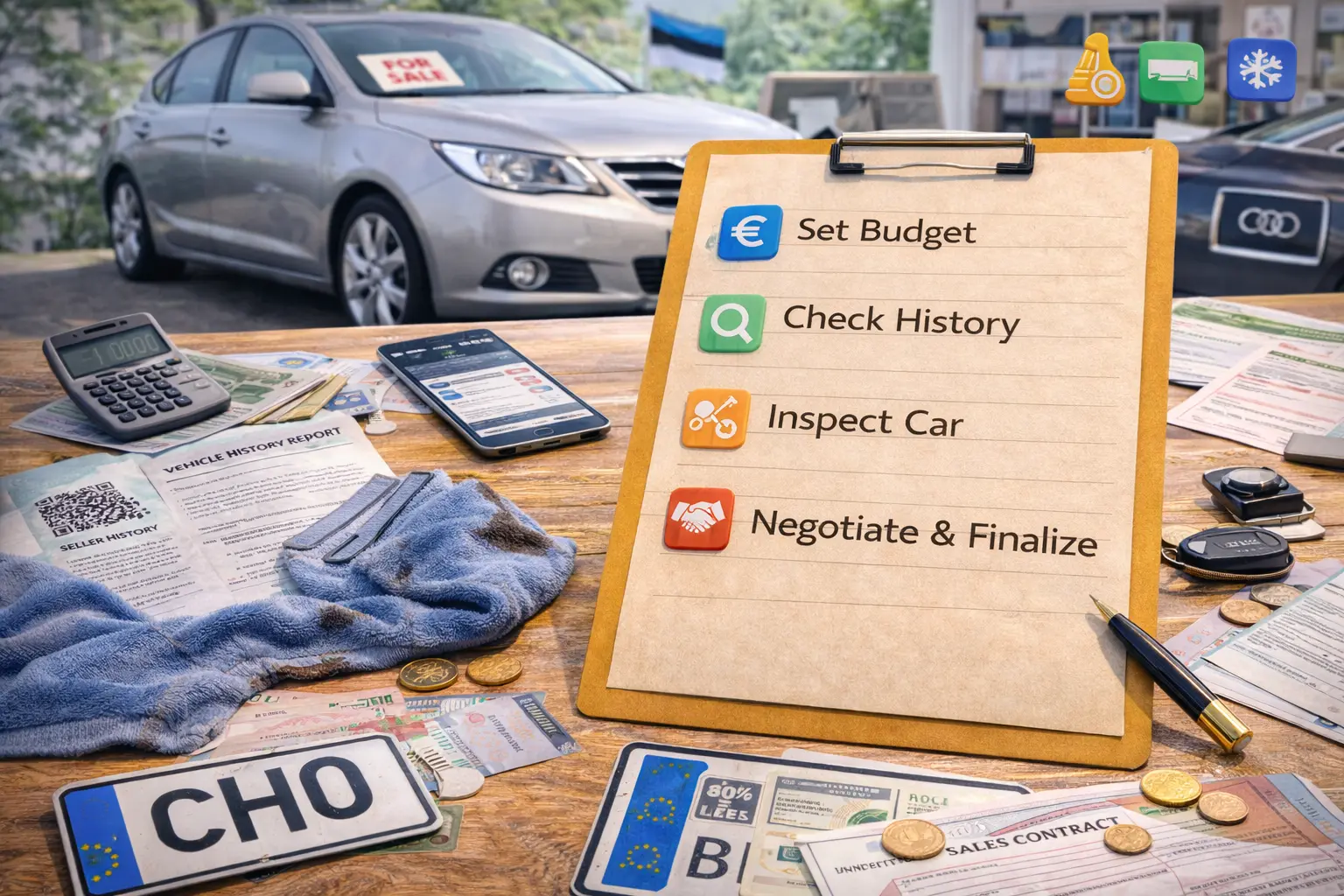
Set your budget - in addition to the purchase price, consider insurance, taxes, maintenance and fuel costs. Think about what you need a car for: city driving, road driving, family car, SUV, etc.
2. Studies
Explore different models and their typical problems. Read forums and reviews. See the availability and price of spare parts.
3. Analysis of the advertisement
Check the information in the ad - does the car have a service book, how many owners, mileage, has there been an accident. A suspiciously cheap price is a red flag.
4. Checking the car
Inspect the car in good light. Check the body, paint color, gaps, rust. Open and close doors, trunk, hood. Sit in and feel the comfort.
5. Test drive
Take a test drive on different roads. Listen to the engine, gearbox, muffler. Feel how the car behaves - brakes, steering, suspension. Try all electrical functions.
6. Expert assessment
If you are a serious buyer, take the car for inspection or invite a mechanic. A small investment can save you from large repair costs.
7. Negotiations and purchase
If you find flaws, use them to lower the price. Agree on the terms of payment and delivery. Draw up a purchase and sale agreement.