

















Introduction
Winter tires are a matter of safety. Here's what you need to know about choosing and changing winter tires.
When to change?
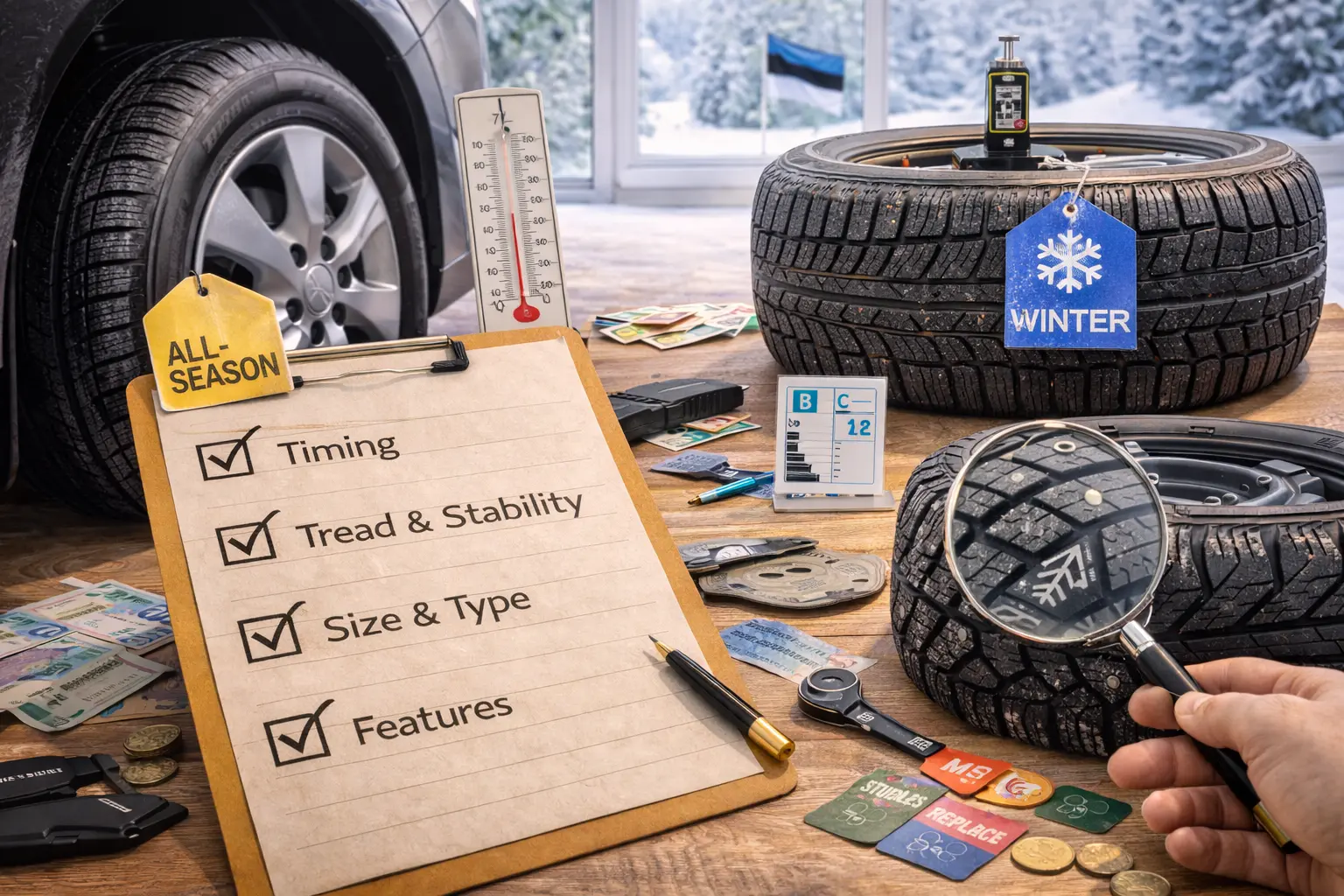
By law, winter tires are mandatory from December 1 to March 1, if weather or road conditions require it. It is recommended to change when the average daily temperature drops below +7°C - summer tires harden and lose grip.
Studded tires vs. lamellar tires
Studded tires - best traction on icy roads, but wears the road, makes noise, prohibited on some streets. Suitable if you drive a lot on icy roads.
Flap tires - quieter, better suited for city driving, good grip on snow and slush. Not suitable for clean ice.
Tire size and type
Use the same size as the car's original - check the car's user manual or the door handle. Do not install tires that are too narrow or too wide, this affects the driving characteristics.
Pattern depth
The legal minimum is 1.6 mm, but at least 3-4 mm is recommended. New tires have 8-9 mm. The shallower depth reduces grip on snow and water slides.
Age
Tires over 6-8 years old lose their properties, even if the pattern is still there. Check the year of manufacture (four-digit number on the side of the tire - e.g. 3520 means week 35 of 2020).
How to choose?
Read tests (magazines, car clubs), ask for recommendations, consider your driving style and conditions. Don't buy the cheapest - winter tires are safety equipment.