













Introduction
A cordless drill is one of the most useful tools in the home. Here's what to consider when choosing one.
Battery and voltage
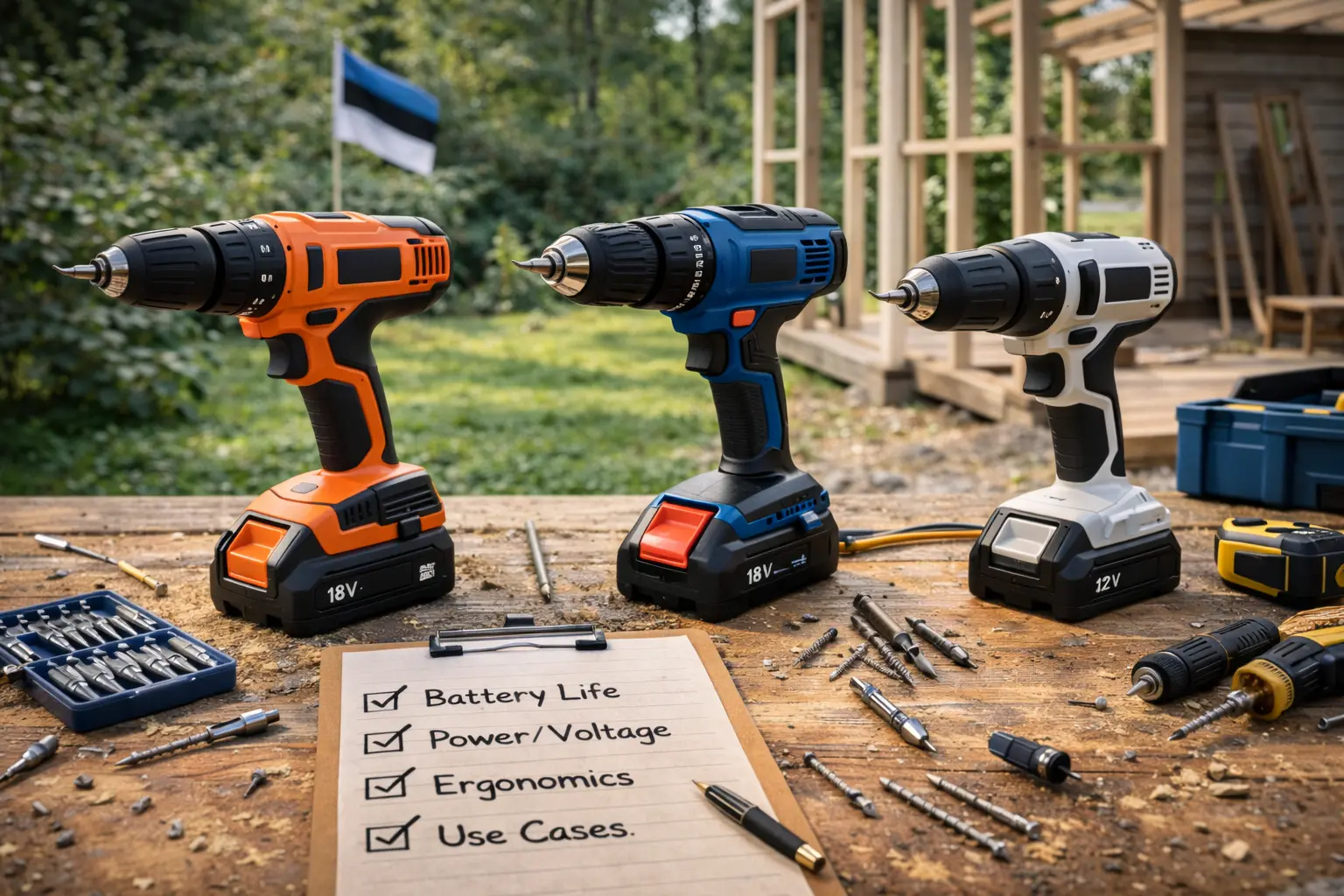
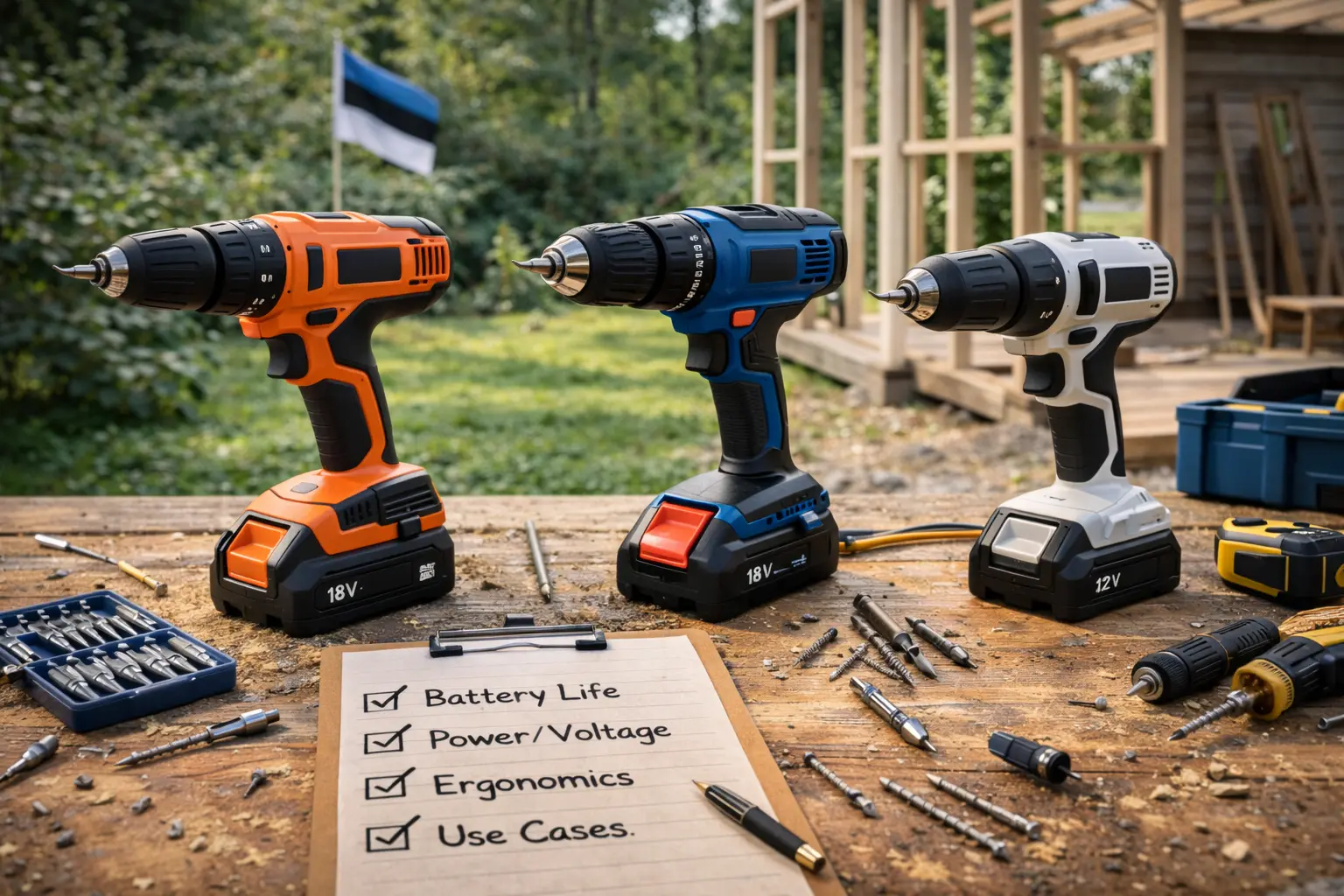
Voltage (V) determines power – 12V for light work, 18V for most home jobs, 36V+ for professionals. The capacity of the battery (Ah) determines the working time - a higher capacity means a longer working time. Lithium-ion batteries are lighter and hold a charge longer than older NiCd batteries.
Torque (Nm)
Torque indicates how much power the drill has. 30-40 Nm is enough for light work (assembling furniture). 50-60 Nm is good for most home jobs (driving screws into different materials). You need more than 60 Nm for larger jobs (drilling concrete).
Revolutions per minute (rpm)
Maximum rotation speed - 1500-2000 rpm is good universal. Adjustable speed is important - lower speed for driving screws, higher speed for drilling.
Cartridge
Quick chuck - you can tighten the drill by hand, convenient. Keyed chuck - requires a key, stronger grip, for professionals. The 13mm chuck is universal, takes most drills.
Functions
Impact drilling - necessary for drilling concrete and brick. Torque regulator - helps control power to avoid over-torque. Reverse gear - for removing screws. Extra handle - better control for heavier jobs.
Brand and kit
Trusted brands offer quality and spare parts. The set may include an extra battery, charger, accessories (drills, bits). Think about whether you need other tools from the same brand - the batteries are compatible.