















Introduction
A chainsaw is a powerful tool that requires safe handling. Here is a guide to selection and safe use.
Types
Electric chainsaw - suitable for light work, home use, quieter, less maintenance. Wired - restricts movement. Battery – Wireless, but battery life is limited.
Petrol chainsaw - more powerful, suitable for larger jobs, forestry work, but noisier, needs maintenance, heavier.
Mast saw - for cutting high branches.
Power and length
The bigger the engine, the more powerful. The length of the saw (bar length) determines how thick a tree you are cutting. 30-40 cm - smaller branches, firewood. 45-50 cm - medium trees. Over 50 cm - thick trees, for professionals.
Safety
Chain Brake - Stops the chain in case of kickback. Protective cover - protects the hand. Kickback Protection - Reduces the risk of kickback. Safety switch - to prevent accidental start-up.
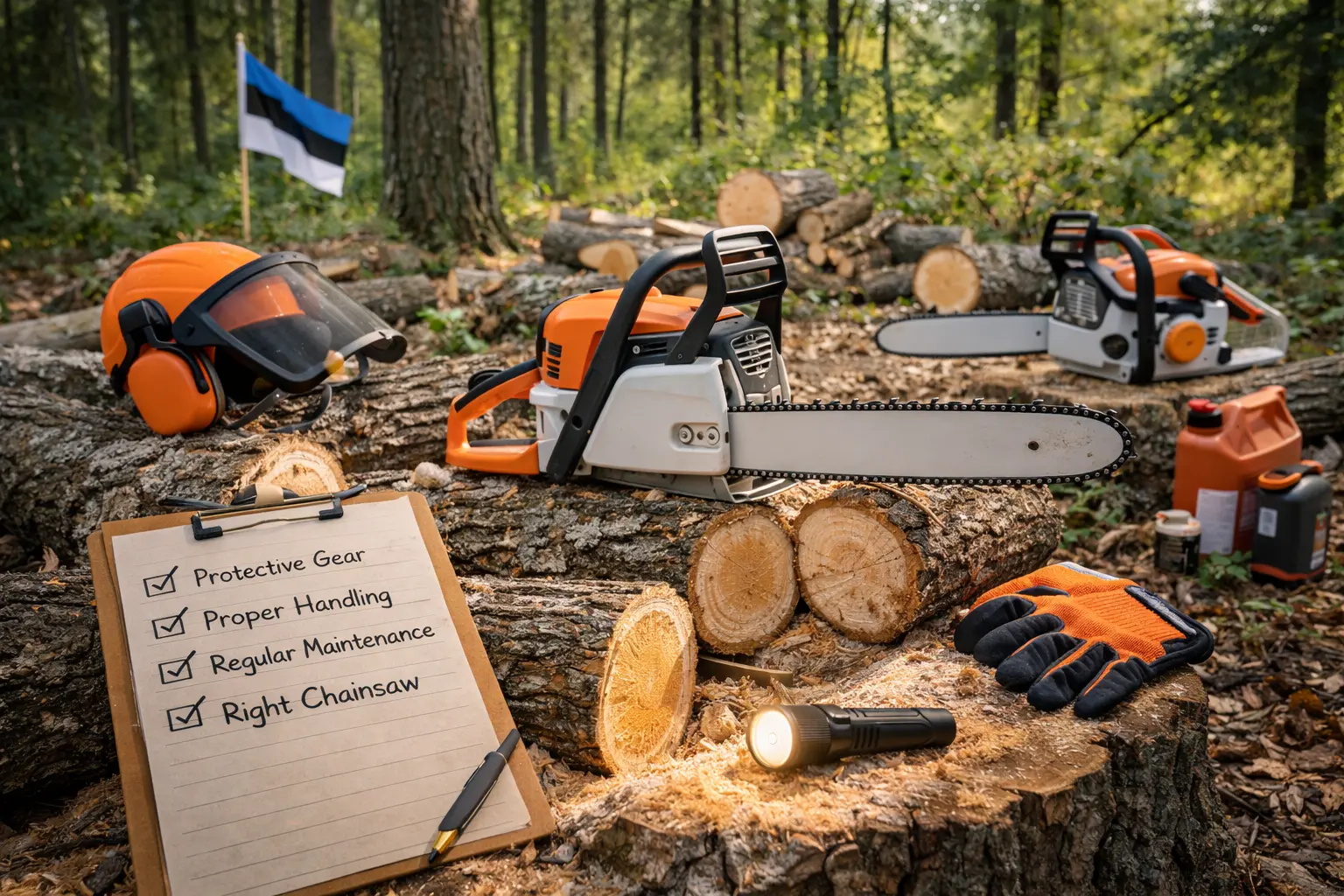
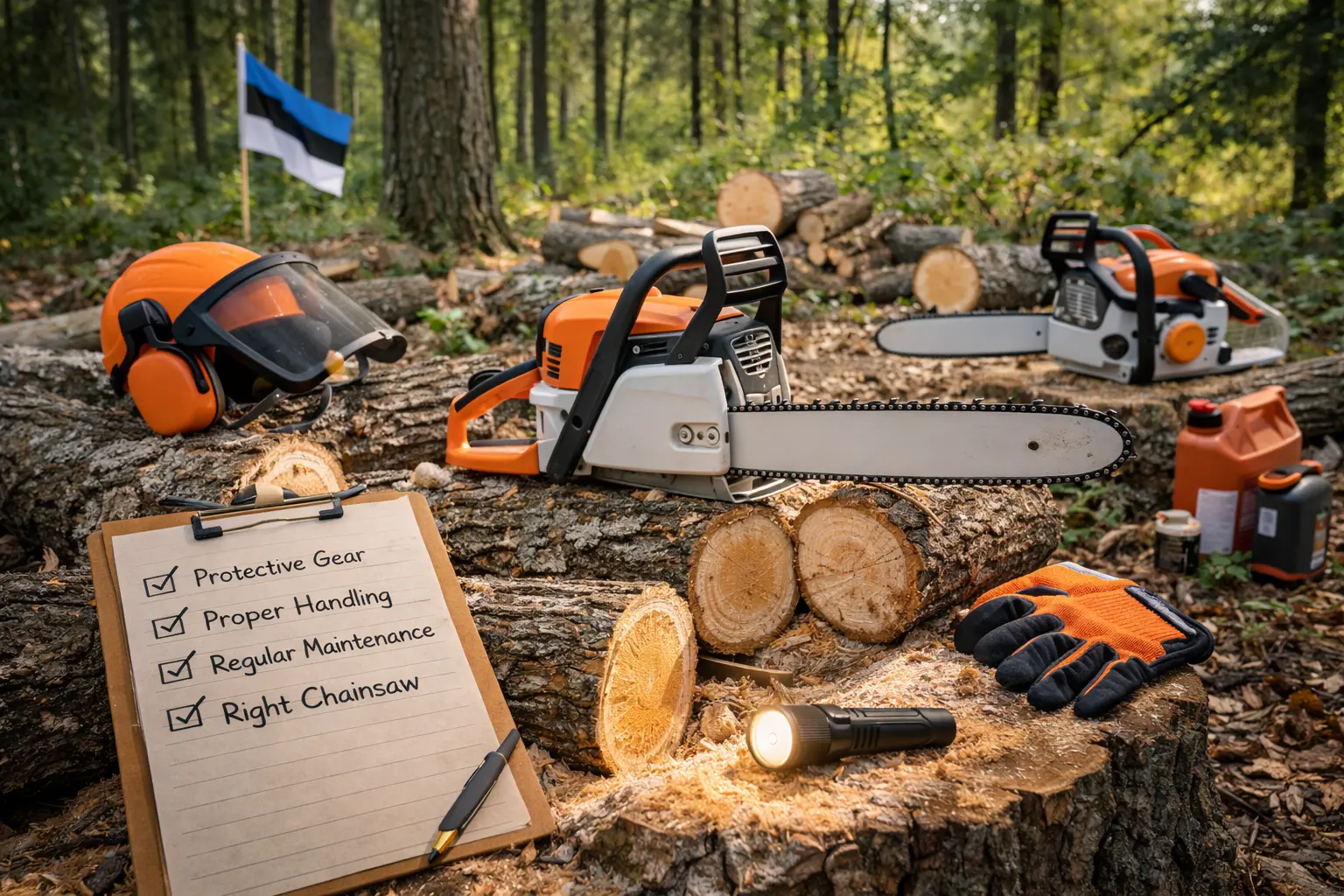
Protective equipment: helmet with face shield and hearing protection, safety glasses, sawing gloves, boots or sturdy shoes, sawing pants or leggings.
Chain tension and maintenance
The chain must be properly tensioned - too loose can come off, too tight will wear out the crop. The chain must be sharp - a dull chain is dangerous. Check the oil level - the chain needs constant lubrication.
How to Saw Safely
Hold the saw with both hands. Do not cut above shoulder height. Avoid the risk of kickback - do not cut with the bar end of the saw. Make sure no one is in the drop zone. Make a plan where the tree should fall.