

















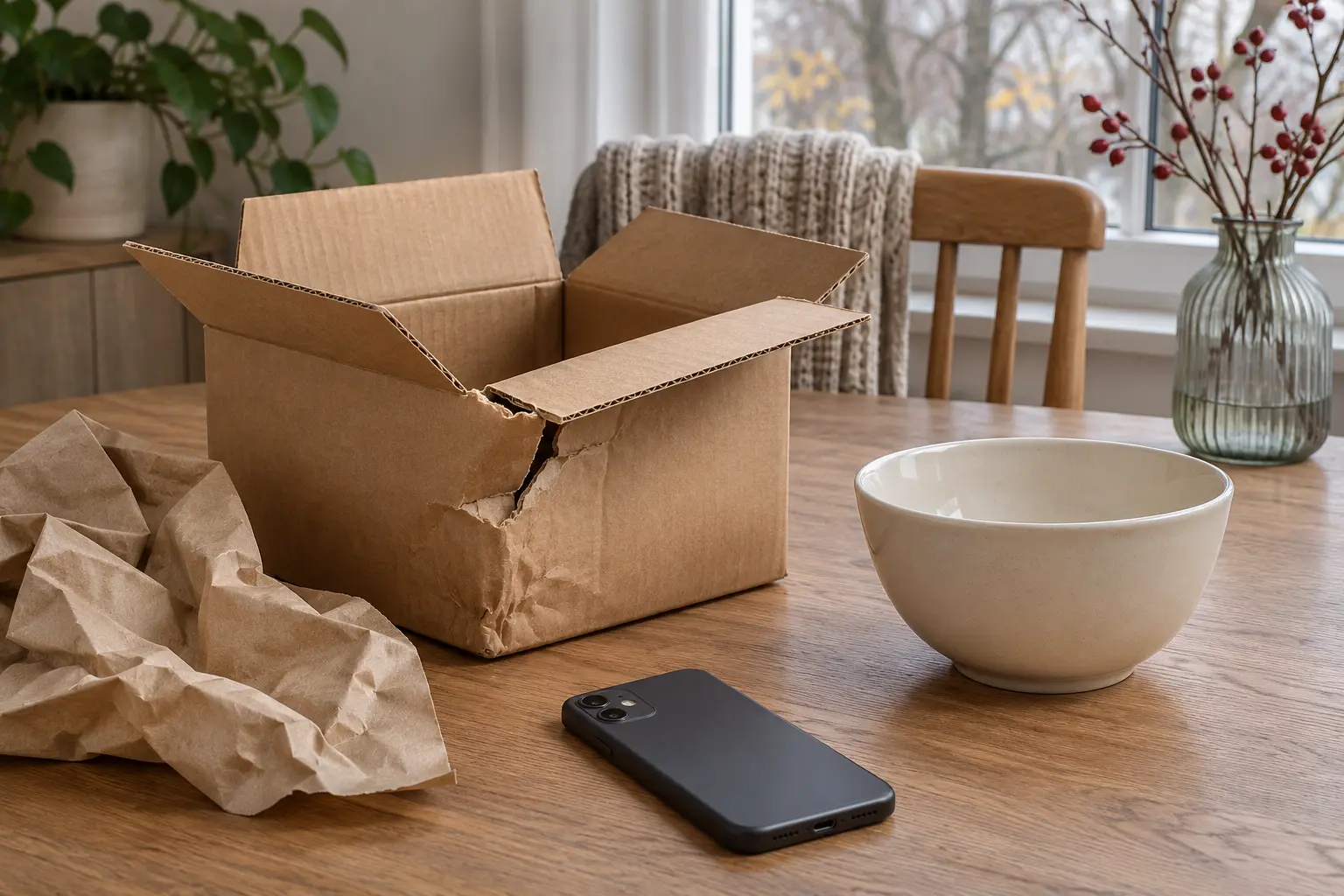
A crushed corner does not tell you whether the item inside is broken, and a neat outer box does not prove that everything survived. When a delivery looks wrong, the useful first task is to record what you actually received. Separate visible observations from guesses about who caused them. This workflow helps you prepare a clear report; it does not promise compensation or determine liability from a photograph.
Record the outside before changing it
Note when and where you collected the parcel and keep its shipment number. Photograph the whole box, its damaged areas and the shipping label for your private case file. An overview and a close-up serve different purposes: together they show where the damage sits rather than merely displaying an unidentified tear. Do not post the label publicly; it may contain somebody’s address and telephone number.
SmartPosti advises photographing visible damage while still near the locker or collection point and sending the shipment details, description and pictures to its customer service. For courier deliveries, its guidance allows refusal and a request for the courier to record the damage. Use the instructions for your actual carrier and service, rather than treating one operator’s procedure as universal.
Open carefully and keep the sequence clear
If it is safe to handle the parcel, record the arrangement before removing the contents and cushioning. Then photograph the item and the specific defect. Do not stage a reconstruction as though it were the original condition. If you already opened the box, simply say so and describe what you noticed at each stage. Accurate chronology is more useful than an impressive but misleading photograph.
As a practical precaution, keep the outer box, inner packing and damaged item while asking the seller or carrier what must be retained for assessment. Do not repair, clean away damage or dispose of packaging before that is clarified. Do not switch on suspect electrical equipment to demonstrate a fault. Photograph only what you can safely observe; documenting a problem should not make it worse.
Tell the sender, not only the carrier
Inform the sender promptly and share the shipment number, photographs and a short description. Omniva and SmartPosti both distinguish reporting damage from receiving carrier compensation: generally the sender is the party entitled to compensation. A recipient’s report therefore does not automatically replace the sender’s claim. Ask who will submit it and keep the reference number, rather than assuming somebody else has already acted.
The purchase and the transport also need to be distinguished. A claim about goods bought from a business is not identical to a carrier claim. TTJA distinguishes consumer purchases from transactions between private individuals. Do not apply an online shop’s consumer process automatically to a private sale. Clarify the seller’s role and the agreed delivery arrangements without inventing a conclusion about liability.
Send a short, factual message
Include the order or agreement reference, shipment number, receipt date, what you observed and the outcome you are requesting. Attach a small set of clear pictures and keep the originals. For example: the box had a torn corner at collection; after opening, the bowl had a crack. That describes the sequence without claiming you witnessed how it happened.
Contact the relevant parties promptly and check the current deadline for the exact service. Do not wait because another service mentions a longer period. Keep correspondence and purchase evidence together. Before sending anything back, obtain the return address and instructions and clarify who arranges the transport. A return code alone is not a decision on compensation. Finish with a recorded next step and a named contact, not an assumption that the matter is resolved.