

















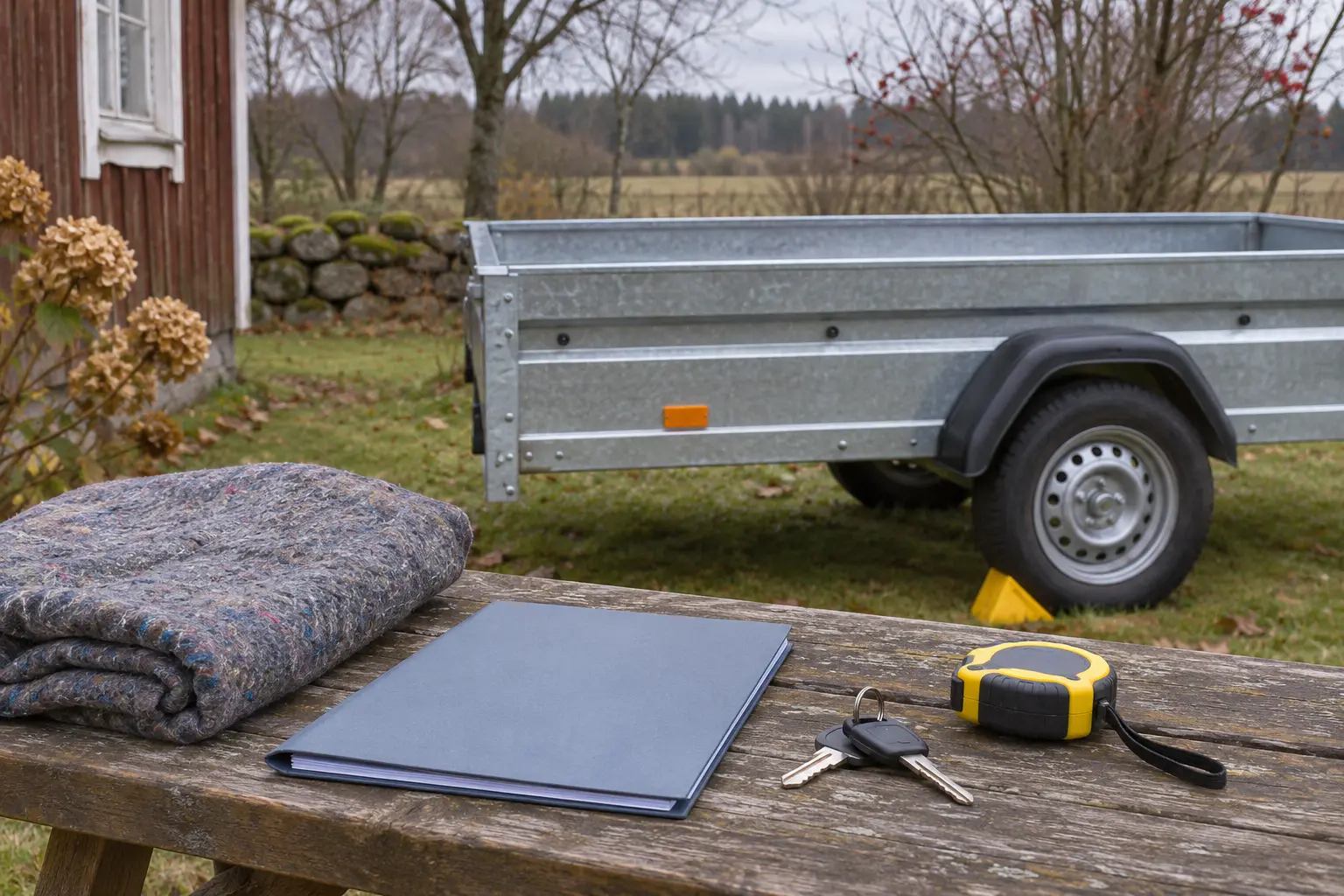
A wardrobe fits inside a hired trailer, and your car has a towbar. That is a starting point, not confirmation that the journey is suitable. The driver, towing car, coupling, trailer and load all have separate limits. Before arranging collection in Estonia, check the exact combination you will use rather than borrowing figures from a similar car or trailer advertisement.
Put the documents beside the purchase details
Ask for the trailer’s registration details and instructions before booking it. Compare its identity with the actual trailer at handover. For the car, find the permitted braked or unbraked trailer mass, as applicable, the vehicle mass limits and the permitted combination mass. Read the car and towbar instructions for the allowed vertical coupling load and any operating restrictions.
Check the trailer’s periodic inspection status as well. The due date depends on its age and category, not the rental period.
Transpordiamet explains registration fields including F.2, the registered maximum permitted vehicle mass; F.3, the combination mass field; and G, mass in running order. These are not interchangeable figures. If a field is missing, a note changes its meaning or the permitted combination is unclear, ask Transpordiamet or the manufacturer to interpret the documents. An empty space is not permission to assume there is no limit.
Count weight separately from space
Obtain the item’s weight, packed dimensions and any detachable parts from the seller. Include packaging, accessories and loading equipment that will travel with it. A trailer’s internal dimensions answer whether the item fits, not whether it can be carried. A lid or extra equipment can also affect the trailer’s own weight and remaining payload.
Estonian traffic law distinguishes actual mass from permitted limits. The actual trailer mass must respect the towing limit assigned to the car; vehicle and axle limits also matter. Do not turn one subtraction into approval of the whole combination. The car’s passengers and other luggage are part of the plan too. If the item’s weight is only a guess near a limit, get reliable information or weighing rather than rounding down.
Check the driver separately
The driving entitlement is another check, not a result of a successful towbar match. The law’s B and BE provisions use permitted maximum masses and distinguish combinations requiring an additional driving test. Confirm the category and any relevant code on your licence against this specific car and trailer.
Do not assume that loading a heavy-rated trailer lightly automatically makes it suitable for your licence. Nor does a broader licence category increase the car’s or towbar’s capacity. Give Transpordiamet both vehicles’ details if you need clarification, and resolve the question before collecting the trailer.
Check connections and securing before moving
At handover, have the owner or rental provider demonstrate the correct coupling and safety-device checks for that model. Follow its instructions for locking, safety cable or other fitted safety device, electrical connection and support wheel. Check the required lights, tyres and visible condition. A connection that appears to fit is not proof that it is correctly locked or roadworthy.
Plan how the purchase will be secured using suitable, sound equipment and the intended anchoring points. Respo’s instructions emphasise preventing load movement and checking the coupling, safety cable, electrical connection and lights before travel. This is a checklist, not a universal strapping pattern: an unfamiliar, tall or awkward load needs competent advice.
Choose a carrier when the answer remains uncertain
Before paying for collection, ask whether safe loading, restraint and unloading are realistically available at both ends. If limits, entitlement, equipment or handling remain unresolved, arrange a suitable carrier. Send the carrier the item’s dimensions, weight and access details. The right transport plan is the one you can verify, not simply the largest trailer you can rent.