

















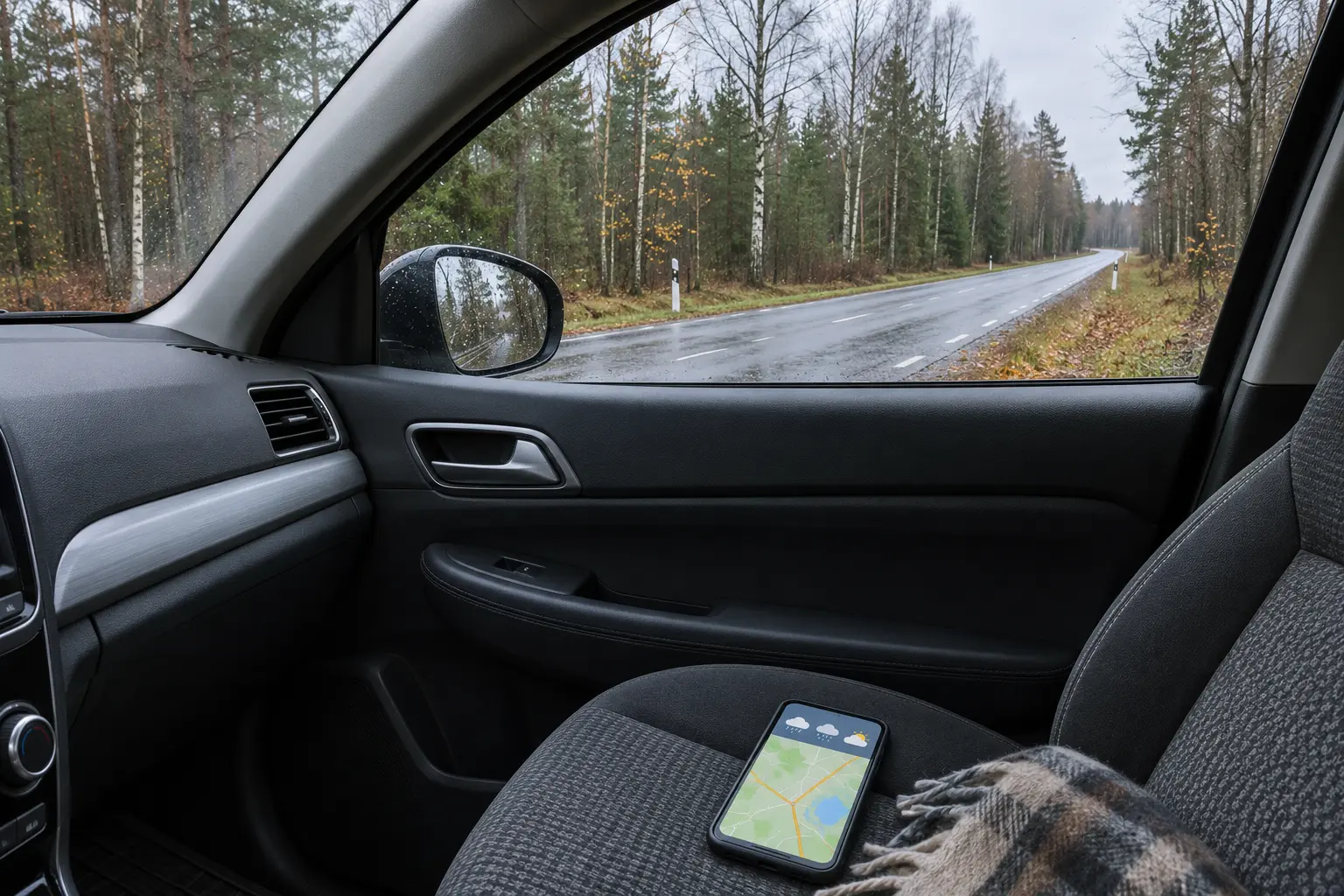
A seller has agreed to meet you outside town at six. Your route planner gives a reassuring arrival time, but it does not settle whether that is a sensible journey tonight. In Estonia, November conditions can change between the outward trip and the return. Before confirming a collection, make three separate checks: the route itself, recent road observations, and the weather expected while you will actually be travelling.
Start with the whole route
Open TarkTee and locate both ends of the journey. Check roadworks, restrictions and reported difficult conditions along the route rather than looking only at your home town. Include the final stretch to the meeting place. A clear main road is not evidence that a smaller access road or the seller’s courtyard is equally easy to reach.
Ask the seller where you can stop safely and whether the entrance is accessible with the vehicle you intend to use. Agree on a precise meeting point before setting off. If the suggested alternative road is unfamiliar, inspect it as a separate route; a shorter line on the map is not automatically the better winter option.
Treat a camera picture as a dated observation
Transpordiamet explains that road cameras help show surface conditions and regional differences in snow, slush, fog and visibility. They take pictures at intervals, not as a continuous live video feed. Check the image time, then compare several relevant points along your route. A bright picture from one location cannot describe the entire journey.
Road-weather stations also measure factors such as road-surface temperature and condition. These observations add context, but they are not a promise of grip. If a picture is old, unavailable or too dark to interpret, count that as missing information, not as confirmation that the road is clear.
Match warnings to your travel hours
Read the Environment Agency’s warning text, affected area and start and end times. Its updated warning service gives each warning a defined time window. Look at the return journey too: collecting and packing an item can take longer than planned, pushing your drive into different conditions.
Do not turn a weather colour into a personal permission to drive. Consider what the warning describes and follow the authorities’ instructions. Transpordiamet’s 12 November notice is a useful reminder that slippery conditions may develop quickly. That dated notice is background, not today’s forecast; reopen the current information before departure.
Agree on a plan that allows a delay
Tell the seller in advance that worsening conditions may mean changing the collection time. A flexible appointment is more useful than racing to save a bargain. You can ask to meet in daylight or arrange delivery instead, but confirm any new price and practical details rather than assuming the original agreement includes them.
Before leaving, check that the item is still available and ready for collection. Keep the address and contact details accessible without searching through messages while driving. Check route information while parked, and repeat the weather check before the return leg. If conditions no longer fit a safe journey, postponing the purchase is a valid outcome, not a failed plan.
For a simple decision note, write down when you checked the information, which stretch still needs clarification and what would make you change the appointment. This is a planning aid, not a certificate of road safety. It helps you explain a postponement clearly and prevents yesterday’s screenshot from silently becoming today’s travel plan.