

















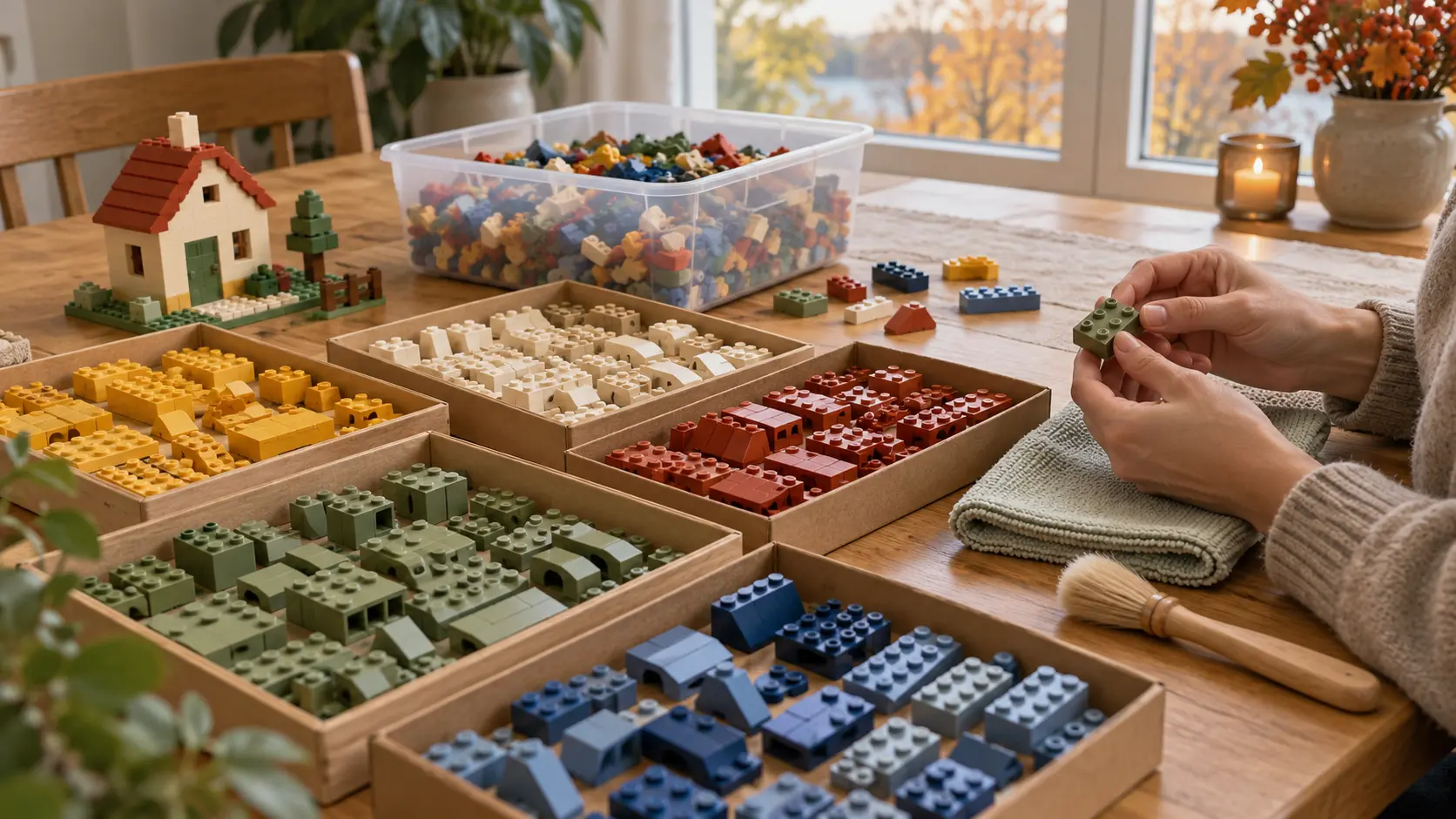
Used building bricks: a mixed box or a specific model?
For building on a rainy autumn day, a mixed box of bricks and a specific model set can both be useful. They are different purchases, though. A mixed lot offers shapes and creative possibilities; a model needs its particular components. Before comparing listings, decide whether you want open-ended building material or the exact object pictured.
1. Decide what a mixed box needs to contain
For a child who builds houses, ordinary bricks, plates and windows may be more useful than many tiny decorations. For vehicles, look for wheels and matching attachments. Request a photograph with the contents spread out, not just a view into a deep tub. Check which shapes dominate and whether unrelated toys contribute to the weight.
A creative mixed lot need not reproduce an original set, but do not value an unchecked mixture as a complete model. Ask whether the seller has inspected it or is selling it unsorted. Your sorting time is part of the purchase.
2. Check age suitability and the building system
Follow the chosen product's age recommendation and warnings. For example, LEGO Classic 11001 is marked 4+ and warns that small parts make it unsuitable for children under three. Adding large bricks does not make the small pieces suitable for a younger child.
Ask whether the box contains one manufacturer's system or a mixture. Appearance alone cannot establish full compatibility. Gently try connecting a few representative parts without forcing them. If their origin is unknown, the listing should say so rather than describe the entire box as one definite brand.
3. Inspect the material, not just the colours
Examine random pieces, including some from the bottom. Look for cracks, sharp broken edges, bite marks, glue, sticky surfaces and strong smells. Remove damaged pieces from the play selection. Ask whether anything has been painted or permanently glued: it cannot be assessed like reusable, separable building material.
Check hinges, wheels and other moving elements separately. Cosmetic wear and a connection that no longer works are different defects. If a printed element's appearance matters for your model, request a close-up.
4. For a particular model, start with its number
LEGO's official instruction search finds building guides by set name or number. Compare the item with the correct guide, not a similar box picture. Start with important special parts: vehicle bases, connectors, large plates and elements that define the model.
Ask whether it has recently been assembled from the instructions or whether “complete” is an assumption. A decorative colour substitution and a missing structural part have different consequences. Establish replacement availability and cost before buying; do not assume the manufacturer will supply everything free.
5. Plan cleaning before play
LEGO recommends handwashing ordinary bricks in water no hotter than 40°C, not machine washing or drying with heat. Follow other manufacturers' own guidance. Do not immerse a mixed box of unknown contents: separate ordinary bricks, sensitive pieces and electronics first.
LEGO Education says not to immerse or spray electronic parts; disconnect power before wiping them separately. A motor or control hub needs its own condition check. If the cleaning method is unclear, ask the manufacturer. Do not describe goods washed by an unknown method as disinfected.
6. Compare usable contents and storage needs
If priced by weight, establish whether that includes the container and unrelated items. Allow for damaged or unsuitable pieces you will remove, replacements and cleaning. A smaller inspected selection may suit your home better than a large random heap. Choose storage that lets you find the shapes you need, and keep mixtures containing small parts beyond younger children's reach.
A useful Zeppik listing clearly identifies a mixed lot or checked model, any mixed manufacturers, and missing or damaged elements. Compare offers intended for the same purpose: creative building material and a complete model need different assessments.