














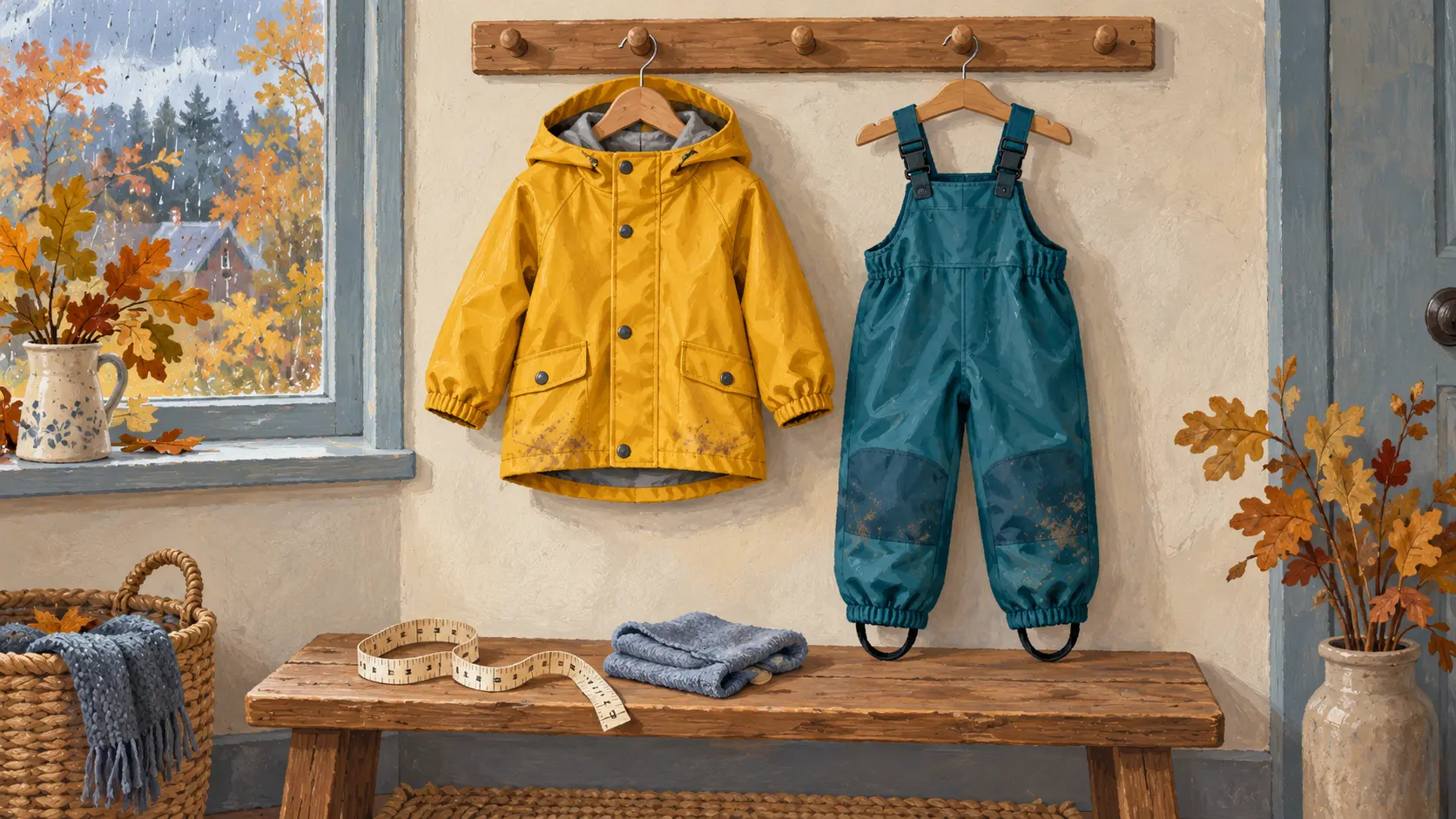
A rain jacket can still look cheerful when its sleeves have become too short. Before passing on a child’s outgrown rainwear, spend a little time separating ordinary marks from damage and recording the fit. This helps another family decide what they are buying and saves you from describing every yellow jacket as simply “good condition”.
Work with the jacket and trousers separately, even if they were bought as a set. Knees, seat and cuffs may have had very different lives. Your aim is an honest account of the garment in front of you, not a promise that it will perform like new in every shower.
Start with the label and the whole set
Photograph the size, material and care labels while they are readable. Note the model if you know it, but do not guess from a similar picture online. Lay out the hood, removable lining, foot straps and any other included parts. Say plainly when an original part is missing or a replacement has been fitted.
Check both pieces for name labels before photographing them. Keep the useful product information visible without publishing a child’s name, nursery or contact details. Removing personal information should not mean cutting away the care instructions that the next owner needs.
Look closely at coating, seams and fastenings
Inspect the clean garment in good daylight, outside and inside. Pay particular attention to knees, seat, elbows, cuffs and the places where straps attach. Look for cracks, peeling, worn patches, pinholes and sections that feel unusually sticky. Photograph a fault close up and again from farther away so its position is clear.
Follow the seams with your eyes rather than pulling them apart. Note lifting seam tape, openings and old repairs. Close the zip and press studs normally; check buckles, elastic and foot straps without forcing them. A neat repair is still a repair, so include its location and what you know about how it was done.
Do not turn a water-beading photograph into a waterproofness guarantee. If you know of a leak during use, describe where and when it happened. If performance has not been checked recently, say that instead. Visible condition and a seller’s experience are useful information, but neither is a laboratory test.
Clean and dry without guessing
Reima’s care guidance says to check the garment’s label and dry inside out at room temperature.
Use the instructions for the actual garment rather than one universal washing recipe. If its label is unreadable, seek the model’s guidance before choosing a treatment. Do not apply a spray merely to make the listing sound better: Didriksons’ Galon guide says that its Galon material does not need reproofing and should be protected from excessive heat.
Allow time for the inside, pockets and folded areas to dry before the final inspection and packing. Check them yourself rather than judging only by the outer surface. Record any lingering odour honestly; perfume is not a useful substitute for identifying a problem.
Give measurements another parent can repeat
Lay the fastened jacket flat without stretching it. Record the back length, width across the chest and sleeve length, explaining your start and finish points. For trousers, add the inside-leg length and the position of adjustable braces. Say whether the chest measurement is a flat width or a circumference.
A simple photograph with the tape in place prevents confusion. Ask buyers to compare these measurements with a garment that fits their child over the intended layers. A size label alone does not describe sleeve length, room for a fleece or how much adjustment remains in the straps.
Store it ready for the next owner
Keep the dry, checked set together with its loose parts and measurement notes. Choose clean storage where you can find it again, rather than hiding it beneath a pile of unrelated clothes. Before handover, check that the condition still matches your photographs. If selling, base the description and price comparison on the actual faults and completeness, not only the original purchase price.
Before you pass it on
- Identify both pieces and every included accessory.
- Photograph coating wear, seams and any repairs.
- Try fastenings and explain missing or replaced parts.
- Follow the garment’s care instructions and check that it is dry throughout.
- Provide repeatable measurements and an honest account of known leaks.
- Remove personal details from photographs and confirm the final condition.