














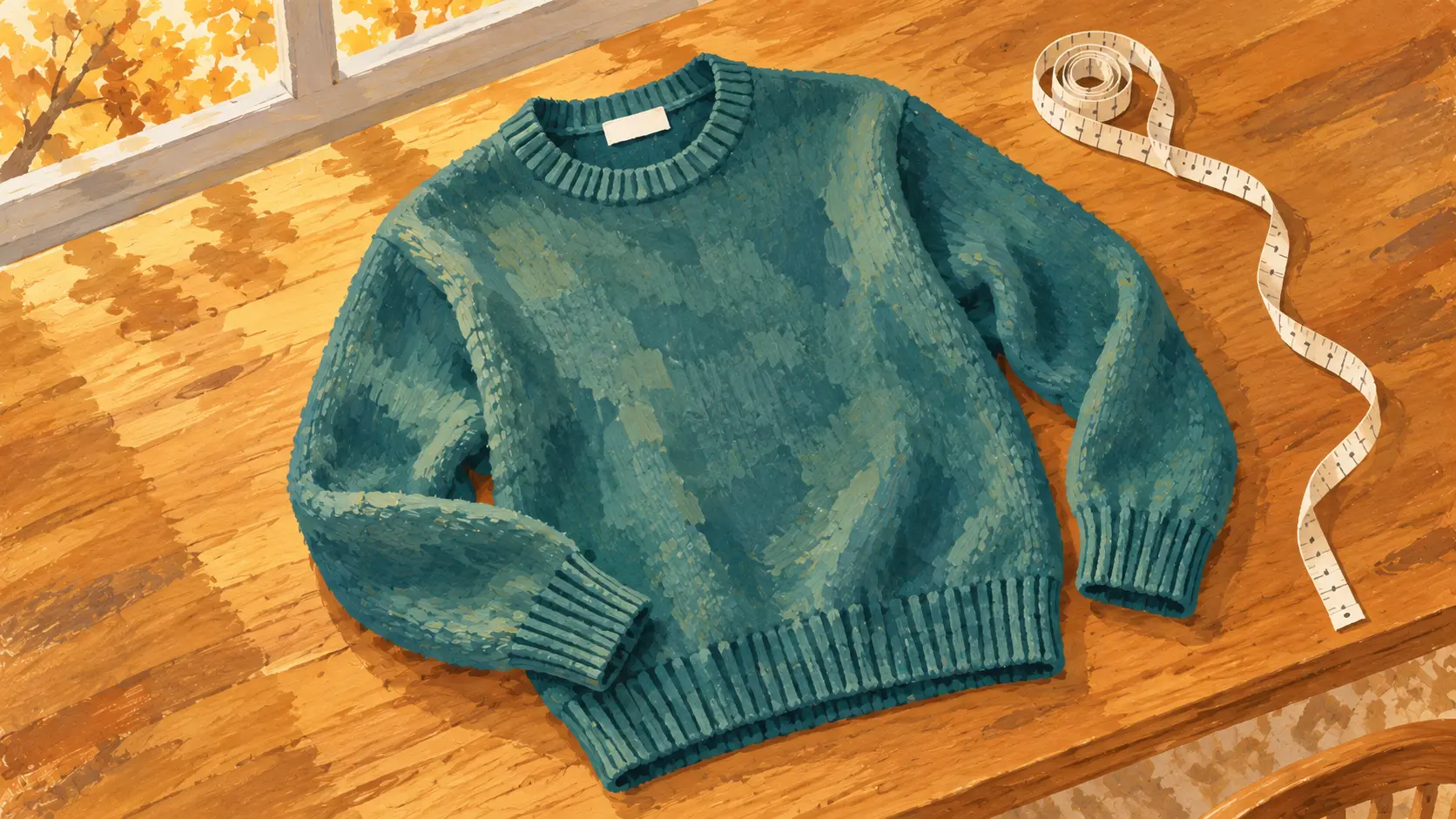
An autumn jumper should fit under your coat and suit the way you can care for it. A familiar size and a soft-looking photograph are not enough: a knitted garment may have changed shape, and surface bobbles can hide thinner areas. Before arranging a collection in Estonia, ask for a few specific photographs and measurements.
Start with two labels
Ask for readable photographs of the fibre composition and care instructions, not just the brand label. A wool blend is not automatically a poor choice, and a high wool percentage does not establish the condition. If a label is missing, describe the composition as unconfirmed rather than accepting a guess based on touch. Check whether the permitted cleaning method is practical for you.
Compare it with a jumper that already fits
Ask the seller to lay the jumper flat without stretching it. Agree the measuring points: width between the underarms, length from the shoulder beside the neckline to the hem, and sleeve length along an agreed seam. Raglan sleeves need a different starting point from set-in sleeves; a photograph of the tape makes the comparison clearer. Measure a similar jumper you own in the same way. A flat chest width is not a body circumference. Check the opening at the neck, cuffs and hem too; do not plan to stretch a small garment into your size.
Look beyond the bobbles
Request close photographs of the underarms, elbows, cuffs, hem and both sides of any suspicious area. Woolmark explains pilling as fibres forming small balls through friction during wear. Bobbles alone are not the same as a hole. Look separately for thinning fabric, broken yarn, pulled loops and repairs. Ask the seller to photograph the reverse of a repair. Avoid pulling loops or scraping the garment during an inspection; that could create damage rather than reveal it.
Ask what changed after washing
Has the jumper become shorter, narrower or firmer? Have the sleeves or side seams twisted? Ask about the last wash and whether the measurements were taken afterwards. Compare both sleeves and the line of the hem in the laid-flat photograph. A seller’s recollection is useful history, not proof that a stretched or shrunken garment will recover. Buy for its current shape, not a promised result from a home remedy.
Make a realistic cleaning plan
Ask about stains, persistent smells and how the jumper has been stored. A photograph cannot establish smell or guarantee stain removal. Woolmark’s washing guide starts by checking the garment’s care claim before machine washing and advises drying knitwear flat in the shade. Do not infer a universal wash programme from the word “wool”. If instructions are absent or a mark is unfamiliar, seek suitable professional advice before purchase; do not test chemicals on the seller’s garment.
Price the condition you can actually see
Add any confirmed cleaning or repair cost and delivery to the asking price. Do not count an unknown repair as free or assume every bobble can be removed without affecting the knit. If the purchase only makes sense after uncertain restoration, leave it. Sellers can make the decision easier by listing the current measurements, visible repairs and missing care information openly.
Before you agree
- Composition and care information are known—or their absence is explicit.
- Measurements were taken flat and compared consistently.
- Thin areas, holes and repairs are shown clearly.
- Current shape and any washing changes are understood.
- Cleaning, repair and collection costs are acceptable.
A good second-hand jumper is one you can wear and care for in its present condition. A clear account of an ordinary flaw is more useful than a promise that a wash will make everything new.