

















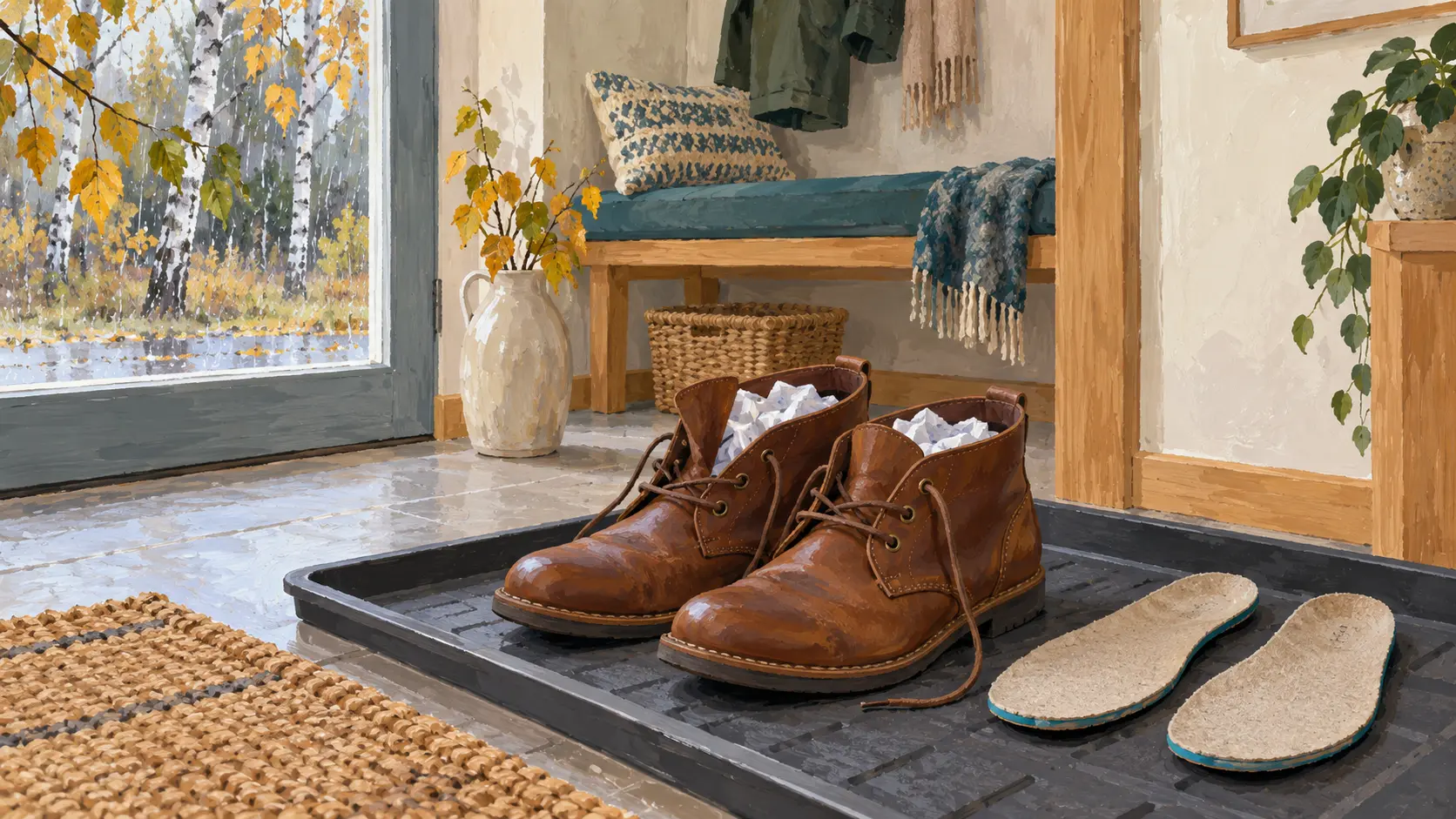
After a wet walk, putting leather shoes beside the radiator can feel like the quickest way to prepare them for tomorrow. A better starting point is the care information for that pair and enough time to follow it. Separate drying, surface care and repair into three decisions. A polished appearance should never be used to hide a problem that needs attention.
Identify the pair before reaching for a product
Look for the model and material information on the footwear, packaging or maker’s website. Smooth leather, suede, nubuck and mixed-material uppers do not call for one interchangeable treatment. Note any membrane or special finish and its instructions. If the material remains uncertain, ask the manufacturer or a cobbler instead of trying the same cream on the whole shoe. A product already in the cupboard is useful only if it is suitable for this pair.
Make room for unhurried drying
Loosen the laces and remove insoles only if they are designed to come out; do not pull glued parts free. ECCO advises natural room-temperature drying rather than radiators or hairdryers. Choose a suitable place away from heat sources where the shoes can remain undisturbed. Follow the model’s advice about shape support. Do not promise yourself a fixed number of drying hours: check the inside as well as the surface before moving on.
Match the next step to the surface
Remove dirt gently using the method permitted for that material. Geox’s care leaflet separates smooth-leather treatment from suede and nubuck care; it specifically excludes ordinary polish or cream for the latter group. This is a useful reminder to choose the correct branch rather than treating every leather surface alike. Read both the footwear and care-product directions, including any test on an inconspicuous area. Do not mix household recipes or assume a stronger product will solve an unknown stain.
Decide whether you are cleaning or repairing
Once the pair is dry, inspect the seams, lining, heel areas and the join between upper and sole. Record anything loose, split or noticeably changed. Cleaning cannot by itself answer whether a structural fault is repairable. Ask a cobbler for an assessment and price before counting on a quick fix. Similarly, a newly treated surface is not proof of waterproof construction. If waterproofness matters, verify the exact model information and disclose any known history of leaks.
Prepare an honest sale, not a cosmetic disguise
If you plan to sell the pair, photograph it dry in clear light, including both soles, the inside where visible and any damaged area. State known repairs and relevant care history rather than calling every freshly polished pair “like new”. Buyers should ask for these views before arranging a meeting and compare the description with the dry shoes in person. A defect should remain visible in the listing even if routine care makes the surrounding leather look better.
A simple decision for the next use
- Known material, suitable instructions and no unresolved damage: follow the care routine.
- Unknown material or treatment: obtain advice before applying a product.
- Loose or damaged parts: establish repair options before relying on the shoes.
- Known leakage: describe it honestly; do not promise a cure from surface treatment.
For a Zeppik listing, observed condition is more useful than the shine in the photograph. For your own wardrobe, the best outcome may be keeping a serviceable pair in use rather than replacing it. Give drying its own time, choose care for the actual material and keep repairs separate from cleaning. The exact pair’s instructions take priority over a general autumn tip.