


















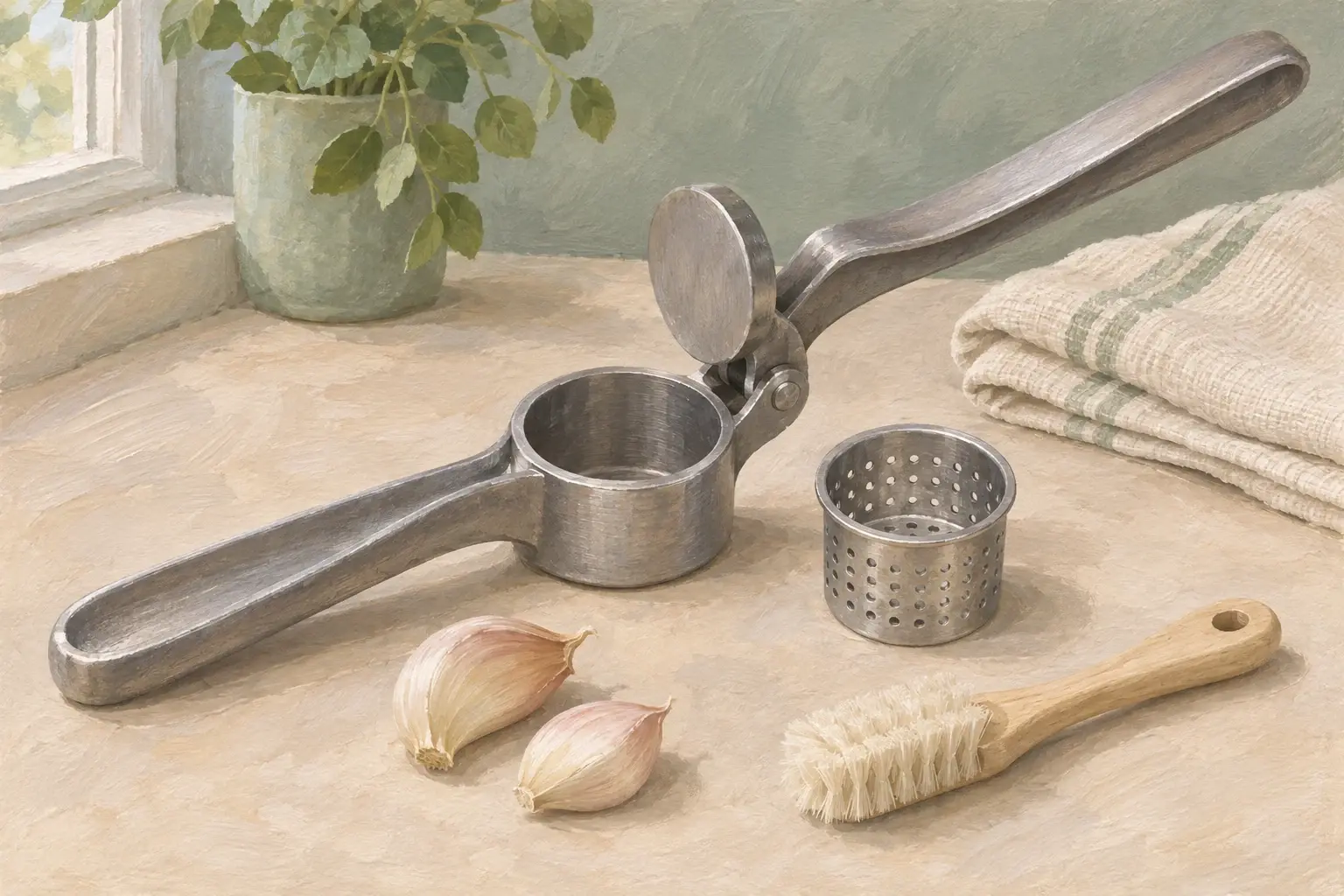
A garlic press can look complete in a photograph while its small inner basket is missing. When buying one second-hand, start with the parts that touch the garlic and the route you will use to clean them. A shiny handle is less useful evidence than a clear view inside the open head. The following inspection plan is editorial advice, not a test performed on the seller's item.
Find out how this particular press opens
Two manufacturer examples show why identification matters: IKEA KONCIS has a removable insert; the Kuhn Rikon Epicurean has a hinged sieve. These are model-specific designs. Ask the seller for the model name and a photograph with the cleaning access open. Do not try to detach a part merely because another press has a loose basket.
Account for the small pieces
Compare the actual contents with the correct product instructions. If a basket should lift out, ask to see it beside the body and then correctly seated inside. Look at the rim, holes and the surface underneath. A cleaning accessory shown in an old advertisement may not be included in this sale. Write down what is present rather than assuming that every pictured accessory comes with the press.
Inspect before applying pressure
In good light, look for cracks near the hinge, a visibly bent plunger, distorted holes, loose handle coverings and flaking surfaces. Keep fingers away from the closing gap. Ask the seller to move the empty press through its normal range without squeezing it hard. Parts should follow their intended path; resistance is a reason to stop and clarify the cause, not to add leverage or bend something back.
Make cleaning access part of the decision
Ask how the item was cleaned and check the instructions for the actual model. Do not infer dishwasher suitability from its silver colour. With the seller's agreement, inspect the basket after normal cleaning and drying, including the underside and the seat in the body. Use only the cleaning method and tools permitted by the maker. Avoid probing holes with a knife or scraping an unknown coating. A photograph of a wet surface can hide remaining residue.
Keep any demonstration modest
If the complete, undamaged press has been cleaned appropriately, an ordinary garlic demonstration can show how it fits your hand. Agree on it first and follow the model instructions. Do not use nuts, stones or other hard objects as a strength test. Then look at the empty basket again and consider whether you would comfortably repeat the cleaning routine after every use.
Describe the handover honestly
For a listing, photograph the assembled press, the open head and the permitted cleaning position. Disclose missing parts, visible wear and any movement that has not been checked. Seeing no residue does not establish microbiological cleanliness. Resolve a missing basket before calling the press complete. If a food-contact surface is damaged, do not use the press or describe it as ready for food use. Resume use only after the damaged part has been replaced in a manufacturer-approved way and safe use has been established. If that cannot be done, decline the purchase. A modest complete press is often a simpler purchase than an attractive body with uncertain replacement parts.