

















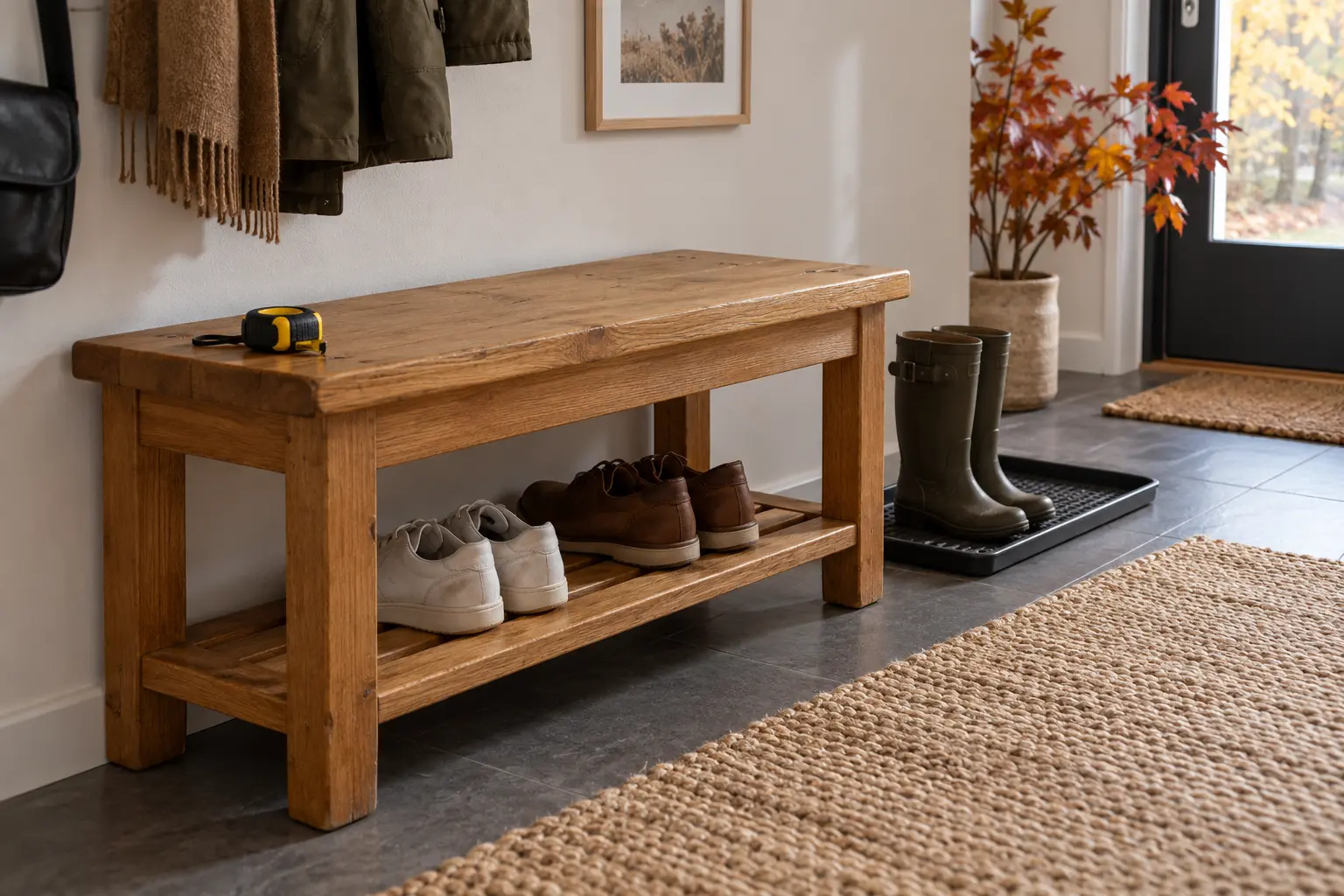
In an Estonian autumn, the hallway has several jobs: somewhere to remove muddy shoes, somewhere to sit, and a clear route into the home. A second-hand shoe bench can help, but a neat photograph says little about its joints or how wet boots will fit underneath. Start with the space and the intended use, not the asking price. A compact bench that works every morning is more useful than a large bargain that blocks the door.
Measure the room as you actually use it
Measure the available width and depth, including skirting boards and any radiator or pipework. Open the entrance door and nearby cupboard doors fully. Mark the proposed footprint with removable tape, then walk past it carrying a shopping bag. Leave room for someone to bend down and put on shoes; the dimensions of the furniture alone do not describe the space needed around it.
Check shelf clearance against your tallest everyday boots, not only trainers. Ask for the usable distance between shelves and for a photograph with a ruler. For a bench with a lid, check the opening height and whether coats hanging above would interfere. Also measure the stairs, lift and vehicle before collection.
A shoe shelf is not automatically a seat
Ask for the manufacturer, model and a photograph of any label. Look up the original instructions to establish whether the top is designed for sitting and what limitations apply. Do not borrow a load limit from a similar-looking product. If its intended use remains uncertain, choose another item rather than testing the structure with your body weight.
For an identifiable model, compare the assembled item with its instructions. Missing cross-braces, different screws and removed panels deserve an explanation. A cosmetic makeover does not establish structural soundness. A combined coat stand and bench may have additional installation requirements: follow the instructions for that exact product.
Inspect below the polished surface
View the item on a level, dry floor. Examine the underside of the seat, the feet, corners, shelf supports and screw holes. Look for cracks, bent metal, corrosion around joints, loose connections and swollen board edges. Ask whether it has been repaired, taken apart repeatedly or stored in a damp place. Fresh paint can make damage harder to see, so request close-up pictures before travelling.
Do not accept wobbling as harmless simply because the seller says one screw needs tightening. Establish the cause and whether the correct repair is possible. A visual inspection cannot certify safety. Walk away from unexplained movement, damaged load-bearing parts or an improvised repair you cannot assess.
Give wet boots their own place
Plan a removable tray for wet footwear rather than letting water collect against furniture. Measure the tray as well as the shelf: raised edges and handles can prevent it sliding out. Keep the tray accessible for emptying and cleaning, and wipe the floor beneath it. Put damp gloves and coats somewhere appropriate instead of closing them inside a storage seat.
Cleaning depends on the material and finish. For example, IKEA's NIPÅSEN care guidance calls for mild cleaning followed by drying. Check the instructions for your own bench, and do not soak board edges or assume an indoor seat is weatherproof. A washable cushion is convenient only if its cover and filling can be cared for as directed.
Agree the whole purchase, not just the price
Add transport, suitable replacement parts, cleaning and any tray to the cost. Before paying, search the identifiable model using the EU's product-safety and recall guidance; follow any applicable recall instructions. Agree who dismantles the bench and keep its fittings together in labelled bags. Save the listing and your written agreement about condition and included parts.
If selling, show the underside and every defect, give actual measurements, and say whether cushions or trays are included. Describe repairs plainly. An honest listing helps the next owner decide whether the bench suits their hallway.
Before you collect: a short checklist
- Doors, walking route and collection route measured.
- Seating purpose and model instructions established.
- Joints, feet and underside inspected; concerns resolved.
- Boots and removable tray fit the available space.
- Recall information checked for the identified model.
- Full cost, included parts and transport agreed.