

















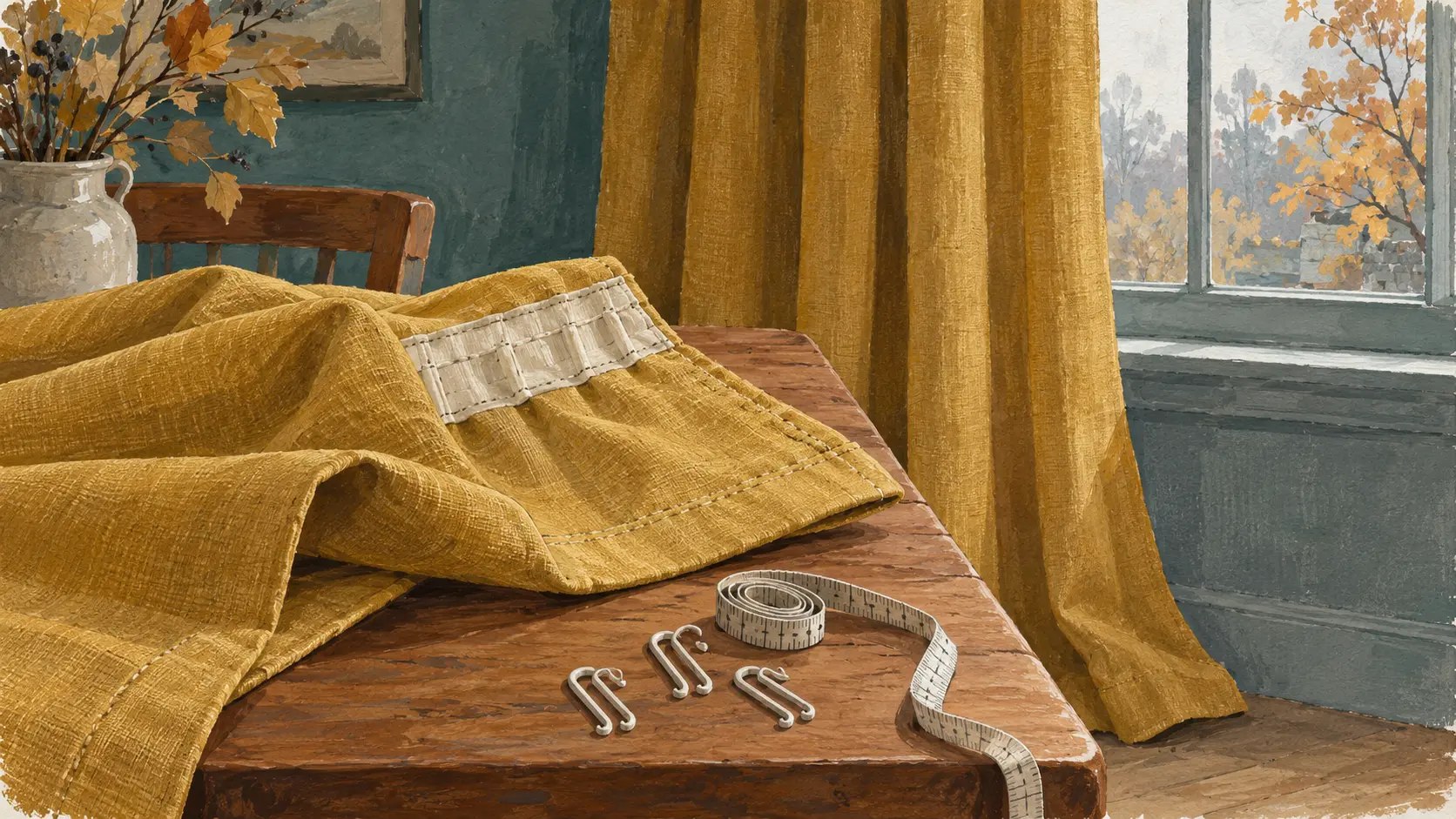
When autumn evenings bring the room into view from outside, a second-hand pair of curtains can seem a simple solution. Yet a photograph tells you little about the hanging length, the number of panels or their condition on the window-facing side. Before agreeing a price, work out whether this particular fabric will fit your existing arrangement.
Start with the hanging point
Measure from the point where the curtain will actually hang, not automatically from the ceiling or top of the window. Note the usable width of the track or pole and the intended lower edge. Check the path of opening windows and doors. Do not plan fabric across a heater or ventilation opening; follow the appliance's clearance instructions.
Take a photograph of your existing hooks, rings or gliders. It is easier to compare fittings than to describe a rail as “ordinary”. You need enough fabric for the intended folds as well as coverage: a fully stretched panel and a gathered panel do not cover the same width.
Ask for each panel's current measurements
Request the number of panels and the flat width and length of each, measured without pulling the fabric. Ask where the length starts: the upper fabric edge, eyelet or hook position. Compare both sides if the hem looks uneven. A label or original product page describes the new item, not necessarily the curtain after washing and shortening.
Ask whether the hem was cut, sewn or fixed with tape. An uncut fold may leave an alteration option, but do not promise yourself extra length until the allowance and condition are visible. Include a photo with the measuring tape rather than relying only on a remembered size.
Match the heading to your fittings
Inspect eyelets, tabs, hook pockets and heading tape close up. Look for torn stitching and stretched attachment points. Count the included hooks and agree whether rings or tiebacks are part of the sale. A seller's pole need not be included.
The IKEA VIDGA guide illustrates a track system using gliders and hooks. It is an example, not proof that any hook fits your rail. Check the actual system and curtain weight before buying accessories.
Look at both sides in daylight
Ask to see the panels opened out, including the window-facing surface, lining, lower corners and folds. Compare the pair for colour differences, faded strips, stains, small holes and damaged blackout backing. A folded photo can hide most of these areas. Do not rub or peel a coating to test it.
If privacy or darkening is essential, ask for a view with the fabric held against daylight, while recognising that photographs change exposure. They cannot guarantee the result in your room. Nor can they establish smell or whether a stain will come out.
Plan care before alterations
Read the sewn-in care label and ask how the curtains were last cleaned. IKEA's care guidance notes that shrinkage depends on the fabric and washing method. Do not apply one percentage or wash programme to every curtain.
If the label is missing, establish an appropriate cleaning method before committing, particularly for lined or coated fabric. Get an alteration or cleaning quote when needed; do not assume that washing will restore colour or remove persistent marks. Do not try chemicals on someone else's curtains.
Before you arrange collection
- The number of panels and their actual measurements are clear.
- The heading suits your existing fittings, or compatible replacements are confirmed.
- Both sides, hems and lining have been inspected.
- Care requirements and any remaining uncertainty are understood.
- Cleaning, alterations, accessories and collection are included in the budget.
For a Zeppik listing, these same details make a useful description: current dimensions, heading type, included pieces and honest close-ups of wear. Choose curtains that work in their present state, rather than relying on an unconfirmed transformation.