

















The autumn clock change is a useful reminder to notice clocks that lose time, make an irritating noise or are difficult to read. It is not a reason to replace a working clock. If you are buying second-hand, establish how the clock works and where it will hang before choosing a decorative face.
Start with the model and the room
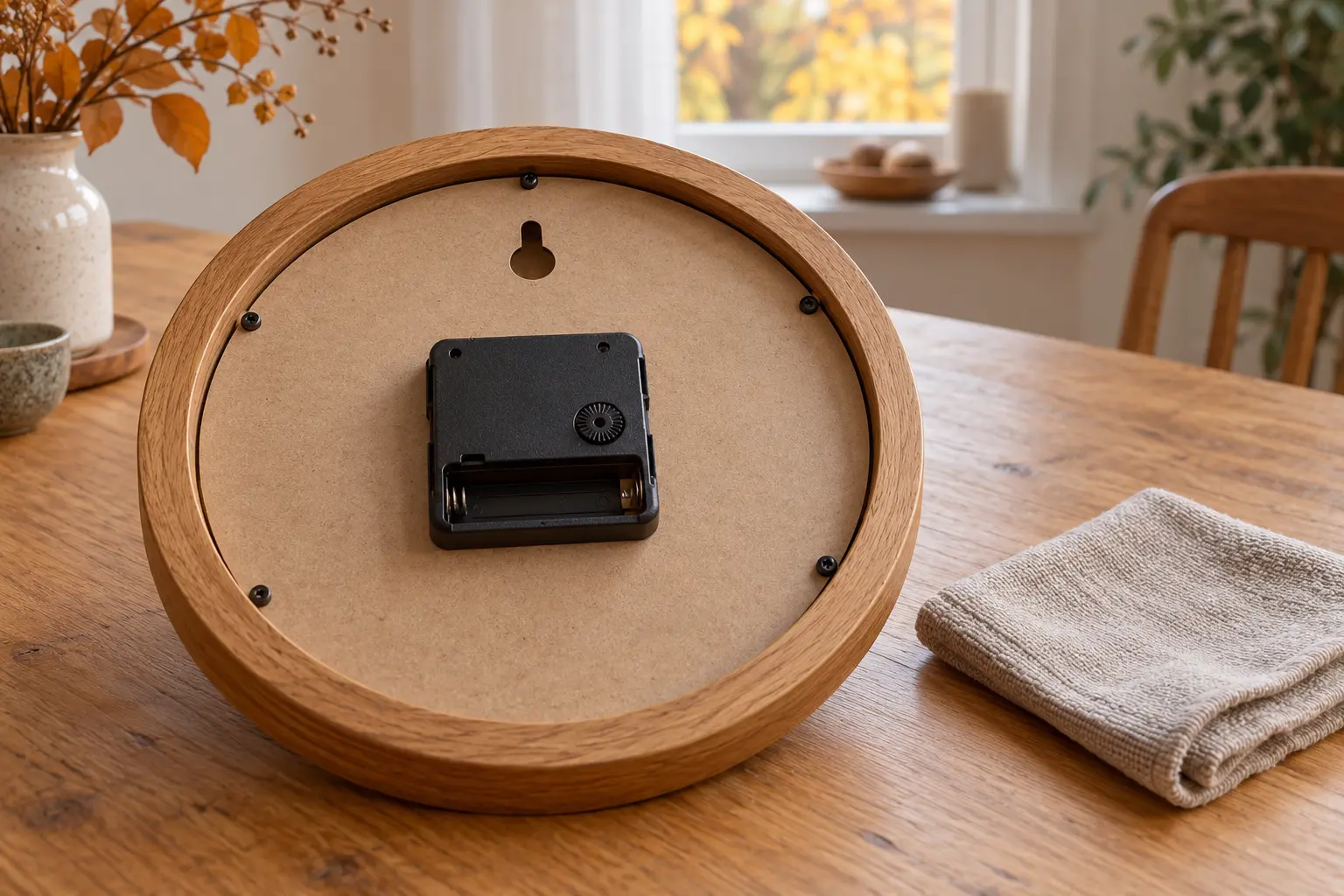
Ask for a photograph of the back, the model number, diameter, depth and weight. Compare the dimensions with the intended space. Check whether you can distinguish the hands from a normal viewing distance and whether the glass reflects your room lighting. For a bedroom, request a short sound recording made in a quiet room: a description saying silent is not a substitute for listening.
A moving hand is not a timekeeping test
Ask the seller to set the time and show the clock again later, for example the following day, beside the same reference clock. Ask about previous stopping and replacement movements. A few seconds of video show movement, not daily accuracy. Use the adjustment described in the manual; never force the hands. For a radio-controlled model, check the supported time signal, time zone and manual-setting option. Automatic correction depends on the model and reception.
Inspect the back as carefully as the front
Look at the case, glass, hanging point and battery compartment. White deposits, leakage marks, corroded contacts or a cracked hanger justify walking away or obtaining a repair estimate first. Starting with a fresh battery does not prove that a damaged clock is sound. Confirm the battery type against its marking and manual, rather than whatever the previous owner happened to fit. With a mechanical clock, also ask about its key, servicing history and a clockmaker’s likely fee.
Plan the mounting before bringing it home
The seller’s old hook may not suit your wall. Choose a fixing appropriate to the wall material and clock weight; ask a competent installer if unsure. Do not put an ordinary indoor model in a damp location without manufacturer approval. Remove batteries for prolonged storage as instructed, and protect the glass and hands during transport.
Before you buy
- Model, dimensions, weight and power supply are known.
- Timekeeping has been checked beyond a brief video.
- Sound and readability suit the room.
- The hanger and battery compartment have no suspicious damage.
- Mounting and possible repair costs are included.
For a listing, an honest account of observed time loss and a photograph of the back are more useful than a promise of perfect accuracy. Estonia returned to standard time on 25 October 2026; needing a manual adjustment does not make an older clock faulty.