

















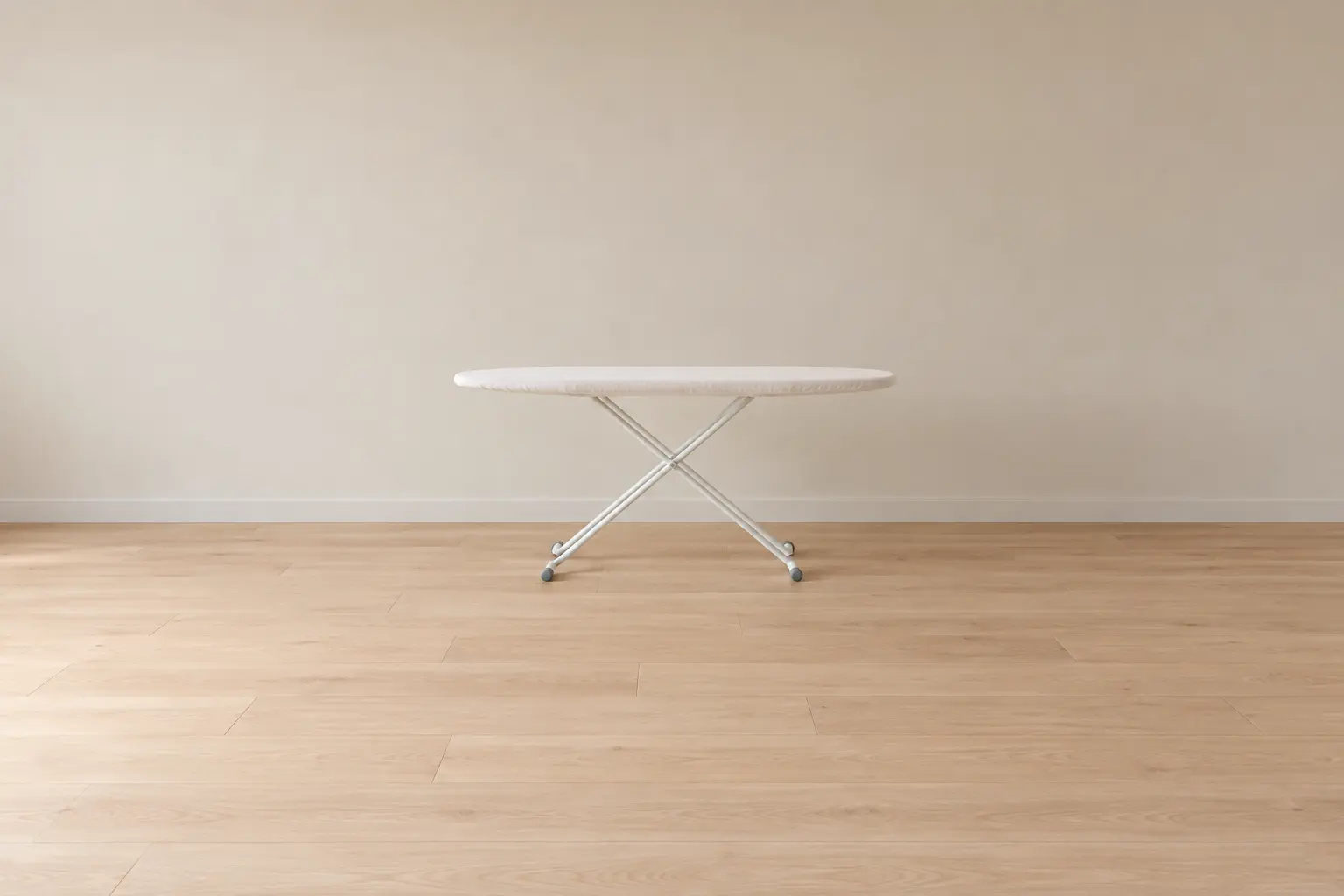
Autumn can be a good time to sort household textiles, but a fresh cover may conceal an ageing ironing board. Inspect a used board fully open, without an iron or added load, before deciding whether it fits your home.
Measure use and storage separately
Ask for the ironing surface dimensions, then the folded dimensions and total footprint including the iron rest. These are different measurements. Check that the board leaves a clear passage and fits its intended storage space.
Ask the owner to demonstrate the normal height adjustment and set it at a comfortable level. Height range and nose shape vary: boards of similar length are not necessarily equivalent.
Check feet and locks
On a firm, level floor, check the feet, protective caps and tubes for obvious damage or bending. Do not cure wobbling with improvised pads or test the board with your body weight. Keep children and pets away while folding.
Have the seller show how working height locks and how the board folds according to its instructions. A lock against accidental collapse and a transport lock serve different purposes, as Brabantia descriptions illustrate. Do not assume every brand has both. A faulty mechanism is not merely cosmetic.
Look beneath the cover with permission
Inspect the accessible underside and lift the cover only with the owner’s permission. Look for deformation, corrosion, sharp exposed areas and signs of damp. Padding matters as well as the top fabric.
Distinguish stains and scorch marks from frame damage. Before buying, check the shape, size and fastening of a suitable replacement cover. Do not assume the old one can be washed: follow its label and instructions. Fresh fabric does not repair a damaged base.
An iron rest is not universal
If you need a rest for an iron or steam generator, verify the intended use, dimensions and restrictions of that particular model. Manufacturer specifications may define compatibility separately. Do not put a heavy appliance on an unknown rest as a test.
An ordinary inspection needs no hot or switched-on iron. Add the price of a cover and missing feet to the board’s cost. If the locking mechanism is doubtful, choose another board rather than planning a homemade lock repair.
Quick checklist
- Working and folded dimensions fit.
- The required height locks normally.
- Feet, caps and base are intact.
- Cover and padding have been assessed separately.
- Rest suitability and replacement-cover cost are known.
Useful listing photographs show the open board, underside, locks and folded position. These reveal far more about condition than the fabric pattern alone.