















Buying a used rug for autumn: size, condition and cleaning costs
If you are rearranging your living room or home office for autumn, a used rug can be a practical choice. A good purchase starts with the floor plan and care requirements, not just the pattern. Before meeting a seller, establish the size you need, what you can inspect and how much you can spend on cleaning.
1. Measure the space before comparing listings
Measure the available floor area and mark the intended rug outline with loose strips of paper. Open doors, pull a chair away from the table and check where furniture legs will sit. Consider whether an edge falls across a busy walkway or prevents a cupboard door from opening. Do not choose solely by the room’s total floor area.
Ask for the rug’s current length and width, not just the size printed on its label. Clarify whether fringes are included. For a round rug, request the diameter; for an irregular shape, ask for the maximum dimensions and an overall photograph. Thickness matters too: check clearance beneath doors.
2. Request clear photographs of the label and backing
Look for the maker, model, fibre composition and care instructions. Appearance alone cannot reliably identify every material or a suitable cleaning method. If the label is missing, treat the material description as the seller’s account rather than a verified fact. You can ask for an original purchase document with personal information removed.
For a multi-part rug system, clarify exactly which parts are included. Ask separately about the pad’s dimensions and condition. Any underlay you need must suit both the rug and your floor; check their manufacturers’ guidance before buying it.
3. Inspect both sides
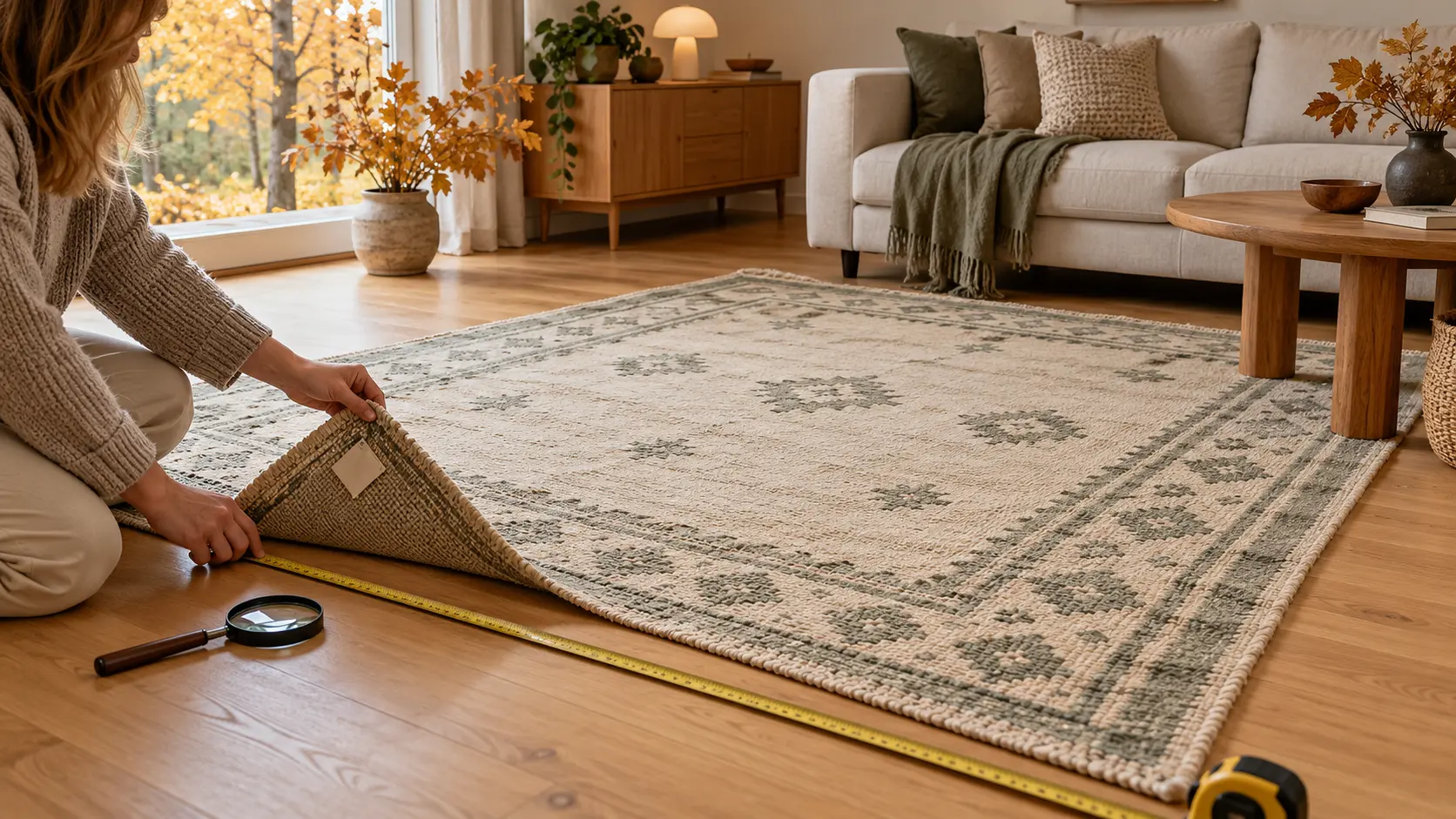
Ask to have the rug laid out fully at the meeting. In daylight, examine the centre, edges, corners and fringes, then turn the whole rug over if possible. Look for worn-thin areas, loose stitching, holes, stains and deteriorating backing. An overall photograph should be accompanied by close-ups of faults.
Ask how the rug was used and stored, whether it has been repaired, and when and how it was last cleaned. Note any strong smell or dampness you notice in person. Do not assume an old stain or unwanted smell will definitely come out. If the condition or possible cleaning result leaves you uncomfortable with the uncertainty, pass on the purchase.
4. Plan cleaning before agreeing a price
There is no single washing recipe for used rugs. For example, IKEA’s LOHALS care instructions prohibit washing. Ruggable also states that not all its rugs are machine washable. Check the exact model and its instructions, not just the brand or the word “washable” in a listing.
Armadillo recommends occasional professional cleaning for its rugs. If you are considering a cleaning service, send label photographs, measurements and pictures of defects before buying. Ask for a quote, transport arrangements and any uncertainty about the achievable result. Do not test water or cleaning products on the seller’s rug without permission.
5. Plan transport and the total cost
Add necessary cleaning, a suitable underlay, transport and known repairs to the purchase price. Compare that total with alternatives of similar size and condition. A low price does not compensate for a rug that will not fit or care that exceeds your budget.
Before collection, ask for the packed dimensions and follow the manufacturer’s rolling or folding instructions. Measure the car boot and the narrowest access point at home. Use a clean surface for transport and do not leave a damp rug tightly packed for a prolonged period. Arrange lifting help in advance for a large item.
Before the transaction
- Current dimensions, fringe length and thickness are known.
- The label and both sides have been checked.
- Faults and previous cleaning have been discussed.
- The care method and total cost work for you.
- Included parts and collection are agreed.
As a seller, include these details in the listing. Show the whole rug and disclose faults without hiding them through photo editing. Specific information helps a buyer decide whether it suits their home before travelling to view it.