


















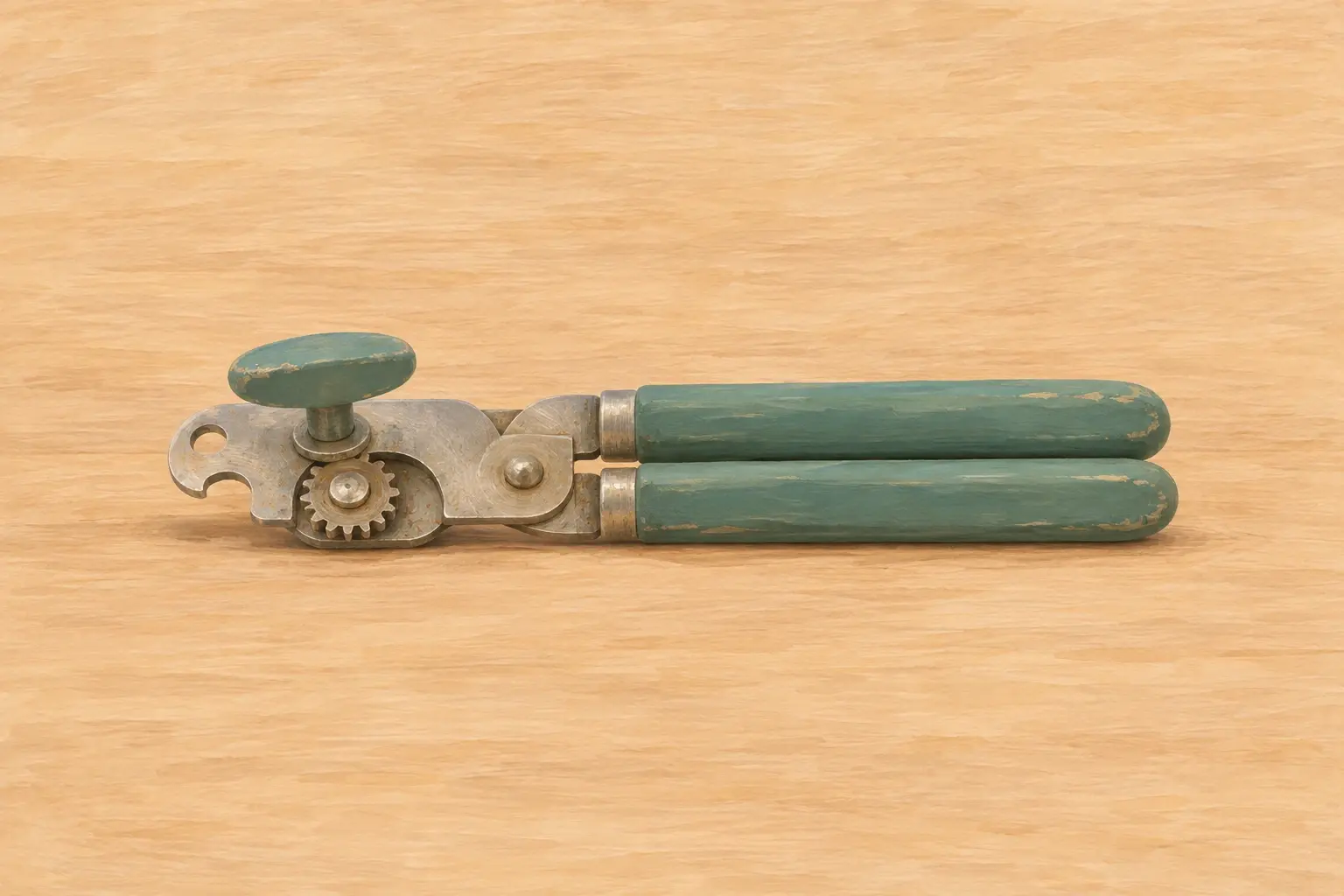
A manual can opener is a small purchase, but a missing control or damaged cutting head can make a bargain difficult to use. Start by identifying the actual mechanism rather than judging it by the size of the handles. Our editorial checklist focuses on observation and ordinary handling. It does not require a cutting test at collection and cannot certify that a used opener is safe or effective.
Identify the model and its controls
The OXO Locking Can Opener includes a locking mechanism. The Zyliss Lock & Lift includes a magnetic lid lifter. These are examples of particular models, not features of every manual opener. Ask for the exact name or a clear photograph of any product marking. Use the matching instructions to understand how the opener attaches and releases before moving unfamiliar controls.
Look at the working head from both sides
Request close photographs of the cutting area, feed wheel, turning knob and connection to the handles. Check whether the photograph shows the entire head, not just its polished outer cover. Look for visible corrosion, chipped surfaces, bent parts and food deposits. Do not run a fingertip along a cutting edge or put fingers between wheels to assess sharpness. A clear visual defect is more useful information than a claim that the tool feels sharp.
Separate wear from missing function
A scuffed handle and a loose turning knob raise different questions. Ask whether the knob slips, the handles spread unexpectedly or a release control sticks during normal use. If the model has removable parts, compare the included pieces with its instructions. Do not assume that a magnet or a spare screw can be fitted from another opener. Establish the exact replacement and its availability before calculating a repair budget.
Try the grip without creating a cutting task
With the seller's agreement, hold the empty, visibly undamaged opener by its intended handles. Keep your other hand away from the head. Follow the instructions for any permitted unloaded movement and stop if something jams. Consider whether you can reach the knob and release comfortably. Free movement without a can does not prove that the tool grips or cuts correctly under load. There is no need to improvise a test using loose lids, thin scrap metal or a knife.
Ask what has actually been demonstrated
A seller's recent account of normal use provides context, but it is not your own inspection. If they supply a video, check that it shows the same item and an uninterrupted ordinary operation. Do not ask for force, repeated stress tests or handling of cut edges. If cutting performance remains unknown, record it as untested. A photograph of an already opened can cannot establish which opener did the work.
Plan cleaning and an honest handover
Check the model's care instructions rather than assuming that metal construction permits machine washing or soaking. Avoid sharpening, oiling or dismantling an unfamiliar head as a quick sales fix. Photograph the complete item and any defects, and list the controls checked. Describe a visual inspection as exactly that. An unresolved problem with the cutting head is a reason to reconsider the purchase, not something to hide behind the phrase “normal signs of use”.