


















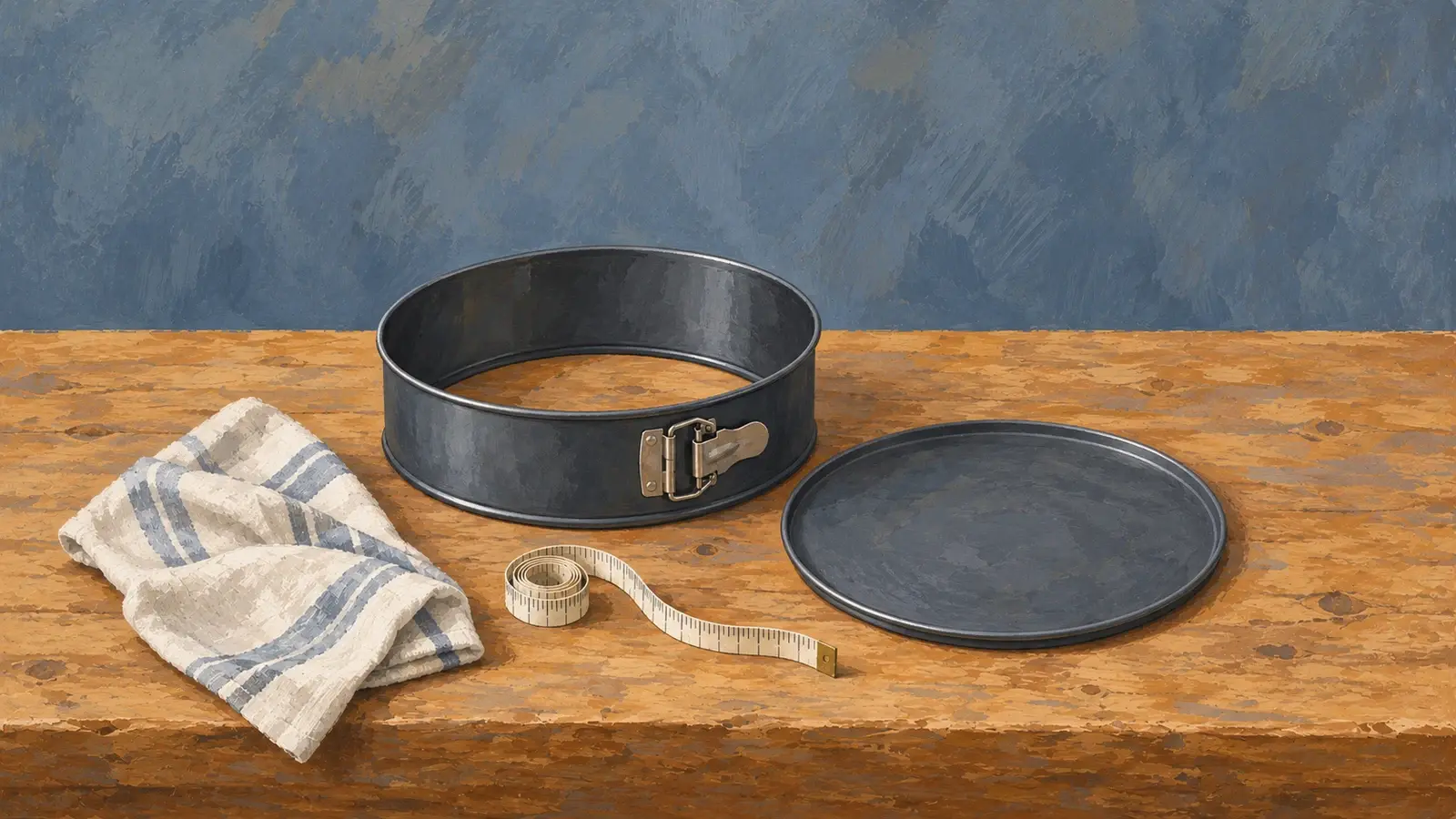
Among a stack of baking tins, the same diameter can easily be mistaken for compatibility. A separate base and side ring still need checking together. If you are buying a used springform tin for autumn baking, start with the recipe and the complete set. A photograph of a finished cake reveals neither the base fit nor the latch's condition.
Decide what you need it for
Open the recipe you intend to use and note its specified tin size and type. Do not treat every round tin as a direct replacement: suitability for the recipe and the condition of the purchase are separate questions. Establish an unusual size before arranging a meeting. Otherwise, you may buy a tidy item with no clear use simply because its colour matches your other bakeware.
Ask to see both parts
Request photographs of the ring and base separately, then the assembled tin from inside and outside. Identify the manufacturer and model if markings remain. Ask whether the parts were originally supplied together or paired later. Matching numbers on two pieces do not replace a fit check. If the pairing's history is unknown, record that uncertainty rather than hiding it behind the word “standard”.
Record the useful measurements
Ask for the internal diameter and height, plus the external dimensions including the projecting latch for storage and positioning. State where the tape was placed. This matters particularly when the seller measured the loose base: its outer rim and the working space inside the tin answer different questions. Compare the measurements with your shelf and oven space, while following the appliance and tin instructions for placement.
Inspect the connection without force
With the tin empty and cold, ask to see the base fitted and the latch closed normally according to the instructions. Look for an uneven base, visible gaps, a distorted ring or damaged fastening. Do not bend metal to make a demonstration work. If the latch holds only after an unusual movement or heavy pressure, record a problem rather than describing a quirk the buyer should learn to accommodate.
A closed latch is not a watertight guarantee
Wilton warns that thin cake batter can leak even with foil.
Do not call an unknown used tin leakproof because it looks sound. Checking the latch addresses the mechanism; suitability for a particular recipe or water bath requires separate manufacturer guidance. Do not promise a baking result that has not actually been checked.
Establish condition and care
Show the interior and joint close up. Scratches, peeling coating, corrosion and distortion should not be hidden beneath a paper liner.
For its 9-inch Springform Pan, Nordic Ware specifies handwashing and excludes metal utensils and abrasives.
That does not make the same routine appropriate for every tin. Find the instructions for the actual item, including permitted oven use. Do not borrow a temperature limit from a similar-looking product.
A short pre-purchase check
- The recipe, dimensions and tin type match the plan.
- Base and ring are shown separately and assembled.
- The latch operates normally, without forced adjustment.
- Coating and connections are visible.
- Care is understood and leakproofness has not been invented.
Keep the matching parts together during handover so the base is not lost. If the fit remains doubtful, continue looking for a complete set rather than expecting the first cake to settle the question.