


















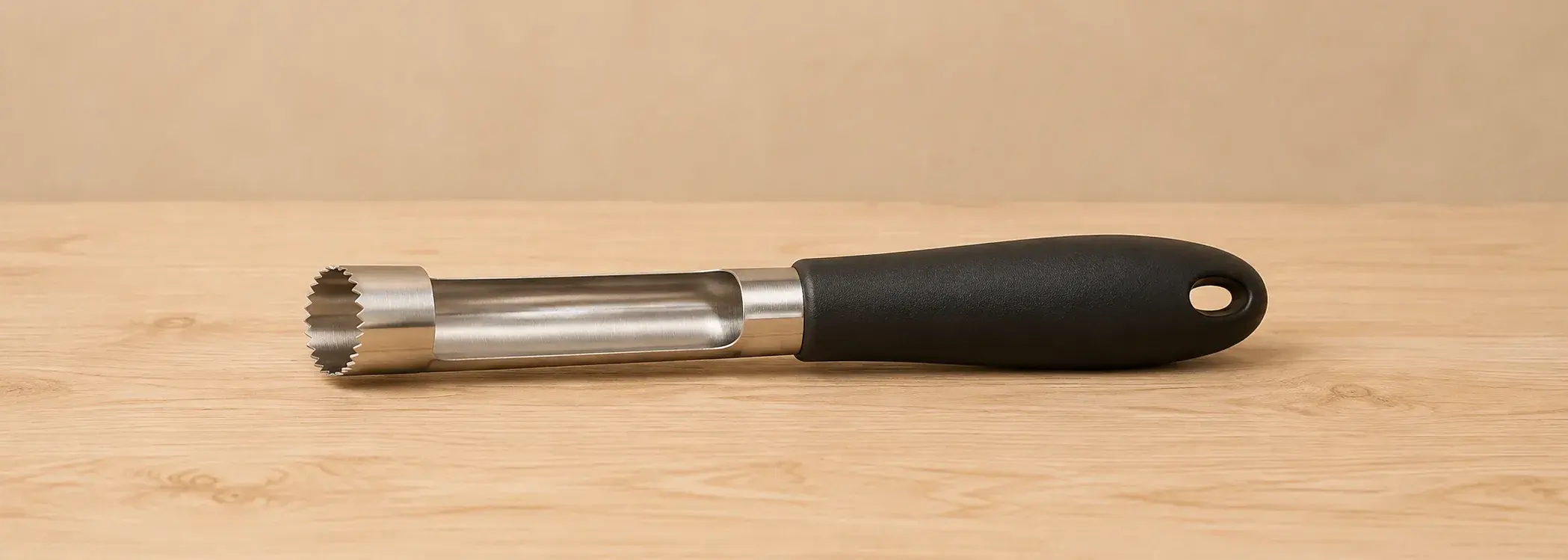
A manual apple corer removes a narrow section rather than dividing the whole fruit into wedges. When buying one second-hand, check that the listing shows this tubular tool, not a circular apple divider. They do different jobs and take up different space in a drawer. A clear photograph of the working end matters more than an attractive picture of prepared apples.
Ask what the measurement describes
Request the working tube's diameter and usable length, plus the overall length for storage. Ask whether the diameter is measured across the outside or the opening. These are not interchangeable measurements, and the width of a broad handle is not the cutting diameter. A ruler placed beside the tool can clarify its scale without anyone touching the edge.
Think about the apples you usually prepare and the amount you want to remove. There is no single tube diameter that guarantees a perfect result with every fruit. Do not infer the cutting size from a manufacturer's overall product dimensions. If the seller cannot measure the working part clearly, ask for another view rather than filling the gap with an estimate.
Inspect the edge without feeling it
Ask for close photographs of the circular edge, the tube's side and its connection to the handle. Look for a bent mouth, missing sections, cracks or a tube that is no longer straight. Keep fingers away from the cutting end; sharpness should not be tested by touch. Photographs can show damage but cannot establish how well the tool will cut.
Check the handle for cracks and its joint for obvious movement during ordinary gentle handling. A comfortable-looking grip does not compensate for a loose connection. Skip a damaged example rather than planning to straighten the tube, sharpen an unfamiliar edge or apply extra force during use. An inspection need not include a cutting trial.
Check how the inside is cleaned
Look through the accessible opening and ask how food is removed according to the model's instructions. Do not push a finger into the tube or improvise a pointed tool to clear it. If food-contact surfaces cannot be inspected or cleaned properly, resolve that question before buying.
OXO and Brabantia describe the cited stainless steel corers as dishwasher safe. This applies to those models, not every similar-looking utensil. Identify your own model and follow its care instructions before first use. Dry it and store the cutting end so it will not be encountered unexpectedly when reaching into a drawer.
For a useful listing, show the whole tool and the working end separately. State actual measurements, visible wear and whether any trial was performed. Avoid promises about all apple varieties: an intact, identifiable tool with clear cleaning access is the more practical purchase.