

















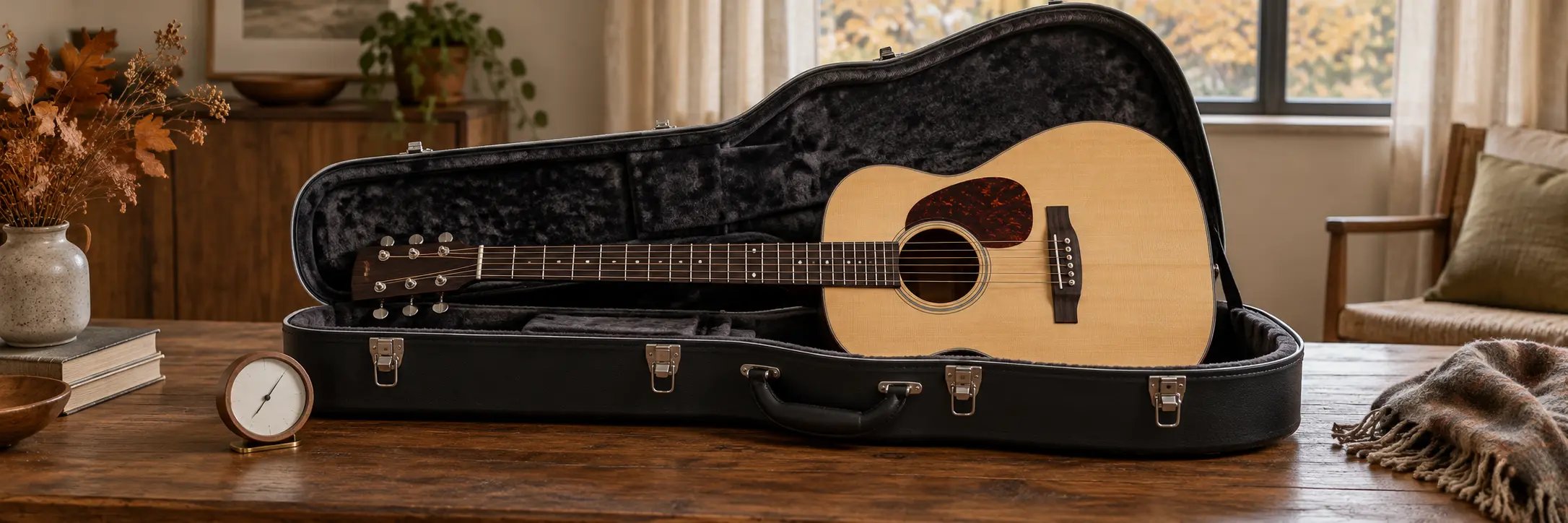
When heating comes on, an acoustic guitar deserves a small change of routine. A room that feels comfortable does not tell you the humidity around the instrument. Nor does an autumn date prove that every Estonian home is dry. Start with a measurement and the instructions for your guitar, not an automatic purchase of a humidifier.
1. Find the recommendation for your instrument
Identify the maker and model, then look for its storage guidance. As one example, Taylor recommends 45–55% relative humidity for acoustic guitars and describes 40–60% as generally acceptable. These are Taylor’s guidelines, not a substitute for another manufacturer’s instructions. Write the relevant range beside your readings so that a number has a useful context.
2. Measure where the guitar rests
A hygrometer belongs near the instrument. Taylor advises placing it in the main compartment beside the guitar, not inside the closed accessories compartment. Make a simple note of the date, location and reading. If you move it between the room and the case, record that too: otherwise you may compare different environments as if nothing changed.
3. Make storage part of the routine
Keep the guitar in its case when it is not being played. A case slows changes in exposure; it does not guarantee the right humidity by itself. Choose a practical place where putting the instrument away is easy, rather than leaving the case inaccessible behind other belongings. Check the reading again as household heating habits change.
4. Add moisture only when it is needed
If the measured conditions call for a guitar humidifier, follow its instructions and those of the instrument maker. More moisture is not automatically better. Taylor notes that replenishment depends on conditions, so do not copy a fixed refill schedule from someone else’s home. Keep a short record of changes instead of making several adjustments at once.
A useful check before buying used
Ask how and where the guitar was stored, whether the seller measured humidity and whether the case is included. Request clear photographs and try the instrument if possible. Buzzing alone is not a humidity diagnosis. If you notice cracks, deformation or an unexplained change in playability, ask a qualified guitar repairer before attempting repairs. The aim is a documented care routine, not a home diagnosis or a promised cure.
Sources
Taylor Guitars: Using A Guitar Humidifier And Other Guitar Humidity Tips; Taylor Guitars: Symptoms of a Dry Guitar.