

















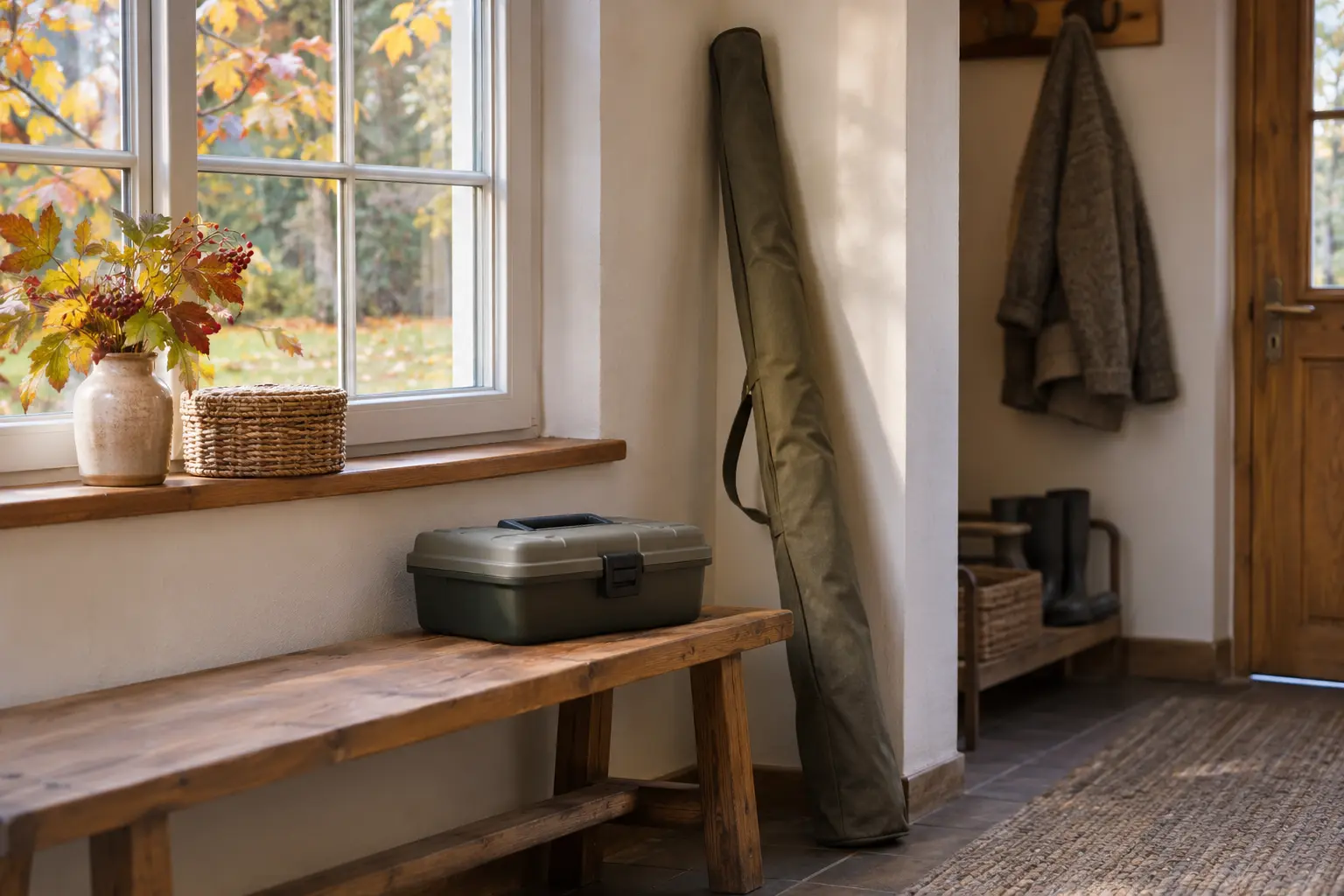
A rod advertised as “ideal for beginners” tells you nothing about the permission needed to use it. In Estonia, the answer depends on the actual gear, the water and the planned time. Before buying a second-hand set or choosing a first outing, describe that combination. A seller’s old permit, somebody else’s experience or a general claim that fishing is free cannot settle it.
Start with a place, not a shopping basket
Write down the water’s name, the intended stretch or shore, the date and the method. Check whether the water is public or designated for public use; Keskkonnaamet directs readers to Keskkonnaportaal for this information. A privately owned water not designated for public use requires the owner’s permission for simple angling. Separately check access and protected-area movement rules. Permission to fish is not permission to drive or walk anywhere you choose.
One simple rod has a precise meaning
Free angling without registering a fishing right is generally available with one lihtkäsiõng on public or publicly used waters, subject to restrictions. This is not every inexpensive rod. The official definition includes a rod, line no longer than one and a half rod lengths, a single-point hook, weight and float, with natural bait only. There must be no reel or winder for retrieving the line. Check the actual setup, not just the listing’s name.
The free route still does not override closed seasons, prohibited places, species restrictions or a location where kalastuskaart is required. If the proposed set has a reel, do not treat it as a free simple rod because it is small or sold as children’s equipment. First identify which fishing method it actually supports.
The ordinary recreational right is a different route
For other recreational gear, such as spinning equipment, check harrastuspüügiõigus. This is ordinarily a paid right, but official exemptions exist. Check eligibility and required evidence directly rather than assuming that age or a foreign document automatically settles it. An exemption from this fee does not remove a requirement for kalastuskaart. Choose the appropriate period in the official service and verify the right is valid for the person who will fish.
Kalastuskaart is not simply an upgrade
Certain gear and places require the separate fishing card, kalastuskaart. Official examples include particular nets and traps, some salmonid rivers and specified protected waters. Check your exact combination rather than buying the ordinary right “just in case”. Keskkonnaamet states that obtaining kalastuskaart does not require prior payment of the ordinary recreational-right fee. Availability and conditions must still match the water, method and period; owning suitable equipment does not guarantee a card will be available.
Verify before departure and remember the report
Use kalaluba.ee to check the issued card’s validity and keep the appropriate identity document available. Read the current restrictions for the specific trip again before leaving. A payment attempt or an old screenshot is not a substitute for confirming the right and its dates. If anything is unclear, ask Keskkonnaamet with the water, method and planned dates before fishing.
Fishing under kalastuskaart also brings a reporting obligation, including when you did not go or caught nothing. Check the reporting schedule for your card and make a reminder; do not assume one universal deadline for every duration. Only after these checks should you decide which gear to buy. This is a preparation checklist, not permission for a particular fishing trip or a complete guide to catch limits.