
















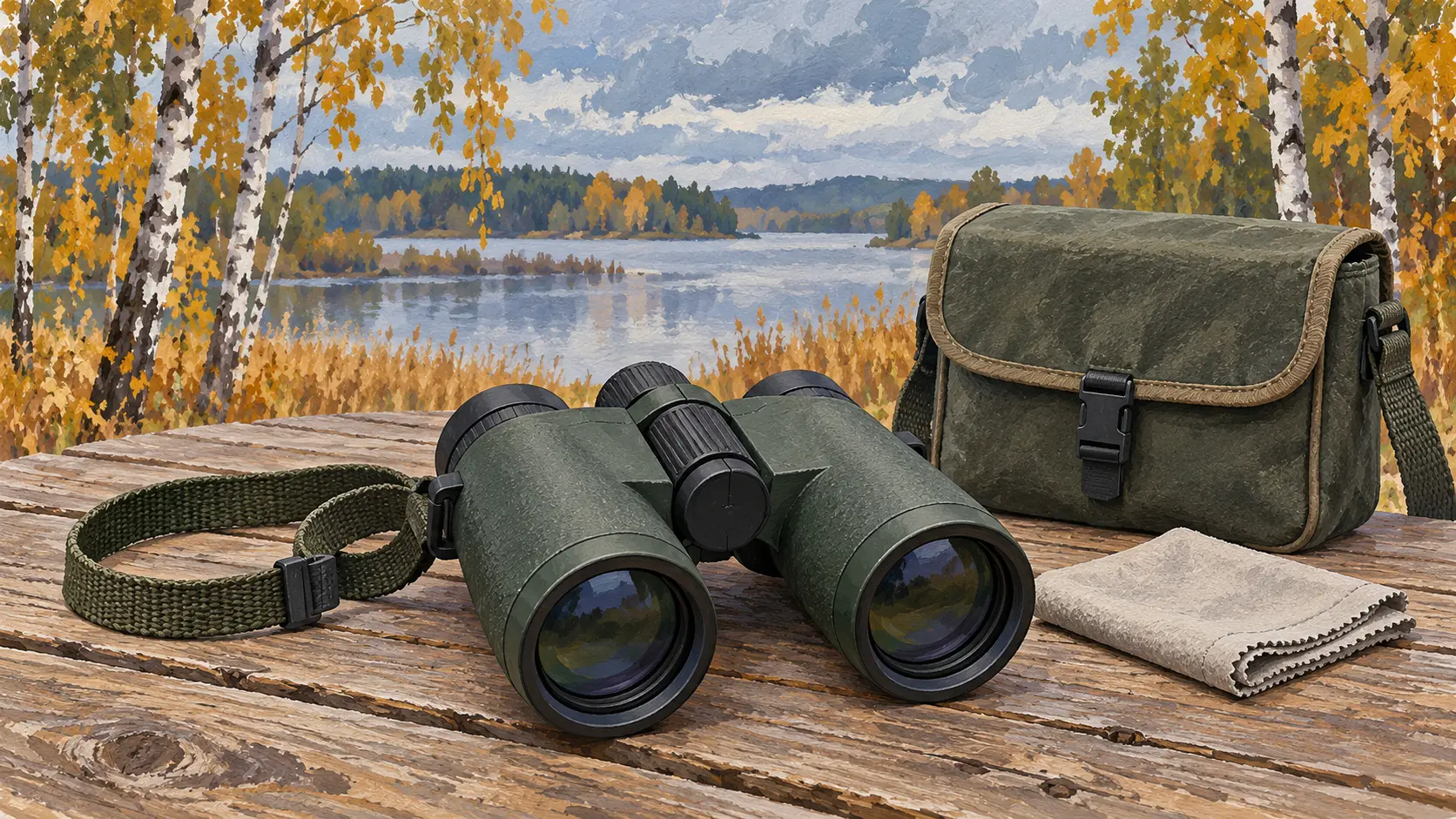
A quiet lakeside walk can become more interesting when you can inspect a distant bird without moving closer. For autumn outings, used binoculars may be worth considering, but the numbers on the casing and a recognisable name are only a starting point. The useful question is whether this particular pair gives you a comfortable, clear view and is in a condition you understand.
Choose for the walk you actually take
Think about how far you carry your bag, whether you wear glasses and how often you stop to watch. A smaller pair that you bring along can be more useful than a heavy pair left at home. Arrange to handle the binoculars yourself instead of judging grip and weight from a photograph.
Nikon explains the 8×42 marking: 8 is magnification, and 42 is the objective-lens diameter in millimetres. These figures do not tell you whether used lenses are scratched, the focusing mechanism is worn or the eyecups suit you.
Ask for identification and history
Request the complete model name, photographs of both front lenses and eyepieces, and close-ups of any damage. Ask whether the binoculars have been dropped, repaired or stored somewhere damp. A missing case is a straightforward cost question; an unexplained impact or internal haze is a different kind of uncertainty.
Look for the instructions before meeting. Confirm which adjustments this model has and whether replacement eyecups, caps or straps are available. If a warranty is mentioned, ask for the actual terms and documents rather than assuming it follows the binoculars to a new owner.
Inspect gently in ordinary light
Check the hinge, focus wheel, eyecups, strap attachment points and rubber covering without forcing anything. Look across each lens from several angles in diffuse daylight. Record scratches, patches or cloudiness honestly; do not rub an unfamiliar mark with a sleeve to see whether it disappears.
Nikon's care guidance says internal fogging in a waterproof model needs professional attention; never look at the sun through binoculars. Do not use a water test to verify a seller's waterproof claim. Ask for the model specification, while recognising that it does not establish the current seals' condition.
Set them up for your own eyes
Bring the glasses you normally use outdoors. Adjust the distance between the barrels and the eyecups according to the manual, then try a stationary, safely positioned distant subject. A branch or sign is easier for comparison than a moving bird. Do not aim toward the sun, even briefly.
Celestron explains that dioptre compensation matches the binoculars to differences between your eyes. Follow the model's procedure rather than immediately treating a blurry side as damage. After adjustment, compare each barrel and then the combined view.
Try focusing on subjects at different useful distances. Check whether the wheel moves predictably and holds its setting. If the view remains doubled, one side will not focus or using the binoculars feels uncomfortable, stop the test. Do not accept a promise that you can easily align the optics at home; request a service assessment or decline.
Compare a complete, usable set
Add the cost of confirmed missing accessories, transport and any quoted servicing to the asking price. Do not assign a tiny repair allowance to an unknown optical problem. Compare another pair in the same session if possible, using the same subject and your own normal adjustments.
For a Zeppik listing, describe the model, included items and known wear, with clear photographs. Distinguish a verified specification from your impression. Avoid claims such as perfect optics if you have not established what that means or have noticed a fault.
Your meeting checklist
- Exact model and instructions identified.
- Lens surfaces, hinge, eyecups and strap points inspected.
- Fit checked with your usual glasses.
- Focus and dioptre adjusted using the correct instructions.
- Both barrels and the combined view tried outdoors.
- Missing items and unresolved service costs considered.
On the first walk, stay still while looking through the binoculars and give wildlife space. A satisfactory purchase is a pair you can use comfortably, not simply the strongest magnification at the lowest price.