

















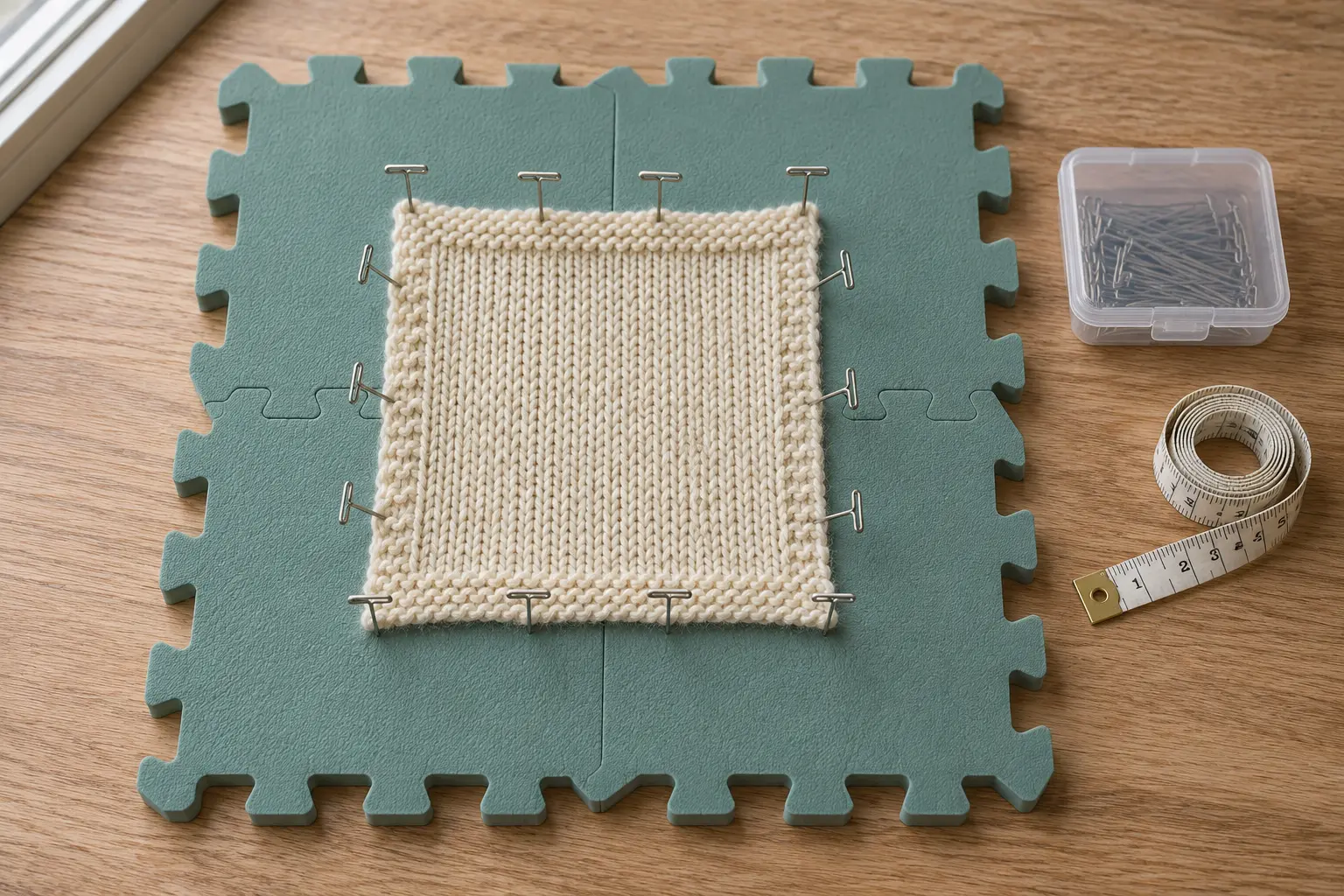
Plan the shape before counting tiles
A long scarf might need a row; a shawl may need a wider layout. Sketch your project dimensions and ask the seller to assemble a similar shape. Measure the assembled work area with room for pins outside the project edges. KnitPro describes interlocking mats that can be arranged to suit different shapes. That does not make equally sized tiles from different kits interchangeable.
Check the joins, not just the individual mats
Join adjacent tiles on a level table or floor. Bridge a seam with a ruler to spot a step between the tiles. Look for gaps, crushed tabs, mismatched thickness and edges that pull apart during normal handling. If your work crosses several seams, those joins matter more than a high piece count.
Test how the foam grips a pin
With permission, try one clean suitable pin in the centre of a tile and then near a join, not in the seam itself. Check whether the pin wobbles or the foam crumbles when you withdraw it. Use a spare swatch, not a finished project. Unlike a wooden board with fixed holes, foam takes pins where your project outline needs them.