









Buying a used board game: check the contents, language and edition
A familiar box and a low price can make a used board game tempting for an autumn evening. First, establish whether the contents of that particular box will work for your group. You do not need to play a whole trial game: start with the correct rulebook, some table space and a few precise questions.
1. Identify the exact box
Ask for photographs of the front, back and product code. Note the title, publisher, language and edition. Similar-looking boxes may contain a base game, an expansion or a travel version. For example, Asmodee identifies its sixth-edition CATAN 5–6 player expansion as compatible with the sixth-edition base game.
If you are buying an expansion, compare its requirements with the box you already own. Do not establish compatibility by name alone. Think about your usual number of players and whether the recommended age and playing time fit your evenings.
2. Count against the right rulebook
Find the official rules for the same product code and edition. A Hasbro product page, for instance, lists the contents and instructions for a particular Travel Monopoly model. Another version's list cannot confirm your box is complete.
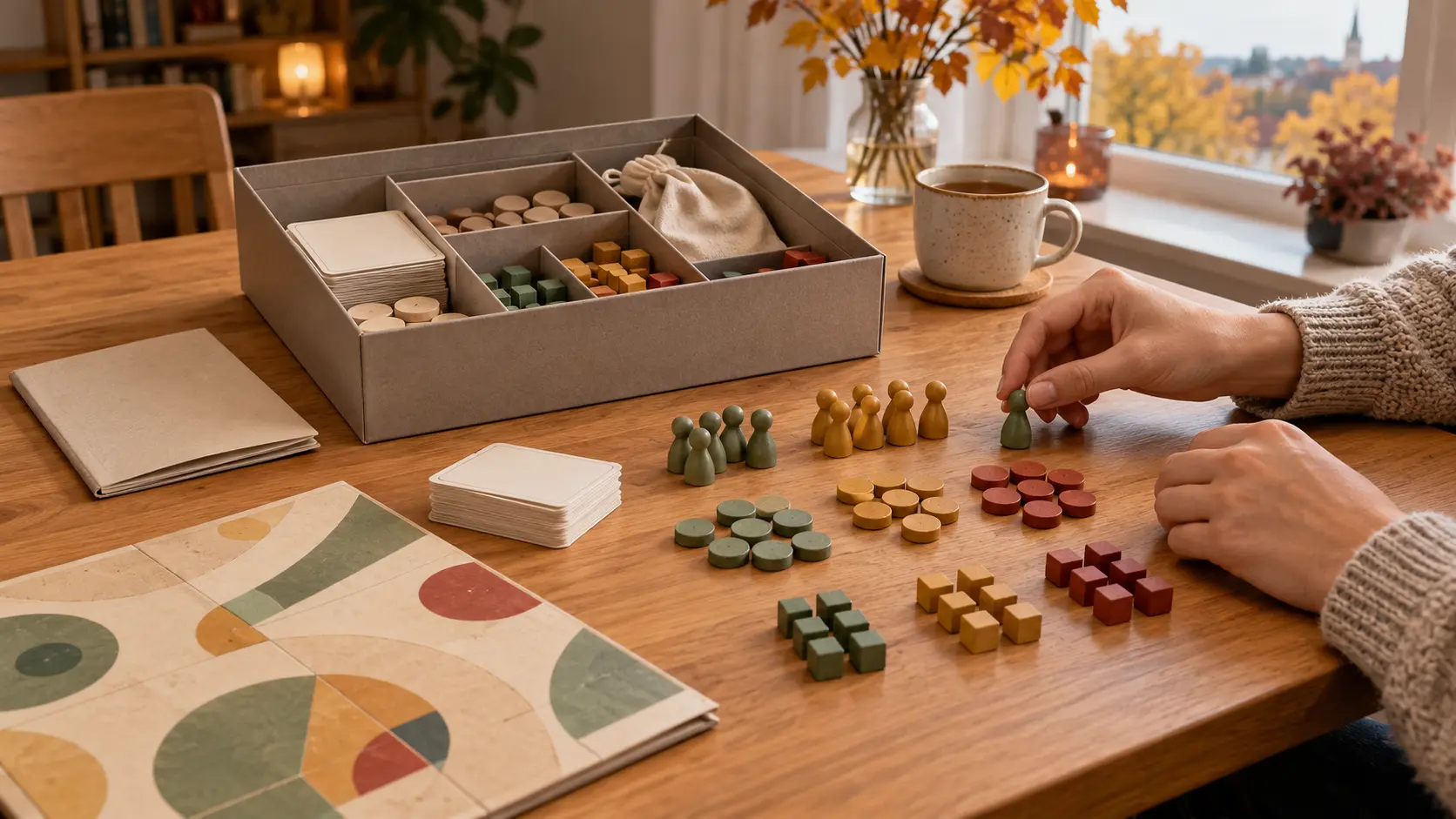
Ask the seller to arrange tokens, cards and tiles in separate groups and record the number in each. Compare them with the list line by line. Include small special pieces, score sheets and player aids. “Everything seems to be there” does not mean somebody has counted it. If no check has been made, the listing should say so.
3. Check the language on the cards
Games in several languages circulate in Estonia. A familiar title on the box does not reveal the language of its questions or tasks. Request a close-up of an ordinary card and the rulebook cover, without exposing story-game solutions. If players need to read quickly, consider everybody's language skills. Translated rules alone do not translate a deck of cards.
4. Separate box wear from playability
A crushed box corner may be acceptable; an unreadable card or missing special tile may disrupt play. Unfold the board and examine its joints and the card edges. Ask about moisture damage, sticky surfaces, smoke and other strong smells. A replacement card with an obviously different back may reveal hidden information.
For campaign or single-use games, ask whether cards have been written on, envelopes opened, stickers used or components altered. A full box does not necessarily mean you can start the experience again.
5. Do not assume spare parts are available
Ravensburger requests a game's name, barcode and an image identifying the missing part in its instructions when handling parts enquiries. Before buying, ask the manufacturer about that exact part and shipping to Estonia. Add any cost to the purchase price; do not assume replacements are free or interchangeable between editions.
Before you pay
- You have identified the game, edition and language.
- You know whether another box is required.
- Components have been checked against the correct contents list.
- Defects and used single-use materials are recorded.
- The agreed price covers the specifically listed contents.
As a seller, bag counted components in groups and include an overview photograph and an honest list of faults. As a buyer, compare the same edition on Zeppik rather than matching titles alone. A checked set that suits your group is a more practical purchase than a cheap box whose missing contents you must track down later.