

















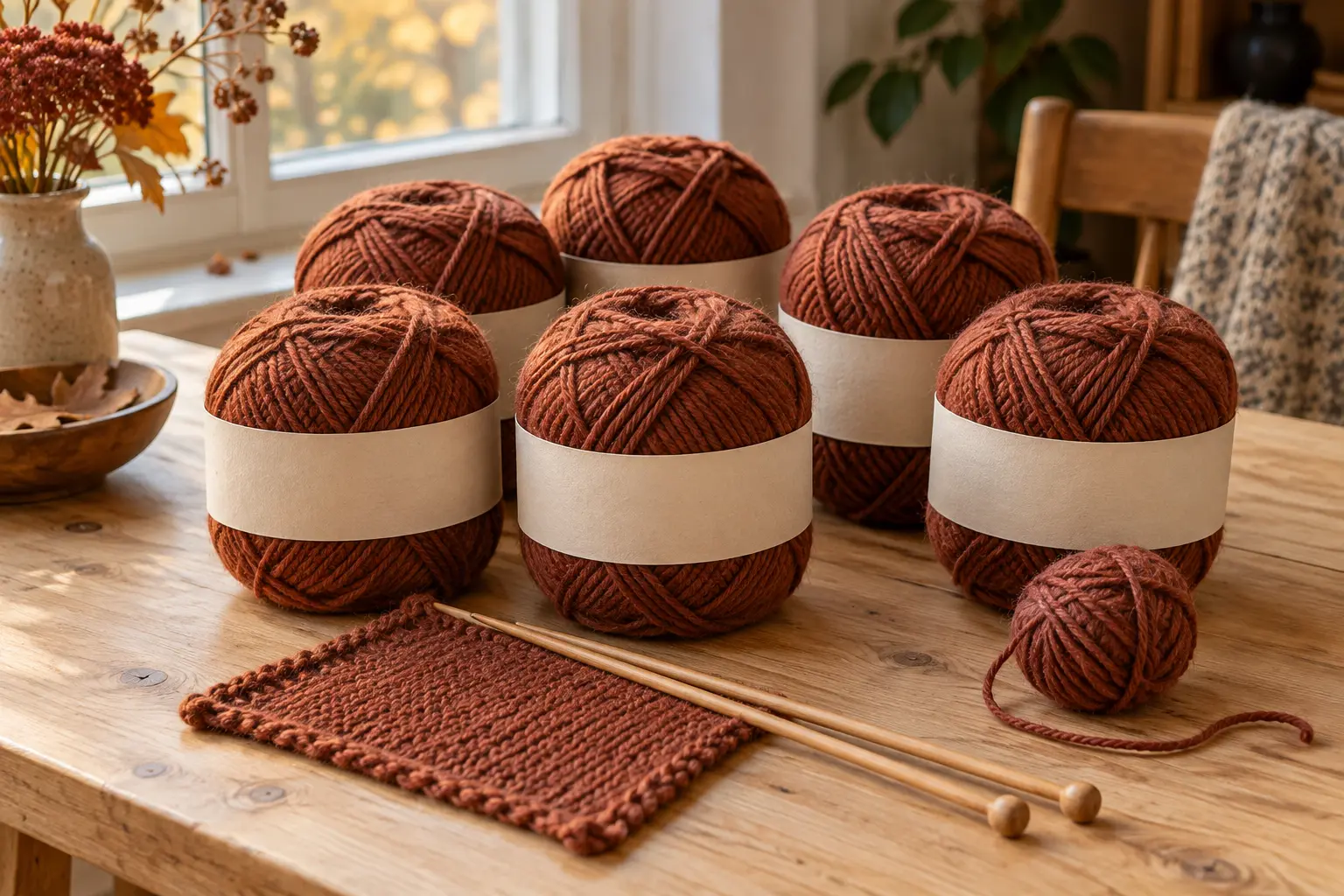
Long autumn evenings invite knitting, and someone else’s unused stash can become a new project. Yet a bag of similarly coloured yarn may contain different products. Start with your chosen pattern and photographs of the labels, rather than relying on an attractive picture.
Identify the actual yarn
Ask for the manufacturer, product range, fibre percentages, ball weight and length. “Wool” in a listing does not explain a blend. Similar-looking yarns may need different care and produce different fabric.
Compare the details with the manufacturer’s information. Without labels, composition and length remain unverified. Softness alone cannot identify an anonymous ball.
Separate colour from dye lot
A colour number identifies the shade; a dye-lot number identifies a production batch. Ask to see these details on every surviving label, not just one ball. Different batches can vary in shade, and a screen cannot replace comparison under the same light.
Variegated yarn may naturally look different from ball to ball. Identify the product before treating uneven colour as a fault.
Plan for a particular project
Compare the pattern’s required length with the length in full balls. Equal weights of different yarns do not mean equal lengths. For substitutions, consider fibre and knitting gauge as well as suggested needle size.
Have the seller list full balls, partial balls and unravelled yarn separately. Net weight helps assess leftovers but does not establish an unknown length precisely. Allow for a swatch and your project’s needs; do not assume the same batch will be available later.
Inspect and keep the information
Ask about storage, noticeable smells, matting, breaks and knots. Inspect more than the outer layer. Resolve signs of damp or unexplained damage before buying rather than assuming they are easily fixed.
Keep the labels and make a swatch before starting a large item. Treat it according to the yarn’s care instructions and measure after drying. Do not invent a washing programme for unidentified fibre.
Before buying
- Product, fibre and care are known.
- Colour and dye lots have been compared.
- Full balls and leftovers are listed separately.
- Quantity allows for the project and a swatch.
- Condition and unknowns have been disclosed.
For sellers, photographs of every label and an honest inventory are more useful than “enough for any jumper”. For buyers, a project suited to a verified quantity is safer than an unspecified bag selected by colour alone.