













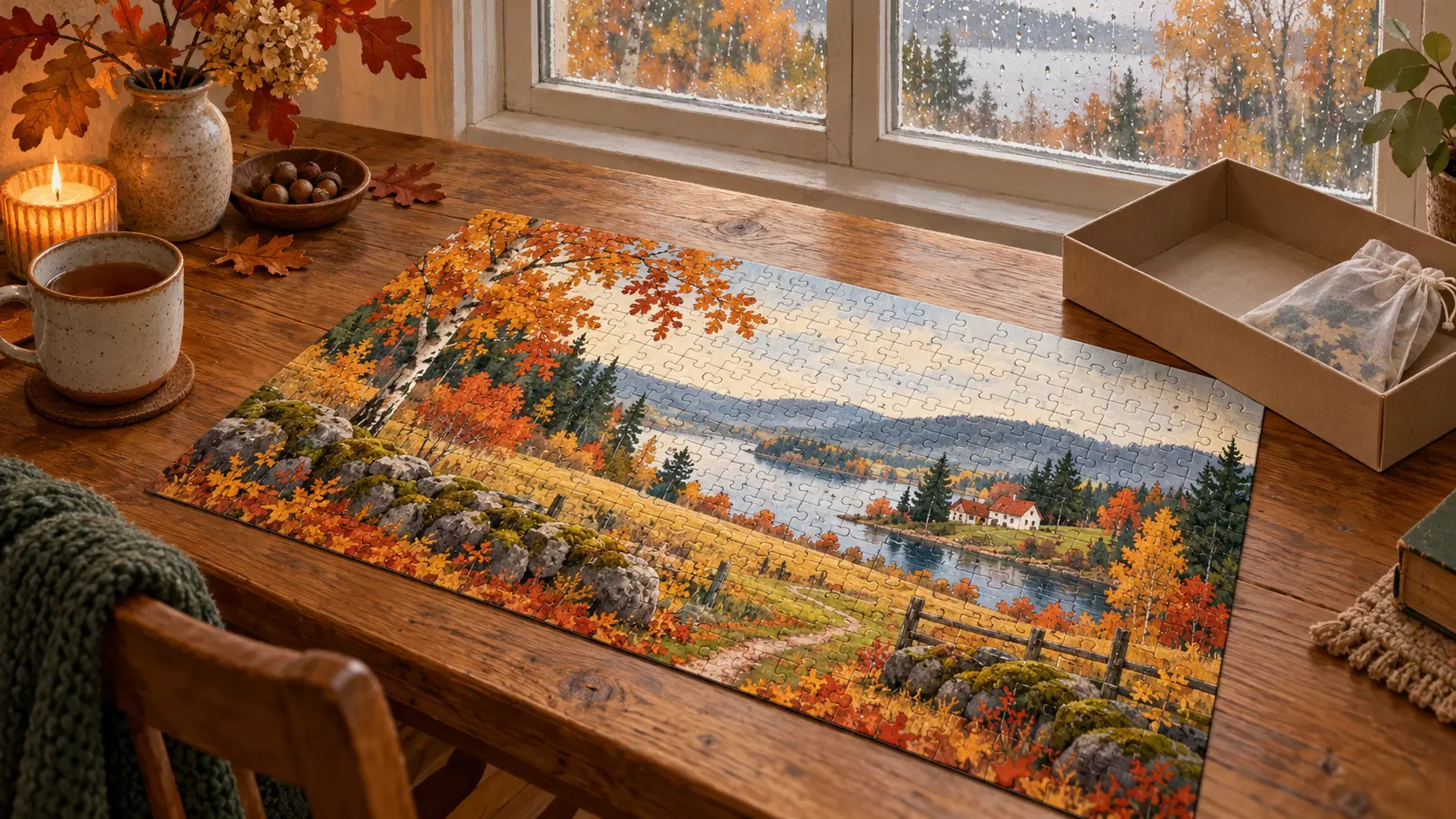
A jigsaw can be a pleasant project for a rainy autumn evening, especially when a finished picture can move on to another household. The awkward part of buying used is not usually the scuffed box. It is discovering one empty space after hours of work. A useful listing therefore explains how completeness was checked, rather than simply describing the puzzle as “good”.
Start by deciding what you want from the purchase. A verified complete puzzle suits someone planning to frame the picture. An unchecked bargain may still interest a relaxed puzzler, but only when the uncertainty is explicit. Neither seller nor buyer needs to pretend that a quick glance into the box settles the question.
Give the completeness claim a clear meaning
Use one of three descriptions: recently assembled and complete; counted but not assembled; or unchecked. If pieces are known to be missing, state the number and show their positions where possible. These descriptions communicate different evidence, so do not merge them into a vague “should all be there”.
For a normal flat jigsaw, assembling the entire picture is the strongest practical check at home. Photograph it clearly from above, with all edges and corners visible. Include the box in a separate photograph so the buyer can identify the edition. Keep the original image rather than only a heavily cropped detail.
Why counting is not the same as completing
Ravensburger explains that box counts can be rounded. Do not automatically call a puzzle incomplete because your total differs from its headline number.
Even an expected total cannot rule out a duplicate or a stray piece from another box. Counting is useful for recording what you have, but describe it accurately. Work in small groups on trays, write down each subtotal and keep checked pieces separate. Do not scatter several puzzles on the same table. If the count is uncertain, say so rather than rounding it to the number you hoped to find.
As a buyer, ask when the puzzle was last assembled and what happened to it afterwards. An old photograph cannot show whether a piece disappeared during a later move. A recent image is more useful, but the checked contents still need careful collection and storage after the photograph is taken.
Inspect the cardboard while sorting
Check bent tabs, separated layers, rubbed printing and pieces stuck together with old glue. Look at the box corners and inside surfaces for signs of damp storage. A strong musty smell or visible mould is a reason to decline the purchase, not something to hide with fragrance. Avoid wet-cleaning cardboard pieces.
Ask whether the puzzle has been glued, repaired or stored assembled. Those details matter to someone expecting loose pieces for a fresh start. Measure the finished picture or read its dimensions on the box, then allow extra table space for sorting. Piece count alone does not tell you whether the project will fit your dining table.
Do not promise an easy replacement
Ravensburger’s service information says individual replacement pieces are unavailable for standard smaller puzzles. Check the specific manufacturer and product before making promises.
A piece from another copy may not fit, even when the picture looks identical. Before buying an incomplete puzzle for repair, confirm a workable route yourself. A transparent low price may make an incomplete item suitable for crafts, but it should not be advertised as a complete puzzle.
Keep the checked set together
After photographing a completed puzzle, dismantle it over a clear surface. Check the table, chair and floor before sealing the pieces in a sound inner bag. Put a note inside with the check date, method and any known damage. Close the box for transport without applying strong tape directly to printed artwork. Pack the box so it cannot burst open in transit.
- Identify the exact picture, maker, edition and finished dimensions.
- Distinguish assembled, counted and unchecked condition.
- Show missing or damaged pieces instead of hiding them.
- Confirm any replacement option before relying on it.
- Bag the checked contents and record the inspection date.
For a Zeppik listing, a precise description and clear photographs are more helpful than a confident but unsupported promise. The next owner can then choose knowingly, and your finished autumn project can become someone else's enjoyable evening.