














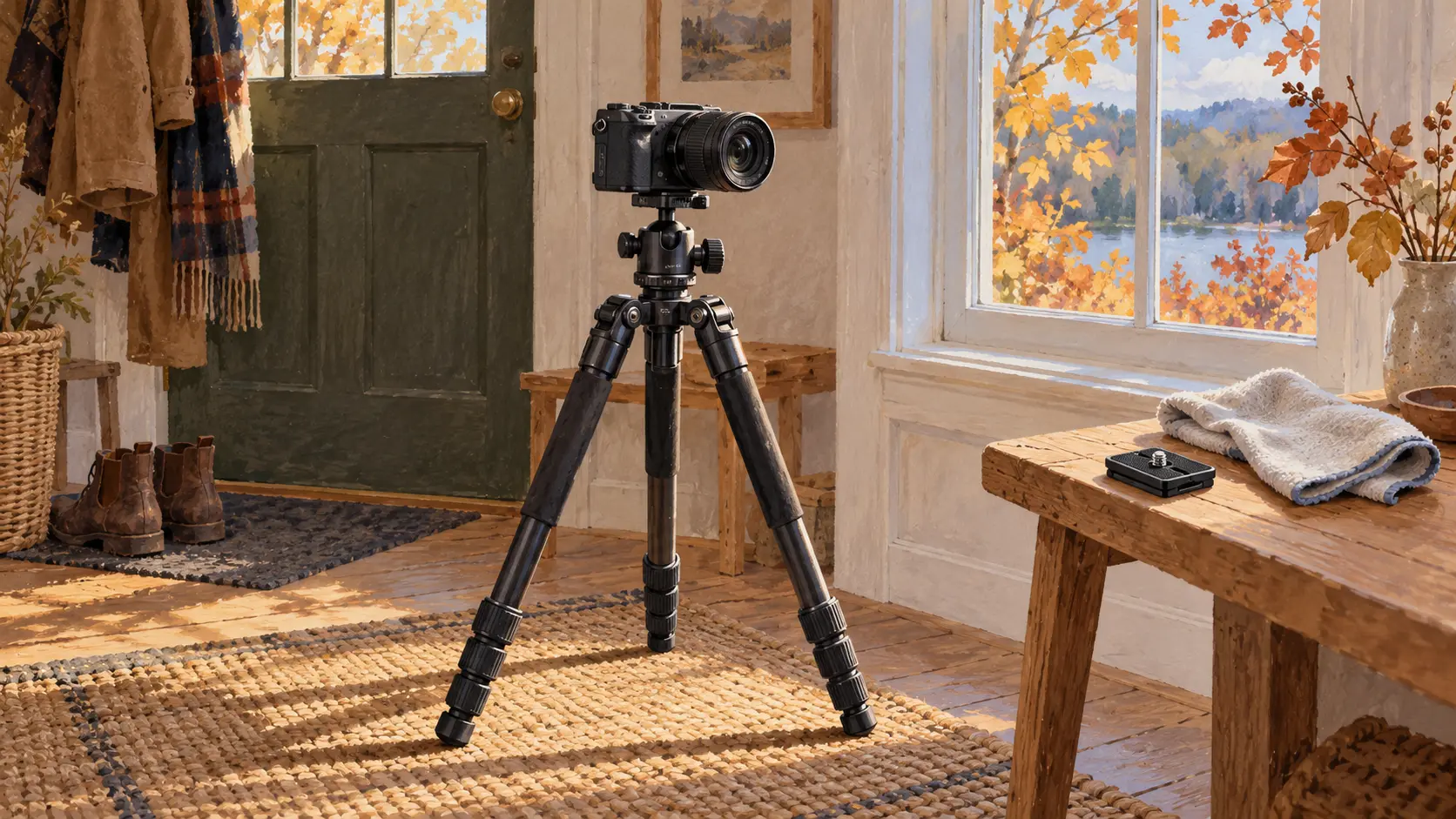
Autumn evenings invite photographs of lit windows, quiet streets and colourful trees. When the light falls, a tripod can give you more freedom to use longer exposures. Buying used makes sense only if the support is dependable. An attractive finish tells you less than a few careful checks of the legs, head and camera connection.
Start with the equipment you actually carry. A small camera and short lens need a different setup from a heavy body with a long lens. Include the head, plate and any attached accessories when checking the relevant limits. Do not treat an advertised maximum load as a promise of sharp photographs in wind.
Identify the whole setup
Ask for the exact model of both the legs and the head. They may have been sold separately. Find the manufacturer's instructions, such as the model-specific documents in 3 Legged Thing’s manual library. Check what is included: mounting plate, screw, feet, centre-column fittings, bag and tools.
A missing quick-release plate can turn a cheap purchase into a frustrating search. A similar-looking plate is not enough: check the actual clamp compatibility. If buying for a phone, confirm whether a suitable phone holder is included rather than assuming the camera plate will hold it.
Open every leg before attaching a camera
Meet on a firm, level surface with enough room to extend all sections. Look for bent tubes, cracks, crushed areas, corrosion and damaged threads. Cosmetic scratches can be acceptable, but a crack or a leg that will not remain locked calls for a repair assessment, not optimistic tightening.
Release and close each lock with normal hand pressure. Extend one section at a time and check that it does not slide back under gentle downward pressure. Do not hang your body weight from the tripod. Check the leg-angle catches, feet and centre-column lock as well. Grit, uneven resistance or a rotating tube deserves an explanation before money changes hands.
Test the head with your own equipment
Only attach a camera after the structure and plate have passed inspection. Keep one hand ready to support it. Tilt and rotate the head through the positions you expect to use, then lock it. Watch whether the composition slowly drops. Try a modest downward angle as well as a level position; a head can behave differently with a front-heavy lens.
Take a few photographs using a timer or remote release, following your camera's instructions. Inspect them at a useful enlargement. This is a practical check, not a laboratory certification: floor movement, shutter settings, focus and wind can all affect the result. Also check whether the controls are comfortable with the gloves you use outdoors.
Budget for care, not a mystery repair
Ask whether the tripod has been in seawater, sand or heavy mud and how it was cleaned. Follow the instructions for that exact design before dismantling locks or adding lubricant. The manufacturer’s service videos demonstrate that maintenance procedures depend on the mechanism. An unknown spray is not a universal cure for a stiff joint.
Compare the asking price plus confirmed replacement parts with a complete, working alternative. A missing foot may be manageable; a damaged load-bearing tube is a different proposition. If selling, photograph wear closely and describe any slip, stiffness or repair plainly. Include the actual model names and folded dimensions, not just “professional tripod”.
Measure the space where you will carry the tripod, too. Check whether it fits inside your usual bag or its outside attachment, and whether you want to carry the weight for a whole walk. Practise setting it up and folding it yourself. Ask whether the bag shown in the photographs is included in the price.
Before you agree
- Confirm the leg and head models, included parts and intended load.
- Check every leg section, angle catch, foot and column lock.
- Verify that the correct plate locks securely in the clamp.
- Test the head carefully with the camera and lens you intend to use.
- Price any missing parts before paying and record known faults.
A good used tripod should be easy to trust and easy to carry. Choose the one that passes a real inspection and suits your outings, rather than the tallest model or the most impressive number in a listing.