

















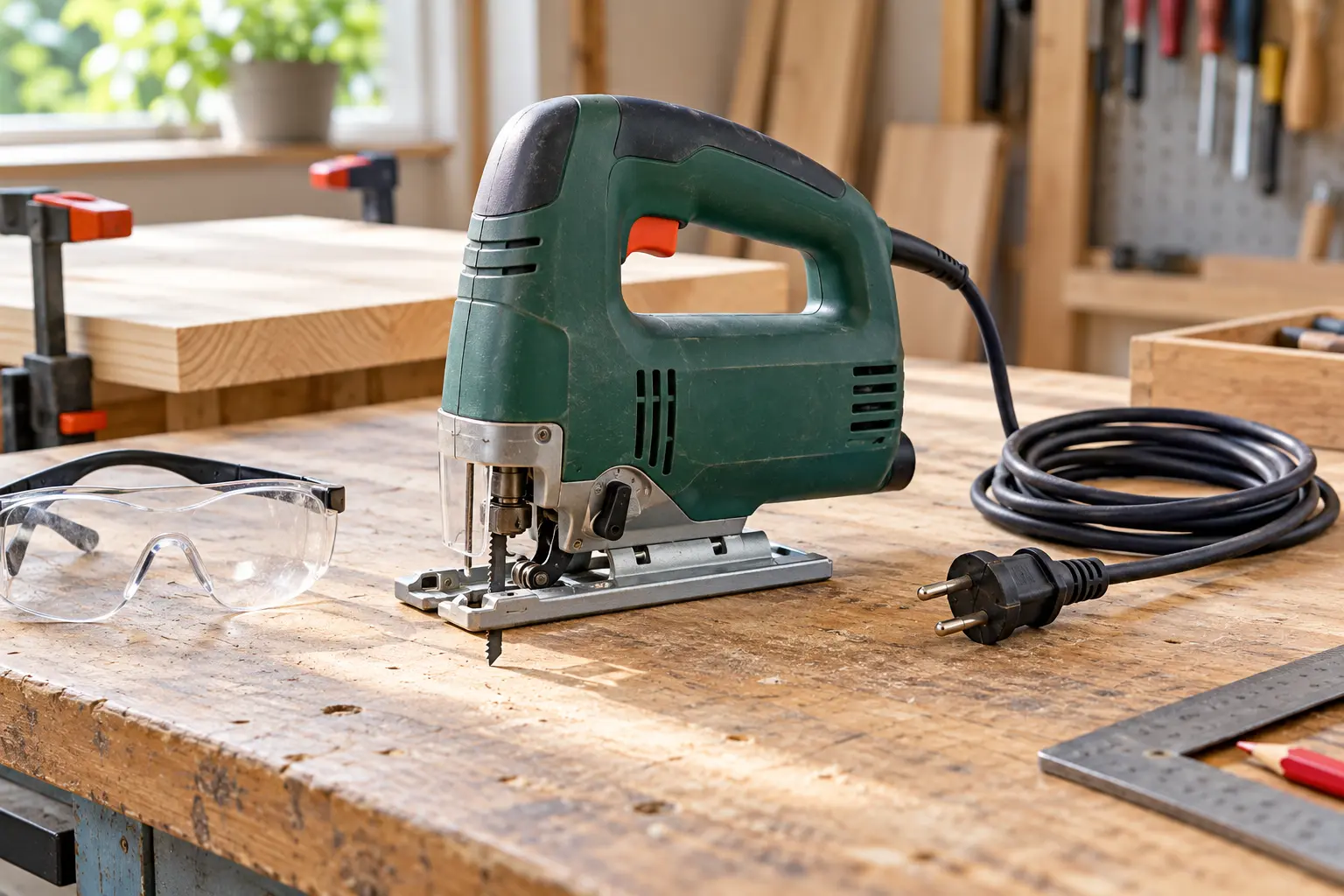
A small autumn home project does not always require a new tool. But a worthwhile used jigsaw is more than a running motor and a carrying case. Before meeting the seller, identify the material and thickness you intend to cut, then check the particular model, its condition and the cost of missing accessories.
Start with the model, not the wattage
Request a photograph of the rating plate and find the manual for that exact model. Check its supported materials and cutting capacities, blade-shank type and required adjustments. Power alone does not describe cut quality. For a cordless tool, establish whether a battery and compatible charger are included: a similar-looking connector does not prove compatibility.
Inspect with the power disconnected
Before inspecting the blade or making adjustments, unplug the tool or remove its battery as instructed. Examine the housing, switch, cable and cable entry. Tape around a lead, cracks, overheating marks and a burnt smell are not minor cosmetic flaws. Do not power up a damaged tool just to test it; obtain a qualified assessment first. Do not open the housing or bypass protective parts.
Look at the baseplate and the complete kit
Place the disconnected tool on a flat surface and look for a distorted baseplate. Check its angle lock according to the manual. Ask the seller to demonstrate the normal blade-change procedure; do not pull sharp teeth with bare hands or test the clamp while powered. Establish whether the protective screen, guide and dust-extraction adaptor are included where the model uses them. A missing optional accessory is different from a removed safety component.
A test cut needs a proper setup
If visual inspection reveals no problem, an experienced seller can demonstrate the tool according to its manual on securely clamped clean scrap with a suitable blade. Use eye and hearing protection, appropriate dust control and clearance beneath the cut. Never test on a loose board balanced on someone’s knees. Watch the speed control and listen for unusual knocking; stop for abnormal vibration or smell. One straight cut does not certify electrical safety or remaining life. A poor cut can also reflect the blade or material rather than the motor.
Buyer’s checklist
- The exact model and manual are identified.
- Blade type and cutting capacities suit the project.
- Housing, cable, baseplate and protective parts are inspected.
- Included accessories, power supply and consumable costs are clear.
- The demonstration is safe; doubtful damage needs an expert.
For a single small cutting job, compare buying with tool hire or a cutting service. Sellers should photograph the baseplate, rating plate and accessories separately: a closed carrying case tells the buyer very little.