







Introduction
A compressor is a versatile tool. Here's what to use it for and how to choose.
Areas of use
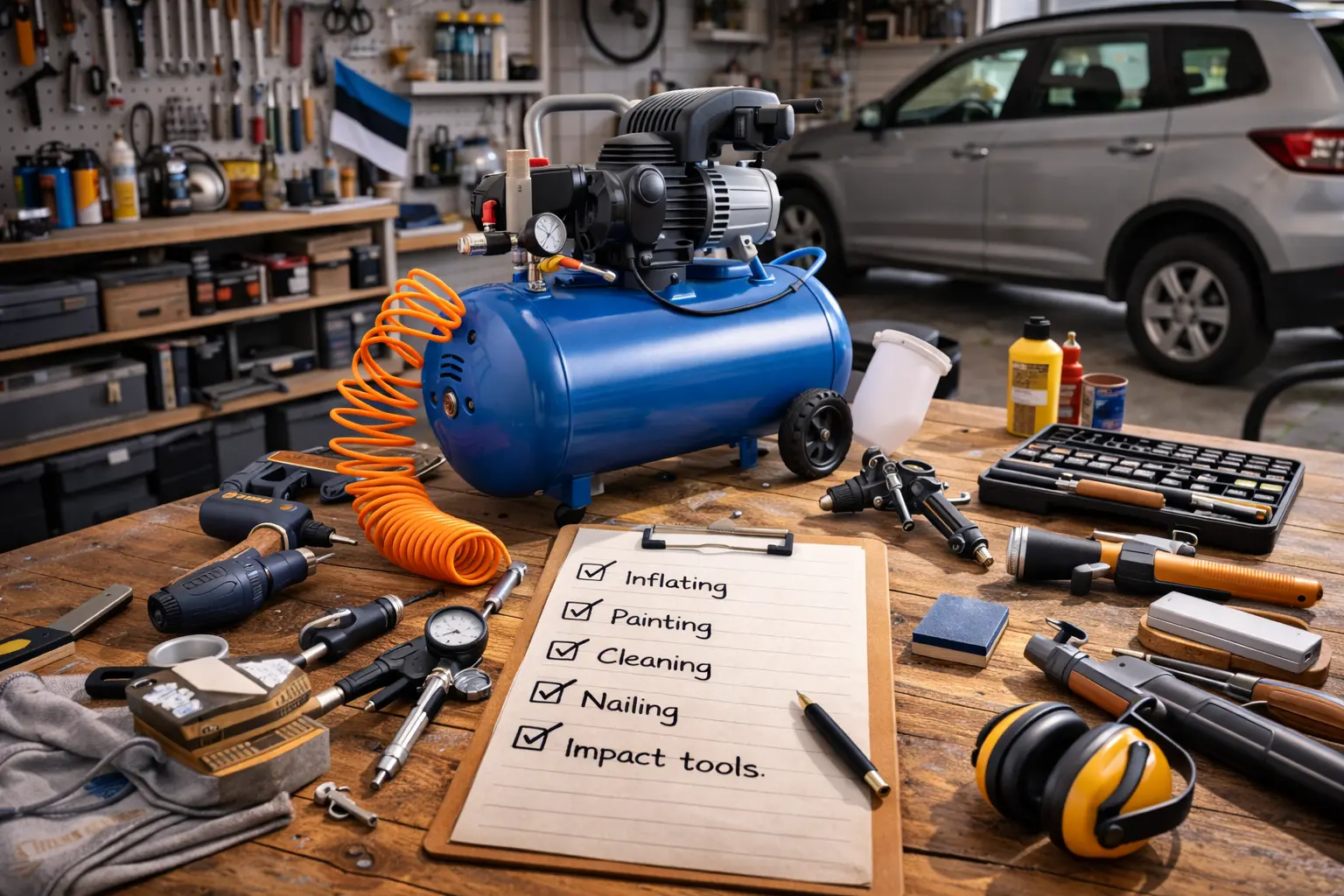
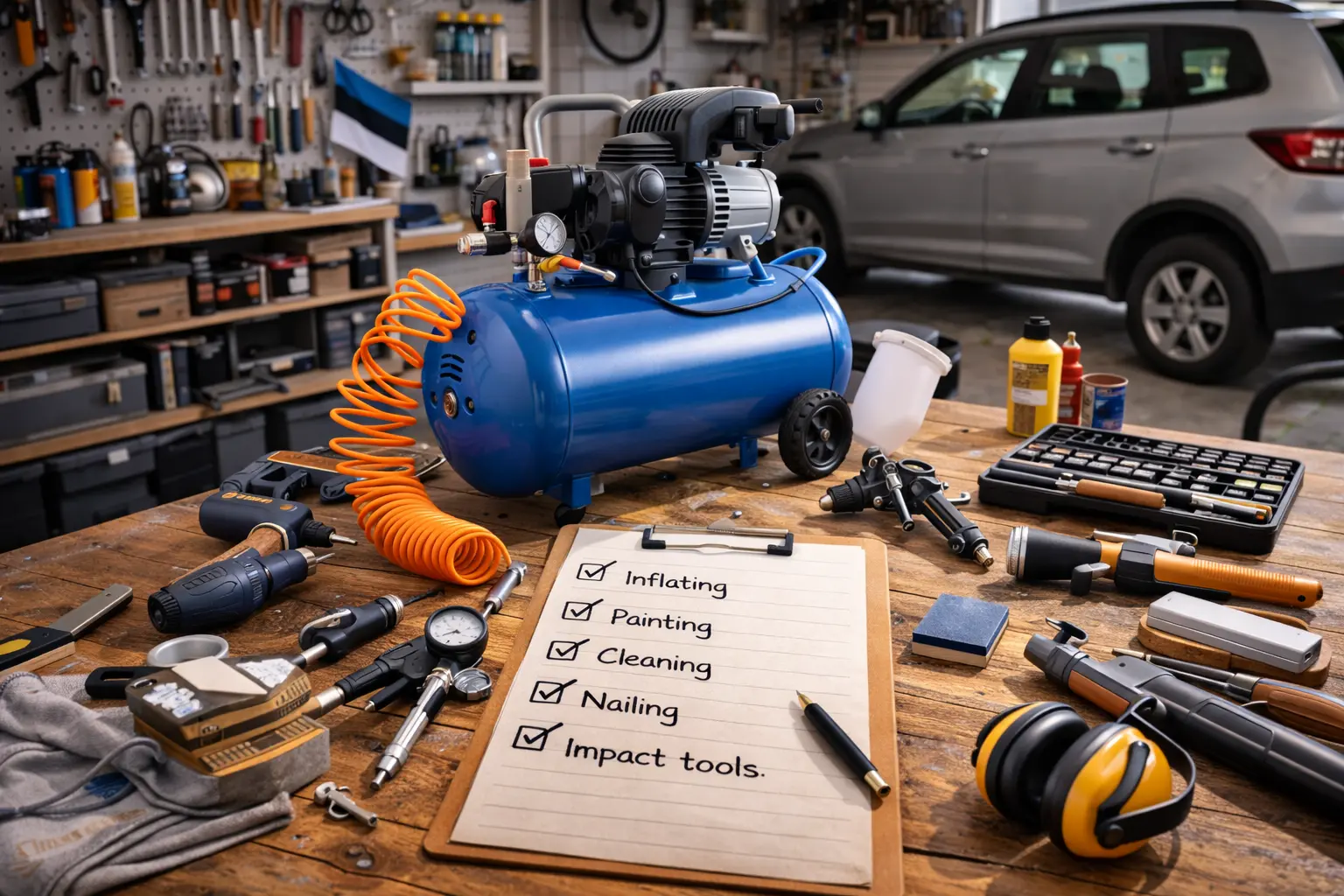
Tire filling - car, bike, trailer. Pneumatic tools - nail gun, choke, sander, spray gun. Cleaning - compressed air cleans computers, workplaces, machines. Painting - uniform finish with a spray gun. Installation of fasteners - nail gun, stapler.
Compressor types
Oil-lubricated compressors - require an oil change, last longer, suitable for professional use. Oil-free compressors - less maintenance, lighter, suitable for light home use.
Air flow (l/min) and pressure (bar)
Air flow (liters per minute) determines how much air the compressor can produce. The higher the airflow, the more powerful tools you can use. Pressure (in bars) - most tools require 6-8 bars. Check the tool requirements.
Tank size
The larger tank allows for longer operation without the compressor starting. 6-24 liters - for light use (tires, nail gun). 24-50 liters - average use (spray gun, sander). 50+ liters - professional use.
Noise level
Compressors can be loud. See decibels (dB). The smaller, the quieter. Some have noise dampening covers.
Appendices
Hose, connections, with filters. Think about which tips you need. Regulator and manometer - allow you to adjust the pressure.