

















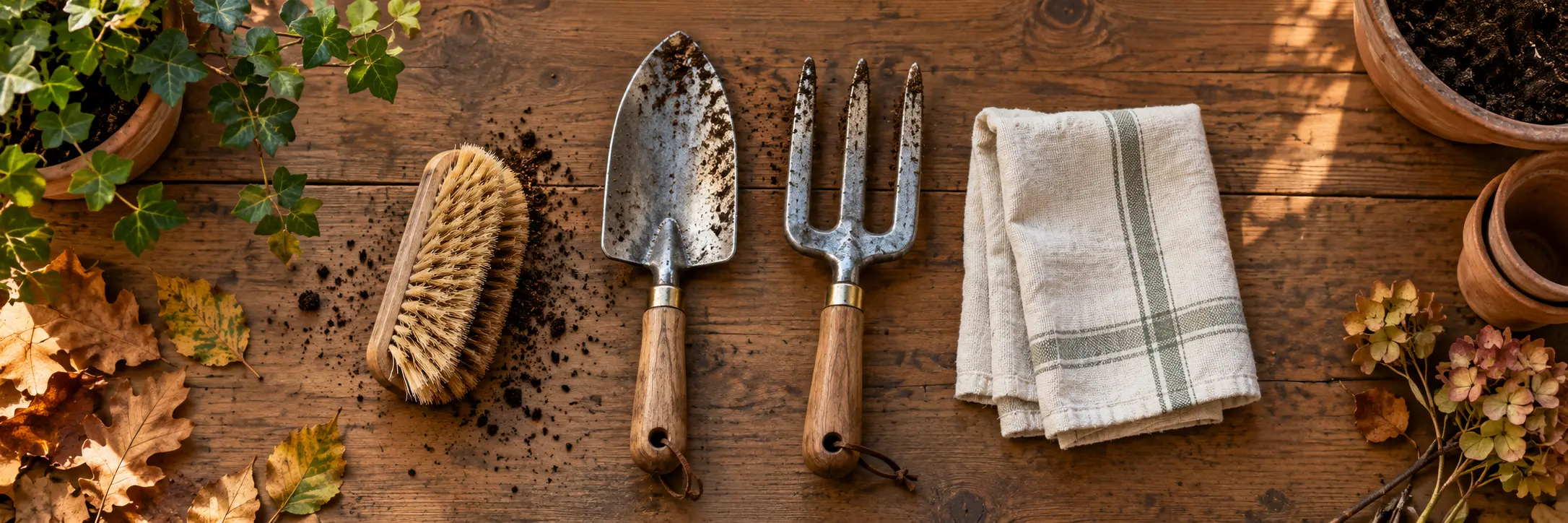
At the end of autumn work, the spade, rake and hoe often end up in one pile, even though their condition differs. Before storing them for winter, give the collection a short review. The aim is not to polish old tools until they look new. It is to remove dirt, notice damage and make the next season easier to organise.
Make three groups
Lay out unpowered hand tools where you can see both the working head and the handle. Separate dirty but apparently intact tools from those with a loose joint, crack or other visible damage. Put items with an unfamiliar material or unclear previous repair into a third group. A questionable tool should not go straight back into the ready-to-use set.
This inspection is not a safety certification. It does help avoid discovering in spring a defect already visible in autumn. If a handle is cracked or the head moves against the shaft, record the problem and decide on an appropriate repair route before using it again.
Clean before choosing a protective treatment
Kärcher’s winter garden guide recommends cleaning and thoroughly drying garden tools; its rust-prevention section also discusses rust removal and protective oil. That is not a recipe for every surface, however. Painted metal, wood, plastic and bare metal may need different treatment.
Remove soil and plant debris using a method suitable for the material. Before using an abrasive or oil, check the maker’s advice and the condition of any coating. Dry the cleaned parts thoroughly. Do not cover dirt or questionable damage with oil simply to improve a photograph. This routine does not include sharpening, structural joint repairs or powered-tool servicing.
Store for retrieval, not just for space
Choose a dry place and arrange tools securely, with sharp edges protected from accidental contact. Grouping by task can work better than piling by size: for planting, you might need a small trowel and a hoe together, rather than every long-handled tool. Keep readable model or maker identification visible.
- Have you checked the head, handle and their connection?
- Is soil removed, and are all parts dry?
- Are items with recorded defects separate from ready-to-use tools?
- Can you retrieve the next tool without dismantling a pile?
If some tools are being sold
Photograph the working head, the full handle, the joint and visible wear. Describe known repairs and defects separately from a general condition statement. “Cleaned” does not mean “in working order”. If strength or an old repair has not been checked, say so directly. A seasonal tidy-up can then become an honest handover rather than a way of concealing problems.
Care basis: Kärcher’s winter garden preparation guide. Material-specific instructions take priority.