
















A tightly packed sleeping bag saves space in a hiking rucksack. At home, when equipment is going on a shelf for months, the goal changes: keep it clean, dry and easy to assess. If autumn trips are finished for now, give the sleeping bag its own storage routine rather than putting away an unopened hiking pack.
Small for transport, roomy for storage
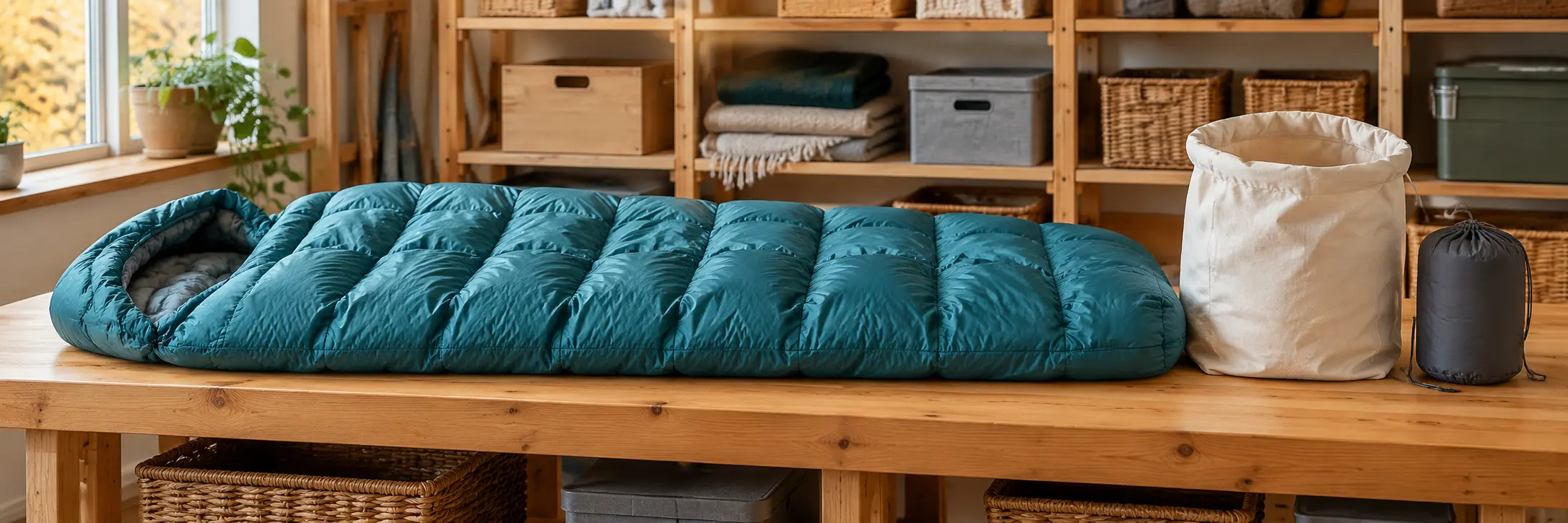
Sea to Summit recommends drying sleeping bags completely before storage and avoiding long-term compression, which can damage the loft of both down and synthetic insulation. Its guidance recommends a roomy fabric storage bag and a shaded, ventilated indoor location. The small compression sack is therefore not automatically the right home for the whole winter.
That does not mean every large bag or indoor space is suitable. Check your sleeping bag’s care instructions and assess the location: is it dry, is there enough room, and can you inspect the equipment when needed? Do not assume a garage or a damp basement corner is suitable just because rain cannot reach it.
Inspect before putting away
Open the sleeping bag and read the care label. Identify the filling and follow the instructions for that product when choosing a cleaning method. One washing temperature cannot become a rule for every sleeping bag. Store only fully dry equipment; if you are uncertain about dryness, do not rush to close the storage bag.
In good light, inspect the seams, inner and outer fabric, and zip. Record tears, opened seams or places where the filling seems uneven. Do not force a sticking zip. This inspection helps you identify questions, but it does not measure warmth or prove that old insulation has recovered.
Keep the information with the set
- Photograph the maker, model and care labels.
- Record the known fill type and the bag’s dimensions.
- Note the last cleaning date only if you actually know it.
- Keep the transport and storage bags identifiable as parts of the same set.
- Describe visible wear and repairs separately.
If the original storage bag is missing, do not hide that behind “complete set”. If a label has worn away, separate known details from assumptions. External thickness, for example, is not a sound way to assign a temperature at which someone should sleep in the bag.
If you decide to pass it on
Photograph the bag opened out, its zip, labels and every included sack. Show a repaired or worn area as well, rather than only the cleanest side. A precise condition description is more useful to a buyer than “suitable for any winter”. Better storage does not automatically make a sleeping bag suitable for winter camping: the exact model’s specifications and intended conditions still need a separate assessment.
Care basis: Sea to Summit’s guide to cleaning and storing equipment. Your product’s care label and instructions take priority.