

















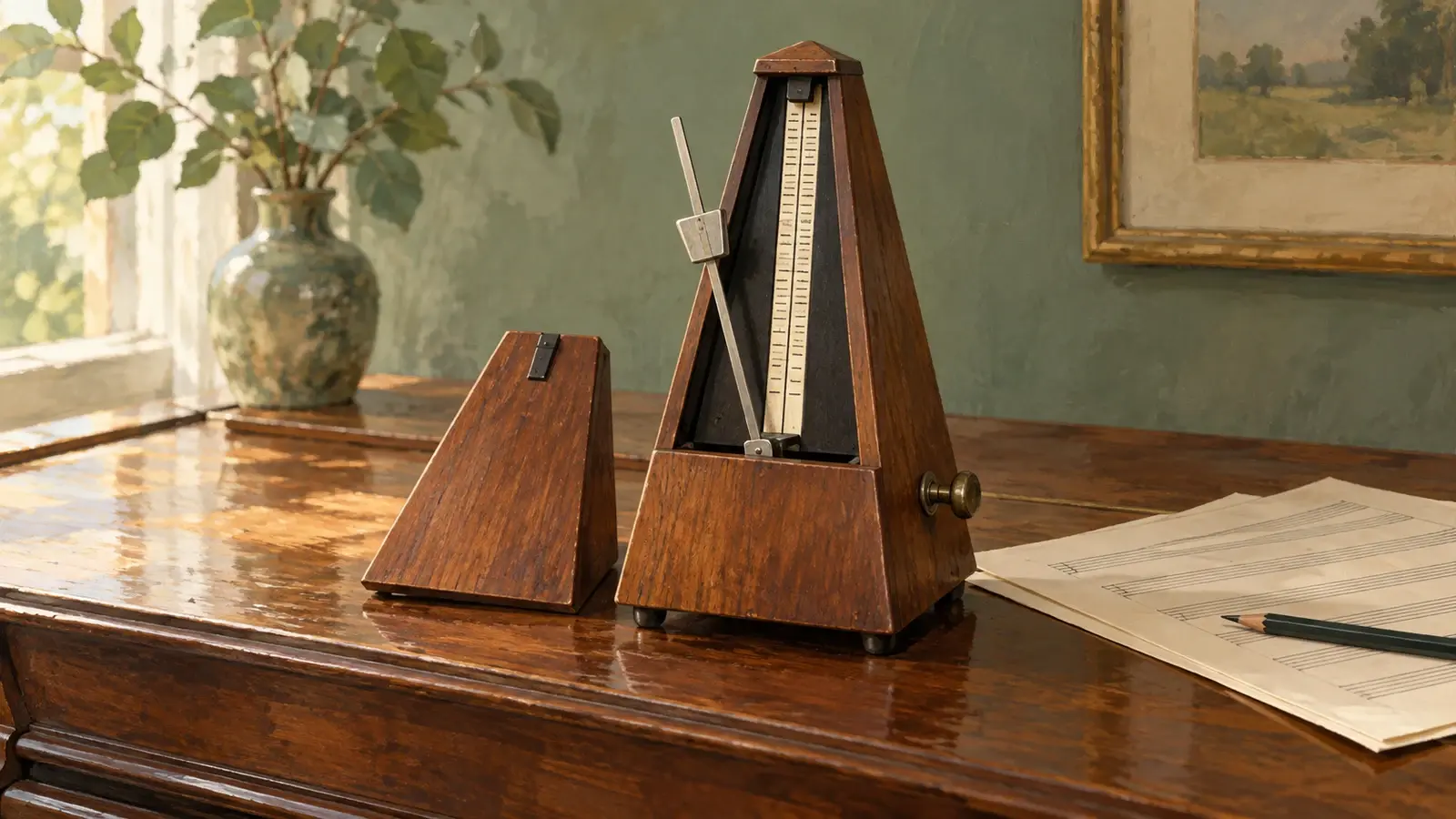
A mechanical metronome can be both a practice tool and a handsome object on a shelf. When buying one second-hand, decide which role matters to you before discussing its appearance. A polished wooden case does not tell you how the mechanism behaves, and a ticking video does not establish timing accuracy. Start with the identity of the instrument and a short list of questions the seller can answer.
Identify the exact instrument
Ask for photographs of the front, back, underside and model marking. Copy the full model name rather than identifying it from the shape of the case. Find the matching manufacturer’s instructions, and check whether the offered version has a bell or other controls. Do not assume that a similar model’s features are included. Ask which cover, winding key and paperwork actually belong to the sale.
Read the markings before the demonstration
Look for a readable tempo scale and an unobstructed view of the sliding weight. Record the lowest and highest markings you can actually read; do not borrow a range from a different listing. If a number is obscured, request another photograph rather than guessing. The WITTNER instructions for the 890 series explain how the weight relates to the tempo scale. That is a model-specific reference, not a condition report for this particular item.
Look without opening the case
Inspect the visible winding key, its mounting area, the pendulum and its retaining point. Note missing pieces, a visibly bent rod, cracks or an unexplained repair. Keep the case closed. Do not ask the seller to dismantle the clockwork, add oil or bend anything for the sake of a demonstration. If a control seems stuck, stop the check and clarify the problem before agreeing to buy.
Agree on a modest demonstration
Ask the seller to demonstrate ordinary operation according to the correct manual, with the chosen setting visible. A short recording should show the same instrument throughout, not just capture a ticking sound. It can help you understand which controls move and whether the seller has actually used them. It still does not certify accuracy, long-term reliability or the state of hidden parts. Those questions need a suitable specialist assessment if they matter to the purchase.
Keep observations separate from promises
For the listing, write down what was observed and what remains unknown. For example, distinguish “shown running at two marked settings” from “calibrated and accurate”. Photograph any defect alongside the overall view. Ask about previous repairs without treating an undocumented recollection as a service record. A clear description of a limited test is more useful than an impressive but unsupported promise.
Plan the journey home
Before packing, identify the model’s pendulum holder or transport restraint and follow its instructions. Do not improvise a clamp or press packing material against the rod. Agree how the case and any separate parts will be protected and kept together. If the intended restraint is missing, resolve that before shipping. Keep the model information and the seller’s description with your purchase notes so the first practice session begins with the right manual, not another search.