


















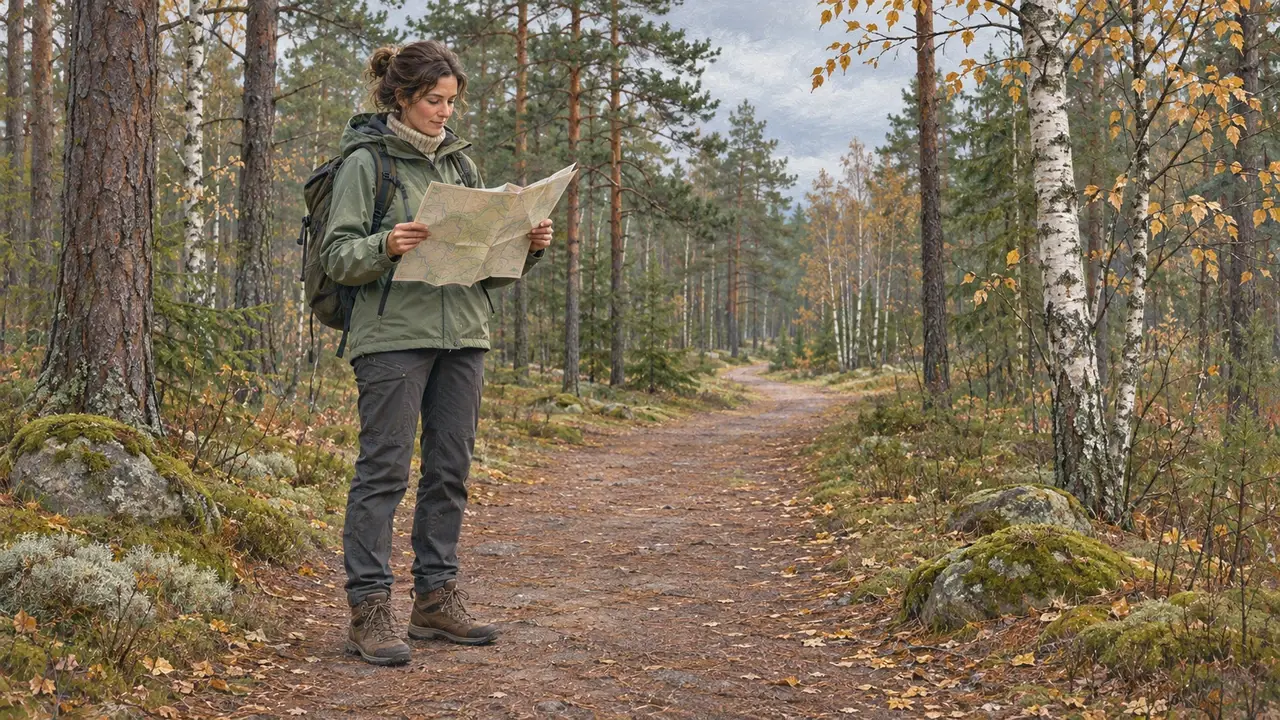
A short walk can be a good November outing without becoming an expedition. The useful decision comes before packing: which route can your group comfortably finish in daylight under the conditions expected that day? An attractive summer photograph gives very little help with that question. Start with the route, the return journey and a shorter alternative.
Read the actual route description
Find the place in RMK's official destination directory and open its own page. Check the starting point, route shape, access information and any notices. A distance printed beside a trail name may need closer reading: work out whether your plan includes a return along the same path or transport from a different endpoint.
For a group, agree on the slowest comfortable pace rather than using the fastest person's estimate. Include pauses for photographs and snacks. Write down where you will turn back if progress is slower than expected. A shorter route with an easy return is a complete outing, not a failed version of a longer one.
Leave room before darkness
Check sunset for the chosen place and date, then plan to finish comfortably before it. Allow additional time for reaching the start and getting home. If you rely on public transport, verify both directions and avoid a plan that only works if you catch one last departure.
Check the official weather warnings for the route area. Each warning has a start and end time, so match it to your walking period. Read the forecast again before leaving. If conditions no longer suit the group, use the shorter alternative or postpone rather than preserving the original plan at any cost.
Understand maintenance and access
RMK's winter guidance explains that year-round maintenance does not mean hiking trails are cleared of snow. Do not treat a maintenance label as a promise of easy walking conditions. Look at the specific site's information and ask RMK if an essential access detail remains unclear.
Protected areas can have their own movement restrictions. Check the applicable information and respect signs on arrival. A route saved months ago, or a line drawn by another walker, is not a current confirmation of access.
Make the plan easy to follow
Share the starting point, intended route and expected return with someone you trust. Keep the map available without relying entirely on reception. Bring clothing suited to the forecast, drinking water and a charged phone; these support the plan rather than replacing it. At the start, compare actual conditions with what you expected and shorten the walk if necessary.