


















What is actually included?
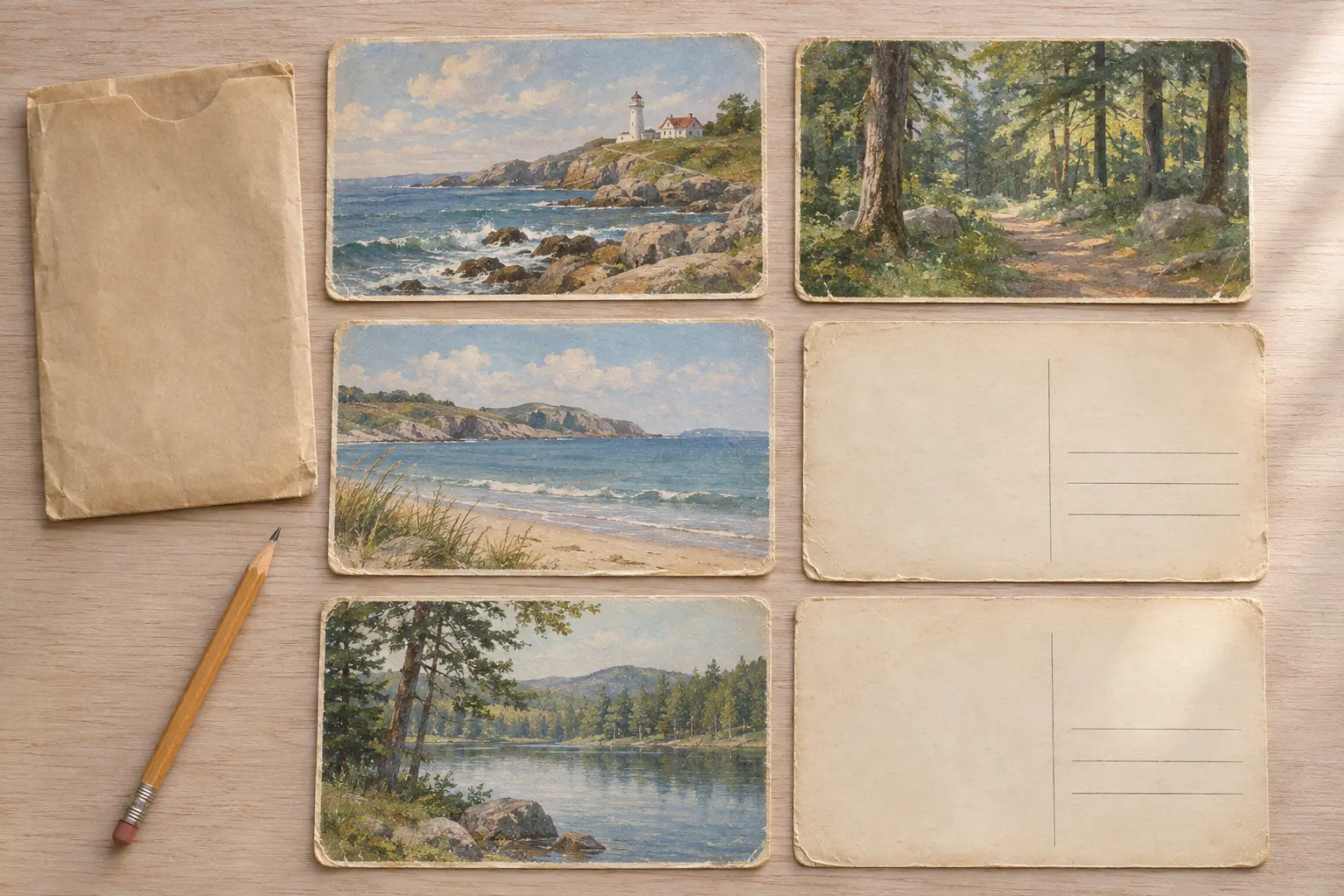
An attractive photograph of a stack does not reveal its contents. Ask for the cards to be laid out with every picture visible, and clarify the number of individual cards. Count repeated subjects separately. If the seller has counted only part of the set, say so rather than extending that result to the whole box.
Look beyond the picture side
Ask which cards have writing, have been posted or show signs of being pasted into an album. For a small set, photographs of both sides in matching order are useful. Cover addresses, personal messages and other private details in public photographs. A buyer can see where writing, postmarks and defects occur without publishing someone else’s correspondence.
Describe condition by group
Inspect corners, edges, folds, stains and adhesive marks. Do not describe the whole set as perfect when some cards are visibly damaged. A more useful description is: eight without obvious creases, two folded, one with a torn corner. Do not erase writing or unstick cards just for a photograph. Selling does not require do-it-yourself restoration.
Do not guess age or rarity
Record any visible publisher information and series number. If the publication date is unknown, say so. An old-fashioned picture does not establish the age of that particular print. “Rare” needs support, and a family story should remain the owner’s account, not an expert finding. For an expensive purchase, seek an independent assessment before paying.
Record the handover
Agree whether the sale is for the entire set or individual cards, whether an album is included and whether you can inspect the backs in person. Add a simple inventory: number on a diagram, subject and condition. Do not write numbers on the cards themselves. Pack them against movement and bending without sticking tape to the paper. On arrival, compare the set with the inventory before mixing it into your collection.