













The illustration on a pattern envelope shows a garment, not what remains inside. Before buying a second-hand paper pattern, choose the version you intend to make and check the contents. An intact envelope, a complete set of pieces and a usable size are three separate questions.
Record the exact issue
Write down the brand, pattern number, size group and garment view you want to sew. Ask for photographs of both sides of the actual envelope being sold. A shop photograph of a similar issue shows neither this copy's condition nor its contents.
Compare the envelope identification with readable markings on the sheets and instructions. If the numbers differ, do not simply choose the more appealing description. Establish whether two sets have been mixed. Until that is clear, keep the uncertainty in the listing.
The envelope size is not the whole answer
Simplicity recommends choosing pattern size from body measurements rather than ready-to-wear size. Simplicity: Size Charts — Measurement Guide
Compare your measurements privately with the relevant issue's chart; they do not need to appear in an advertisement. Then ask whether pieces have been cut and along which lines. A range printed on the envelope does not establish that every size line survived earlier use. Request a view of the required size marking on important pieces.
Check against the piece list
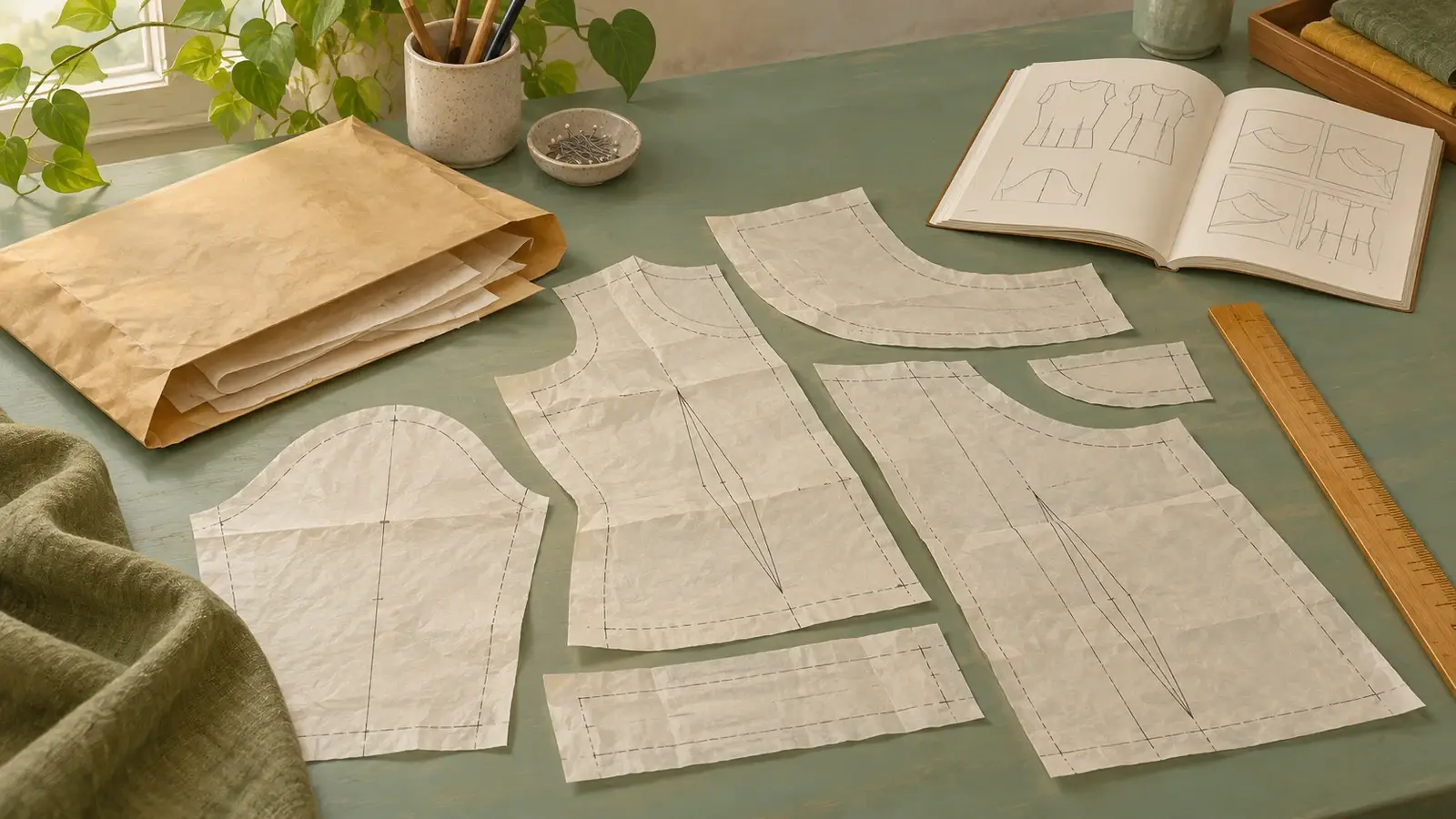
Use a clean, dry table and work with one pattern set. From the instructions' diagram, list the piece references required for your chosen view. Mark those found, missing and not yet confidently identified. Total weight or the number of folded sheets cannot replace that check.
Do not describe the whole pattern as complete if you checked only one view. List small pieces separately: they are easy to overlook among folds. If instructions are missing, establish whether the correct official guide is available before buying, rather than promising to reconstruct it from memory.
Describe alterations to the paper
Look for tears, trimmed edges, taped additions, handwritten changes and unreadable markings. Ask which alterations the previous owner made. “Cut” or “unused” should not conceal pieces that have been lengthened or reshaped.
Do not trim the paper to improve a photograph or flatten it using an improvised treatment. A listing needs an overview and close photographs of identification and defects, not a complete scan of the working sheets.
Before putting it away
- The issue number and size group match the contents.
- Cut and uncut pieces are described accurately.
- The garment view actually checked is identified.
- The instructions and their language are listed.
- Missing pieces, alterations and damage remain explicit.
Fold the pieces without making new cuts and include a short inventory. If the required size or piece cannot be confirmed, continue looking rather than expecting uncertainty to disappear once you start cutting fabric.