


















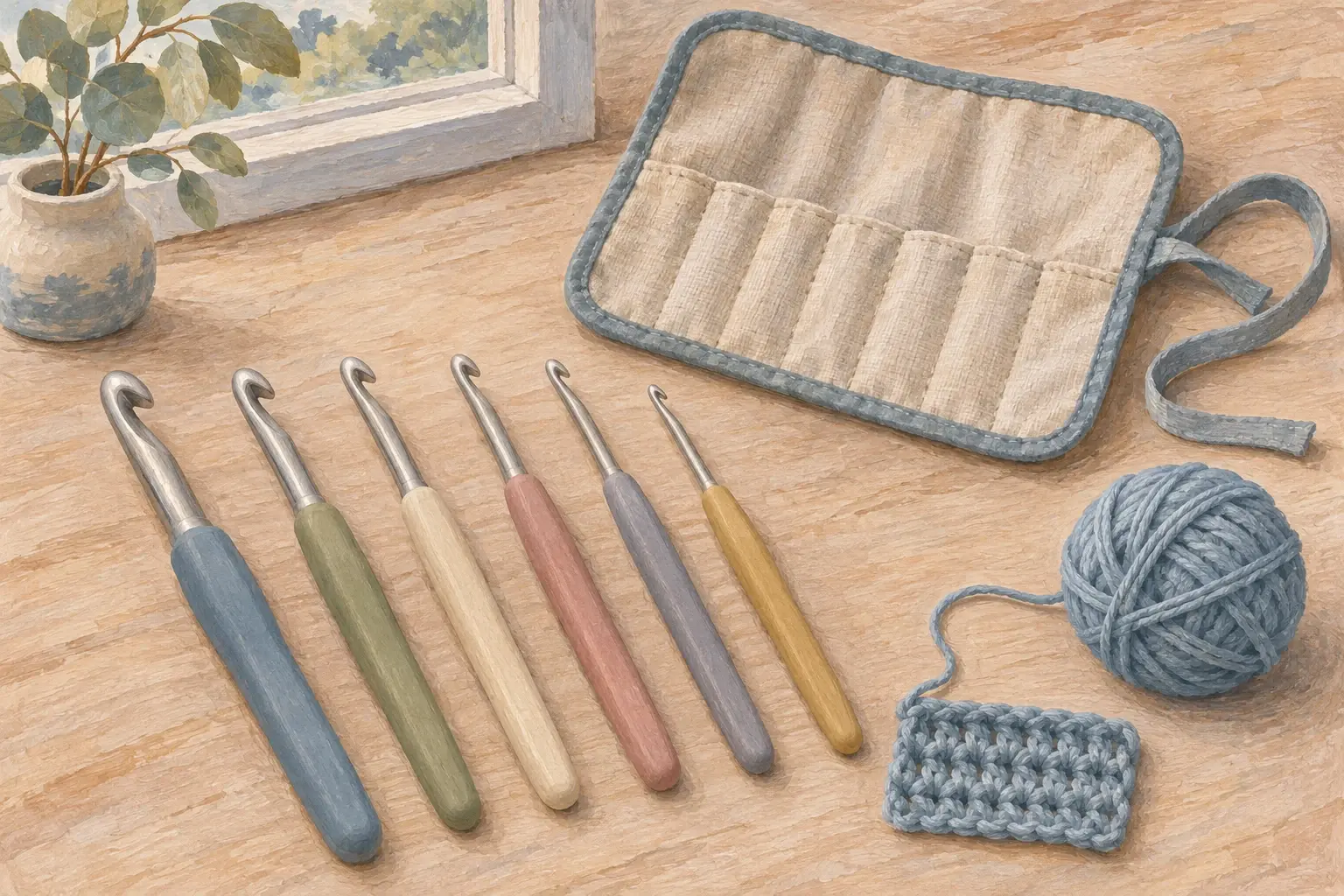
A second-hand crochet hook set can be a useful way to build a small working collection. The important question is whether the tools suit the projects you actually want to make. A colourful row in a case may look complete while missing the size you need most. Begin with one familiar pattern and a written list of the hook sizes you already own. This keeps the purchase focused on useful additions rather than the largest possible number of pieces.
Identify the tools first
Ordinary crochet hooks have a hooked head. Circular knitting needles have two pointed tips joined by a flexible cable. They belong to different tool categories, even when their packaging shows similar millimetre values. Ask for a photograph outside the case so that every working end is visible. If a mixed craft bundle contains both, request separate descriptions and counts. This article concerns ordinary single-ended crochet hooks; specialist Tunisian or cable-connected crochet tools need their own identification.
Read the markings, not the colours
The Craft Yarn Council guide describes both metric and US letter/number sizing. Copy the markings from each actual hook, including the unit. Do not guess a missing size from handle colour or the position of an empty pocket. Ask for a close photograph of faint markings and record anything unreadable as unknown. A seller’s handwritten list is useful, but it should agree with the photographs. Compare the list with your pattern before paying, rather than assuming that consecutive-looking labels cover every size you need.
Inspect the head and grip
Look closely at the tip, the recess under it and the surface leading down the shaft. Ask about chips, burrs, bends or peeling finish. At collection, with permission, try a short chain using your own ordinary yarn. Notice whether the yarn catches and whether the grip feels comfortable in your normal hand position. Head shapes and handle profiles can feel different; a familiar size alone does not guarantee a familiar experience. Do not file or reshape a borrowed tool during inspection. A sticky or loose handle should be described honestly, not dismissed as a stain.
Count what is actually included
Clover’s Amour set 3672 lists ten sizes. That is one identified set, not a rule for other brands or regional packages. For the offered bundle, ask for an itemised list of hooks, case and accessories. Check duplicate sizes separately. A missing hook may matter more than several extra stitch markers. Establish whether a case is included and whether its closure works; an attractive storage roll is not evidence that all original tools remain.
Make the handover clear
For a sale listing, photograph the whole set and any damaged or unreadable area. State which parts are replacements and avoid calling an assembled assortment an original complete set. For delivery, agree on packing that keeps the heads from rubbing against each other or piercing a soft envelope. Keep the photographed inventory with the transaction. A smaller, clearly described collection can be the better purchase when its condition and useful sizes are known.