


















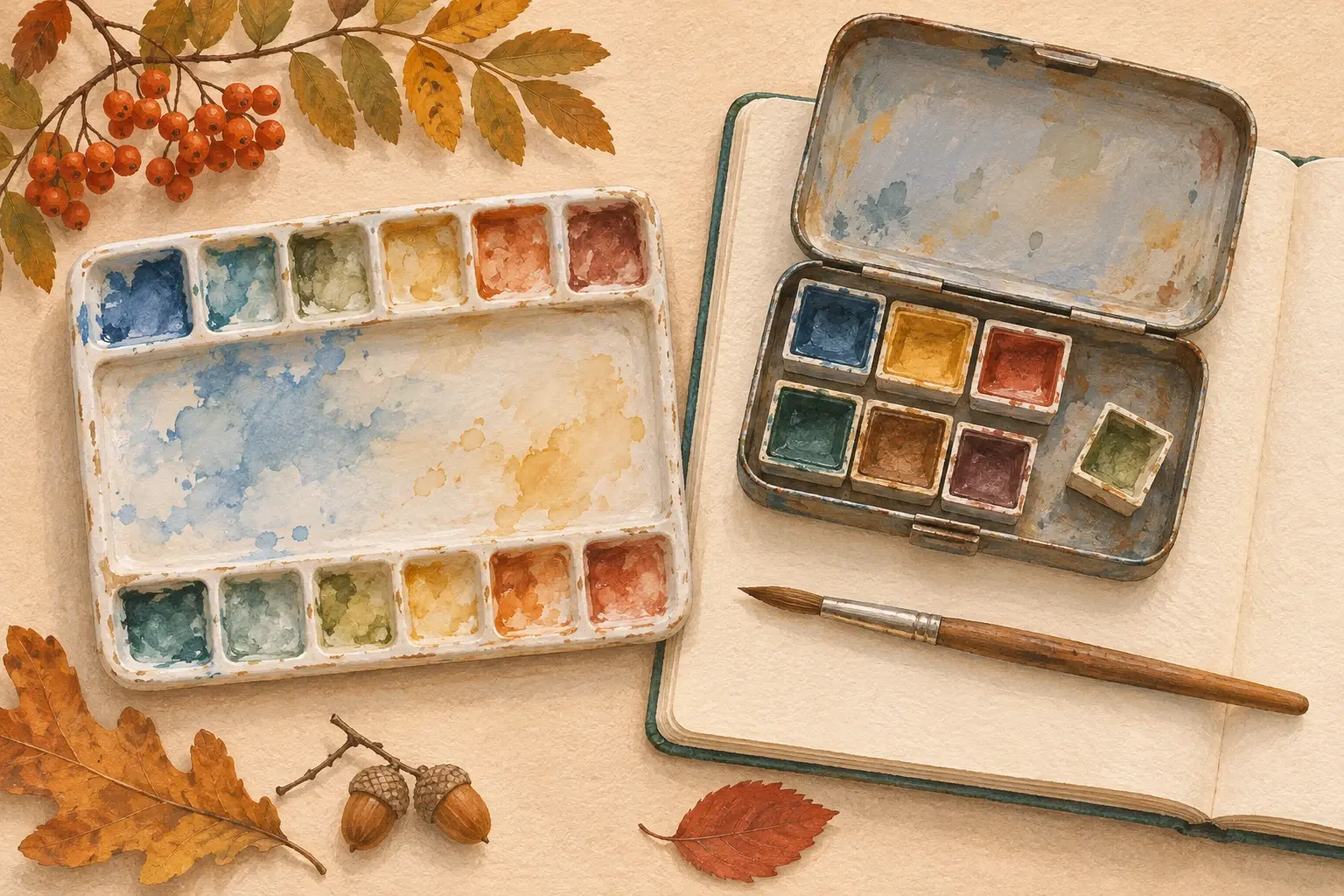
A second-hand watercolour palette can be a useful addition to a painting corner, but a photograph full of attractive colours does not show how comfortably it will work. Start with your own brushes, paper size and working habits. A palette for quick sketches at a café may need a different layout from one that stays on a studio table. Decide what you need before comparing the asking prices.
Count usable spaces, not just wells
Separate the places that hold paint from the surfaces where you will mix it. Many small wells may look generous while leaving little room for a broad wash. Imagine loading your largest usual brush and preparing two mixtures at once. Can you reach the corners without squeezing the brush into an awkward position? Ask for a photograph straight from above with the palette fully open, and request its external dimensions as well as a close view of the mixing surface.
Identify the actual material
The Jackson’s ceramic range illustrates several well layouts. This is a product example, not evidence that all ceramic palettes behave alike. Ask the seller what the object is made from and look for a model marking or original packaging. Examine ceramic edges for chips, plastic for cracks or distortion, and coated surfaces for visible wear. If a photograph cannot distinguish a stain from missing surface material, request another view in side light rather than making a confident diagnosis.
Check what comes with the box
The Art Toolkit Pocket Palette Without Pans has a magnetic tray and excludes pans. For any used listing, count the actual included pieces. Do not assume that removable pans, a mixing insert, a lid or a pouch are included simply because they appear in a manufacturer’s photograph. Ask whether the seller’s loose pans fit the particular tray and whether they stay in position during normal use. A closed box is not automatically a leakproof container.
Inspect without experimental cleaning
Agree on a simple visual inspection before collection. Open and close the palette normally, check that it rests steadily, and look closely at hinges and catches. Ask what paints or other media were previously used. Unknown residues should not be described as a valuable collection of usable colours. Avoid universal cleaning recipes, abrasives or solvents based only on the word “palette”. Find the maker’s instructions for the exact material and coating before deciding how to care for it. Do not promise that all marks will disappear.
Make the listing and handover clear
For a useful zeppik.ee listing, show the whole palette open, the closed exterior if applicable, every removable piece and any visible damage. State whether the offer is for an empty palette or includes identified paints. Compare the complete price with the cost of any missing essential pieces and the effort of collection. Before paying, confirm that the photographed object is the one being handed over. Choose the layout you can actually use, with enough mixing room and an understandable condition, rather than buying the highest well count.