


















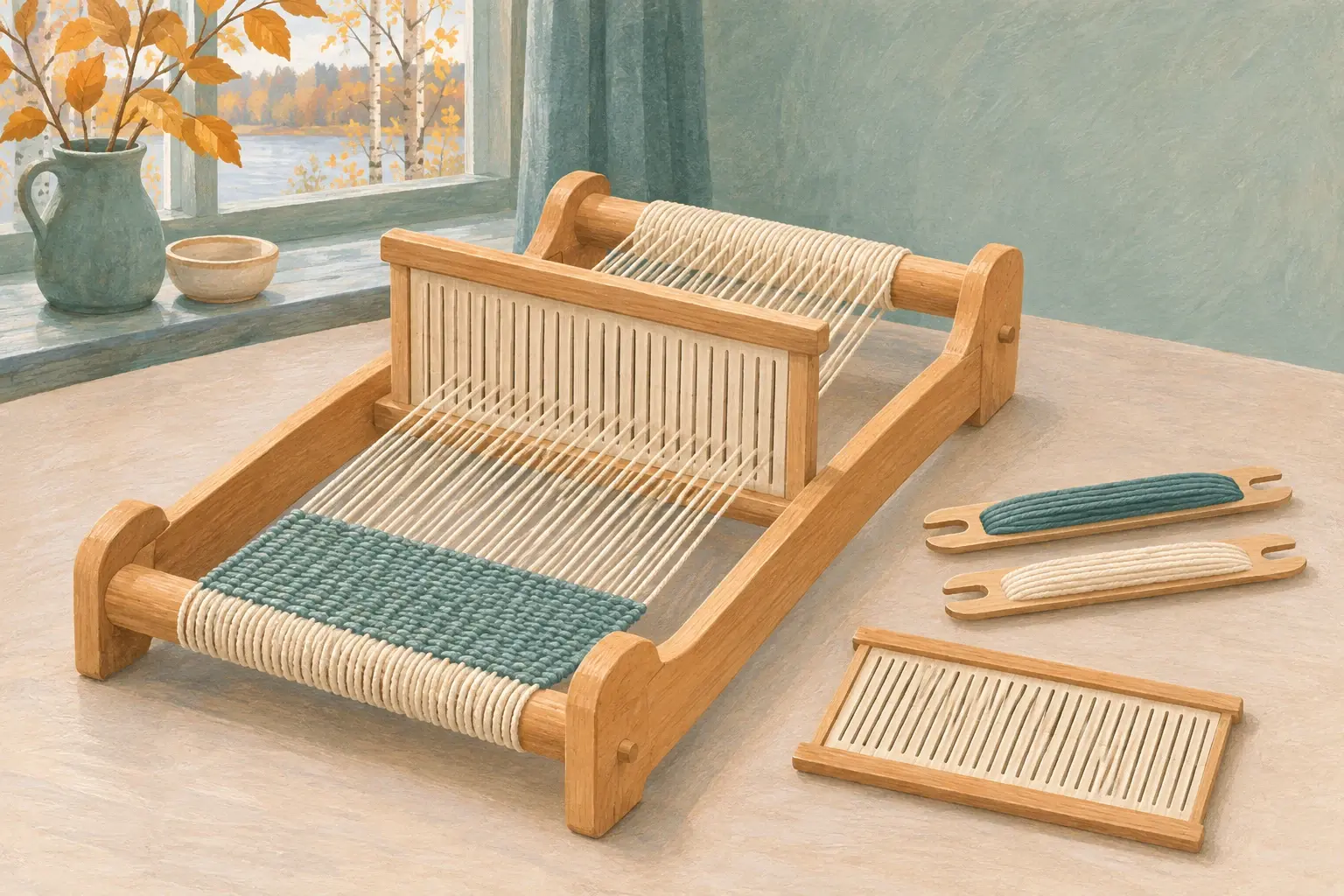
A small tabletop loom can look complete while still missing the part that makes your first project possible. Before comparing prices, decide what you want to weave: a narrow sample, a scarf or a small table textile. Then inspect three things separately: the usable weaving width, the thread-guiding equipment and the actual contents of the sale. The checks below are editorial buying advice, not operating instructions for a particular loom.
Identify the type before measuring
Ask for the maker, model and a clear photograph of the middle of the loom. This guide focuses on a simple rigid-heddle loom, where a slotted, perforated component guides the warp threads. A small multi-shaft table loom requires a different parts check. Do not order a replacement merely because an advertisement calls both items a “reed”. If the model is unknown, record that uncertainty rather than borrowing specifications from a similar-looking product.
Separate weaving width from outside dimensions
Ashford lists four weaving widths for its Standard Rigid Heddle Loom. That is a model-family example, not a rule for other looms. Ask which size is actually offered and compare its stated usable width with your intended project. Measure the outside frame separately for your table and storage space. Do not promise a finished cloth width from that number alone: plan a sample with your chosen yarn before committing to an exact final size.
Read the marking on the rigid heddle
Request close views of the entire heddle, its ends and any density marking. Copy the number together with its unit; an isolated number is not a complete specification. Schacht supplies the Cricket with an 8-dent reed. A used Cricket may have a different component fitted, so verify the object rather than the original box description. Before buying a spare, match the intended loom model and working width, not just the apparent length.
Look for small defects where yarn travels
In good light, examine slots, holes and edges for visible damage. Ask whether any teeth or sections have been repaired. A distant photograph of a clean wooden frame does not show a chipped opening. Do not scrape, sand or force an unfamiliar part during an inspection. If a thread catches during a seller-approved demonstration, identify the location and pause. A repair claim is useful only when the changed area and the remaining limitation are clearly described.
Write a parts list for this particular sale
Ask the seller to lay out removable pieces in one photograph. Record the rigid heddle, shuttles, clamps, threading tool, warping accessories and any bars or cords belonging to the identified model. This is a checklist to compare with its manual, not a promise that every loom needs the same accessories. Separate included items from props. Extra yarn does not compensate for a missing necessary fitting, and an empty storage bag does not prove that the original set is complete.
Request a calm demonstration and plan the handover
Let the seller show the normal movement of the heddle, the beam controls and the way the loom rests on a table, following its instructions. Keep fingers clear of moving parts and avoid tightening an unfamiliar mechanism to test its strength. If a project remains on the loom, agree whether it stays there and who owns the yarn. Photograph the agreed configuration before packing. Confirm the price, missing parts and collection dimensions in writing; buy only when the unresolved details are acceptable for your intended first project.