


















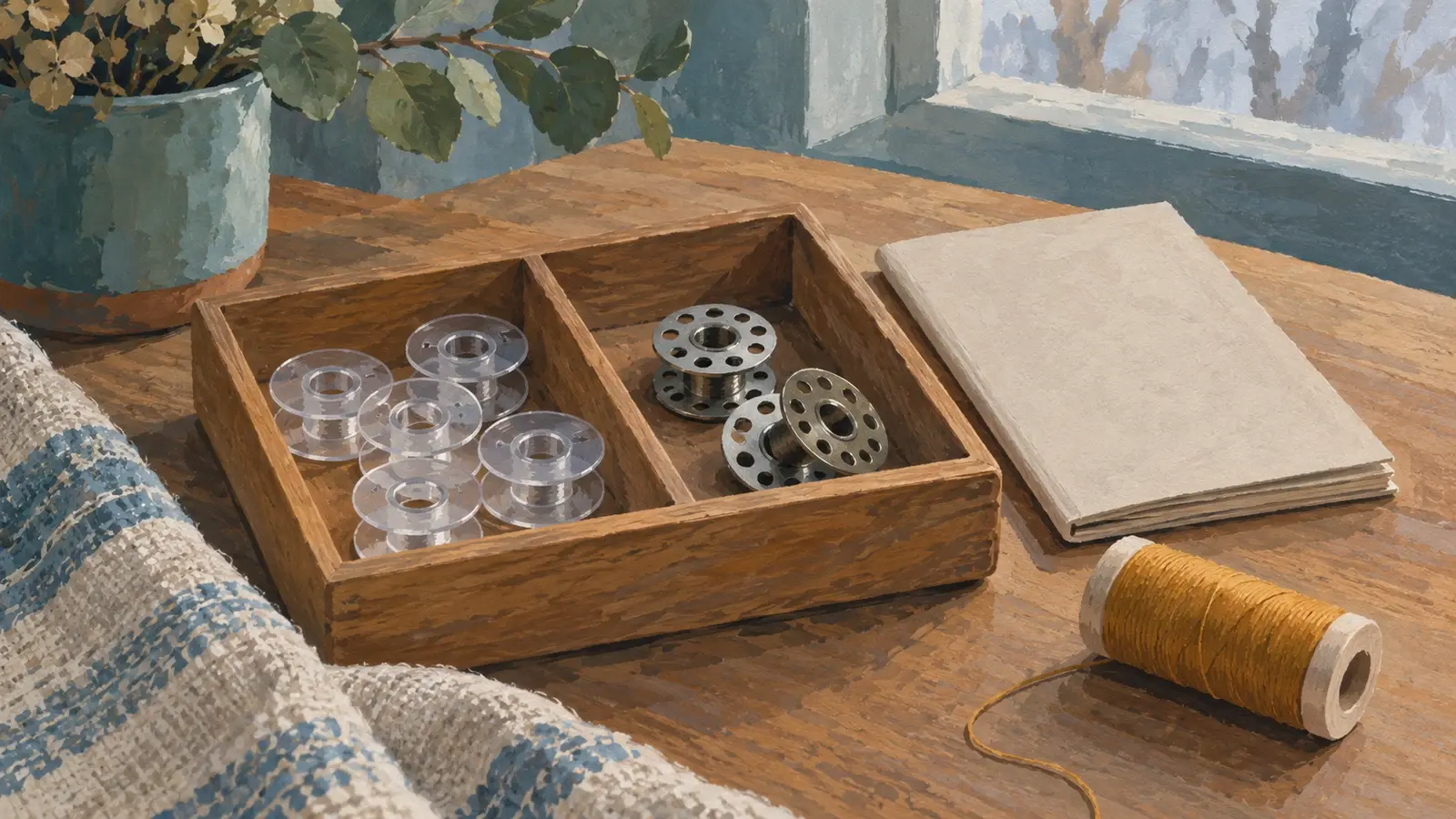
A box of colourful bobbins can look like a useful supply for several winter sewing projects. Yet it may contain parts from different machines. Before buying the box or organising your own drawer, separate compatibility from thread colour. Start with the exact machine model and a clear account of where each group of bobbins came from.
Start with the machine
Copy the model designation from the machine itself, including letters and extra digits. Find its manual and the bobbin section. Record the specified class or part number separately. A brand name on a storage box does not establish that every item inside suits your machine. If the manual is missing, ask the manufacturer or a sewing-machine specialist to identify the required part before buying.
Similar appearance is not identification
SINGER says to use the specified bobbin style rather than a similar-looking substitute.
Matching plastic colour or approximate height therefore does not establish compatibility. Comparing an unknown bobbin with a confirmed original can reveal differences, but it cannot certify the unknown one. Do not put an unidentified part into the machine simply to see whether it works.
Make three groups
Clear a table and separate confirmed bobbins, those needing identification and visibly damaged items. Keep original packaging with the relevant group only when you know the parts came from it. A separately purchased storage case is not that evidence. Once sorted, keep unidentified bobbins out of the working supply; otherwise the same uncertainty returns at your next sewing session.
Look beyond the thread
For a remote purchase, ask for photographs of an empty bobbin from above and from the side. Wound thread hides some surfaces, so do not describe those areas as inspected. Note visible chips, distortion, corrosion or unidentified residue separately. Do not plan to straighten a damaged bobbin, and do not include doubtful pieces in a set described as ready to use. An attractive overall photograph is not a substitute for these details.
Count the useful set
A listing is clearer when it gives the number of confirmed bobbins of each type, rather than one total for a colourful assortment. Say which are empty and which carry thread of unknown composition. If their origin is uncertain, state that. Do not promise enough thread for a garment: the visible amount is not a measured length. A photograph of the whole group lets the buyer compare the description with the contents.
Before closing the box
- The full machine model is recorded.
- The bobbin type matches the manual or has been confirmed by a specialist.
- Unknown and damaged pieces are separate.
- Each group's quantity and condition are described.
- Packaging and photographs belong to the actual items offered.
Label the storage compartment with the type and relevant machine model, then organise colours within that group. Keep groups separate during handover, too. A small set with a known purpose is easier to use than a large box of mysteries. If identification remains unresolved, postpone the purchase; a useful thread colour does not resolve a compatibility question.