

















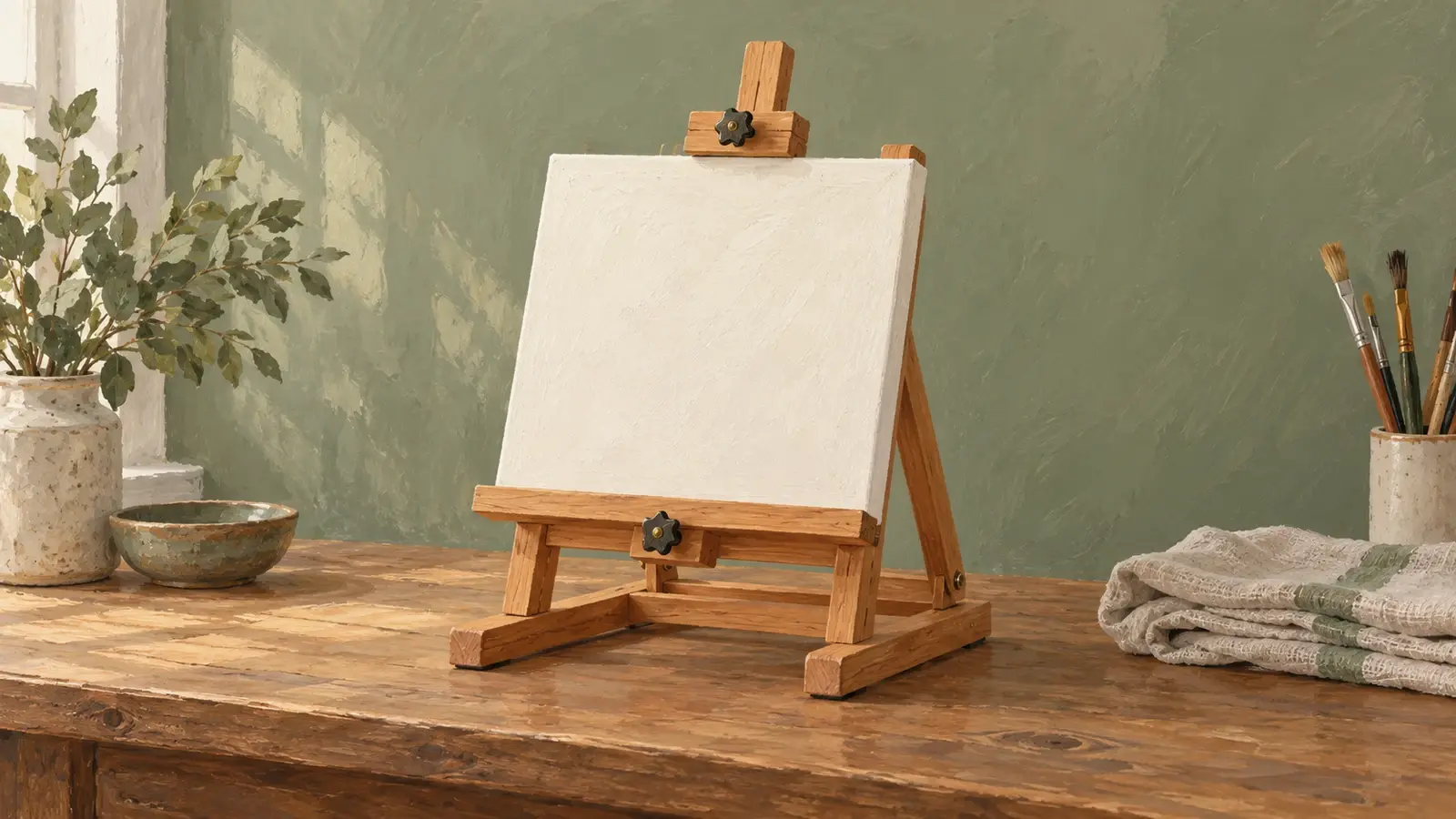
A small easel can turn a kitchen table into a painting corner, but a compact photograph tells you little about how comfortably you will work. Before buying second-hand, choose one canvas you actually intend to paint. Its dimensions, your table and the easel’s complete set of supports are a better starting point than a description such as “suitable for any artist”.
Measure the work, not just the easel
Write down the canvas height, width and stretcher depth. If you paint on a board, record its thickness instead. Ask the seller to identify the model and photograph the lower ledge and upper holder. A listed maximum height does not answer whether your particular thick canvas can sit securely between those parts. Do not confuse a small display stand with an adjustable working easel.
Keep two sets of dimensions
The manufacturer’s Jullian Black Travelbox page separates canvas capacity from folded dimensions. Do the same in your notes. Measure the space available on the table when the easel is open, including its rear support. Then check the folded length, width and thickness against the shelf or cupboard where it will live. Leave room for your hands, paints and a stable water container.
Check the complete adjustment system
Height and angle adjustment are separate features in the Jullian TRAVEL Deluxe specification. On a used easel, ask which movements the actual model allows. Check that its knobs, holders and stops are present. A missing knob is not merely a cosmetic flaw if it belongs to the support you need. Do not assume that a spare screw from another easel will fit.
Try a realistic working position
At collection, ask the seller to demonstrate the normal adjustments without forcing them. Use a suitable blank canvas, not a valuable wet painting. Sit at the table and check that you can reach the upper corners without leaning on the easel. Look for visible cracks, a warped ledge, loose joints and paint obstructing moving parts. Describe what you see rather than promising that every stain can be removed.
Make the handover easy to understand
Photograph the easel open and folded, plus close views of the holders and any damage. List removable pieces individually and agree whether a bag or drawer is included. Keep adjustments and packing consistent with the model’s instructions; do not dismantle unfamiliar hinges for a smaller parcel. If a necessary part is missing, establish its availability before treating the easel as ready to use. A complete, correctly sized modest model is more useful than a larger one with an unresolved support problem.