


















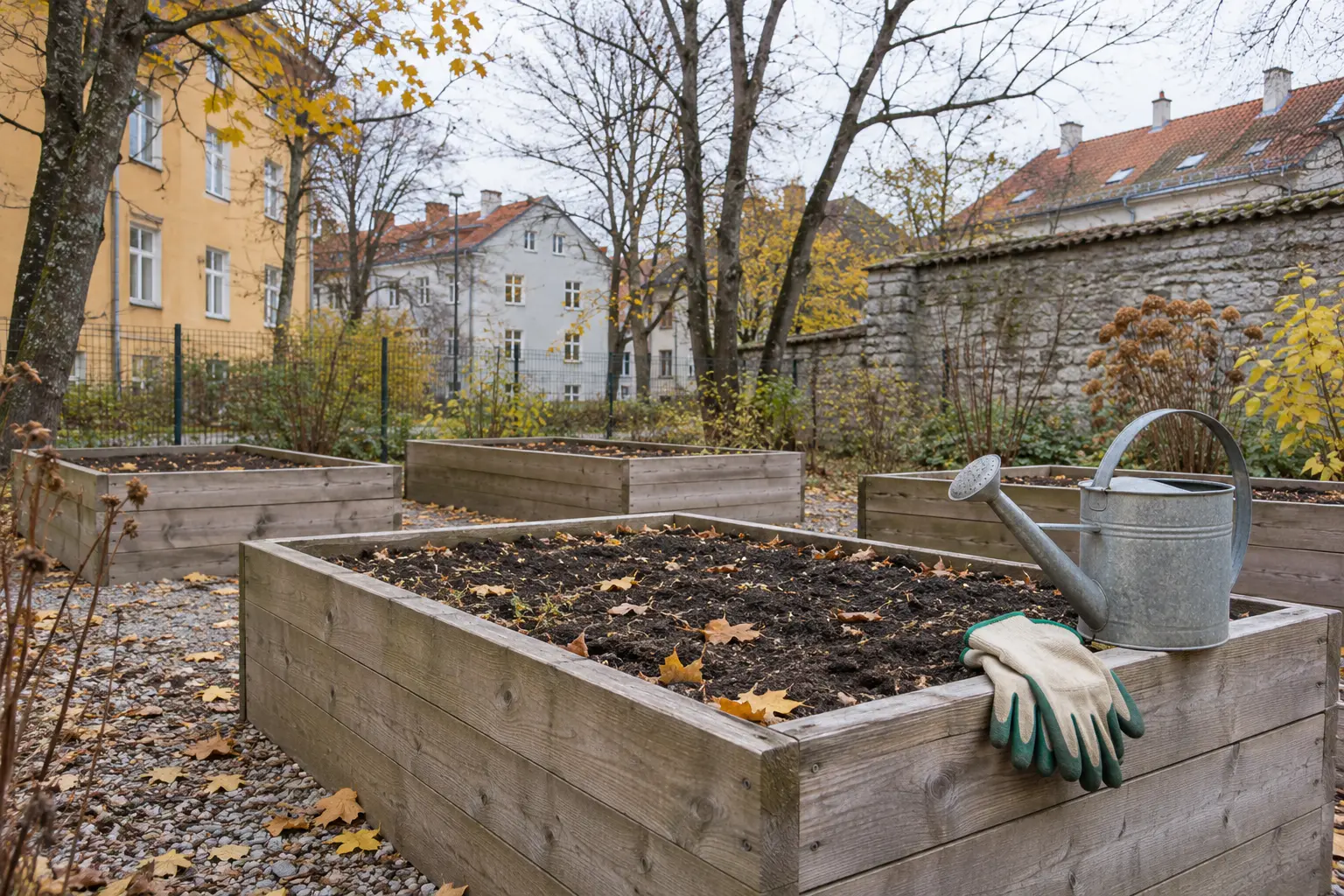
Want to grow something but have no garden? Joining an existing community garden can be a more realistic first step than buying a full set of equipment. The important decision is not which spade to order, but what you are taking responsibility for. In November, use the quieter season to ask about the next growing season; an online garden listing does not promise a vacant bed or work taking place today.
The cover was created with AI as an illustration and does not depict a specific community garden, including Kopli 93.
Start with a manageable journey
Use Tallinn's urban-gardening information to find an existing group, then contact the coordinator through the garden's published channel. Choose a place you could actually visit regularly, not merely the prettiest photograph. Consider the journey after work, carrying supplies and returning during a busy week. A manageable nearby commitment is better than an ambitious plot you rarely reach.
Your first message can be short: say whether you want a personal bed, help with shared areas or occasional organised work. Ask when newcomers are considered, whether a waiting list exists and when the current rules will be available. These are questions to settle, not entitlements implied by the word “community”. Do not arrive with plants and occupy an apparently unused bed.
Separate your bed from shared work
Kopli 93 provides a concrete example, not a rule for every Tallinn garden. The city's description distinguishes personal growing boxes from shared beds and growing areas. Its published rules direct people seeking a personal box to the coordinator. Find out which arrangement you are being offered and what participation involves before agreeing.
A useful answer identifies both your own responsibility and the common tasks. Ask who organises shared work, how tasks are assigned and how you will hear about changes. If you prefer helping rather than managing a bed, say so. Agreeing a limited, useful role is more honest than accepting a personal space because it sounds like the normal way to join.
Plan absence before planting
Look at your summer calendar before choosing how much to grow. Explain a long trip, irregular working hours or difficulty carrying water. Ask whether the group can agree cover and who must confirm it. A friendly neighbour is not automatically responsible for your plants. Write down the arrangement while everyone knows what has been agreed.
Also clarify when the site can be entered and what happens if you stop participating. Do not privately pass a bed to a friend without checking the garden's process. These small organisational decisions prevent an unattended space becoming somebody else's unexpected job. They matter more than drawing an elaborate planting plan before you have a confirmed place.
Borrow knowledge before buying supplies
Ask what tools, water access and storage are actually available for the coming season. Kopli 93's rules describe shared tools and organised water-tank filling; that is a reason to ask how the system works, not to assume unlimited access everywhere. Confirm where items are returned and what personal equipment, if any, you need.
Before buying soil, fertiliser or seedlings, ask the coordinator what materials and plants the garden accepts. Do not leave unwanted pots, chemicals or garden waste there as a donation. Clarify which harvest belongs to personal beds and what sharing arrangements apply to common areas. Permission to enter does not itself mean permission to pick everything growing there.
Leave the first conversation with a small plan
Aim for four clear points: your role, the next agreed contact or visit, the responsibilities you accept and the purchases you can postpone. Keep the current rules and coordinator's contact together. Start modestly and expand after a season of real experience. A successful first year is a commitment you can maintain, not the largest bed or the most equipment.