















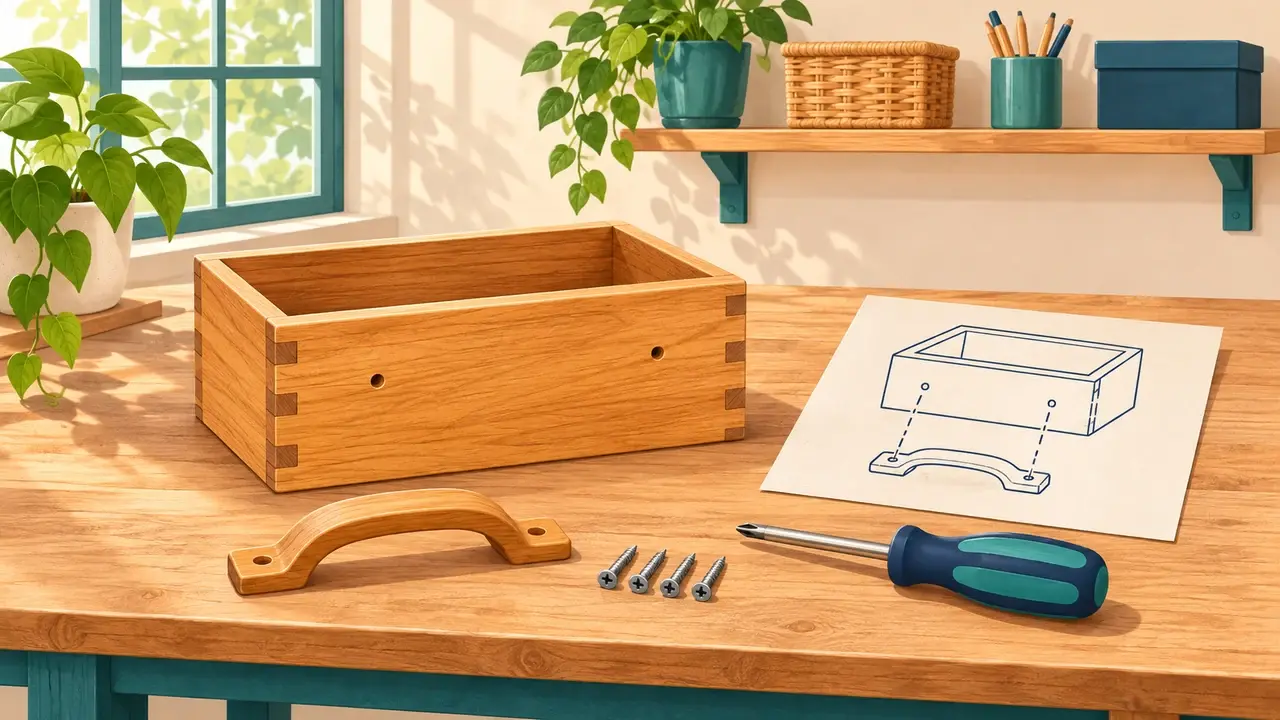
A loose handle on a wooden box can be a good reason to investigate repair before replacing the whole item. An open workshop may give you access to advice and equipment, but first find out how the visit works. Do not assume it is a repair service where you drop something off and collect it finished.
Match the workshop to the task
Tallinn describes its Lasnamäe general workshop as a place where visitors repair items themselves with guidance, primarily working with wood and metal. Check its current official page before travelling. Ask whether your particular item and proposed job fit the workshop, whether booking is needed and what you must bring. A listing for a scheduled class may have different arrangements from an open session.
Make a small repair brief
Take one photograph of the whole item and another of the fault. Add its dimensions and describe what happens in plain words: the handle moves, a screw is missing or a lid no longer aligns. Avoid diagnosing the cause from a photograph alone. If you have an instruction leaflet or know the material, bring that information too.
Choose one achievable aim for the first visit. “Find out how this handle should attach” is more useful than “restore everything”. Ask the supervisor whether the proposed repair is suitable before buying materials or taking more of the item apart.
Keep the parts together
- Bring a clean item and all loose pieces, including damaged ones that may help identify a replacement.
- Put small parts in a labelled container and keep photographs of their original position.
- Clarify which materials you need to supply and whether tools are available for your task.
- Plan safe transport both ways and ask what happens if the job remains unfinished.
Leave time to learn
Guided work still takes your participation. Follow the workshop’s safety instructions and ask before using unfamiliar equipment. Do not improvise with mains wiring or dismantle batteries. A successful first visit may produce a repair plan rather than a finished object. If you later sell the item, describe the work actually completed, not the repair you hoped to make.