











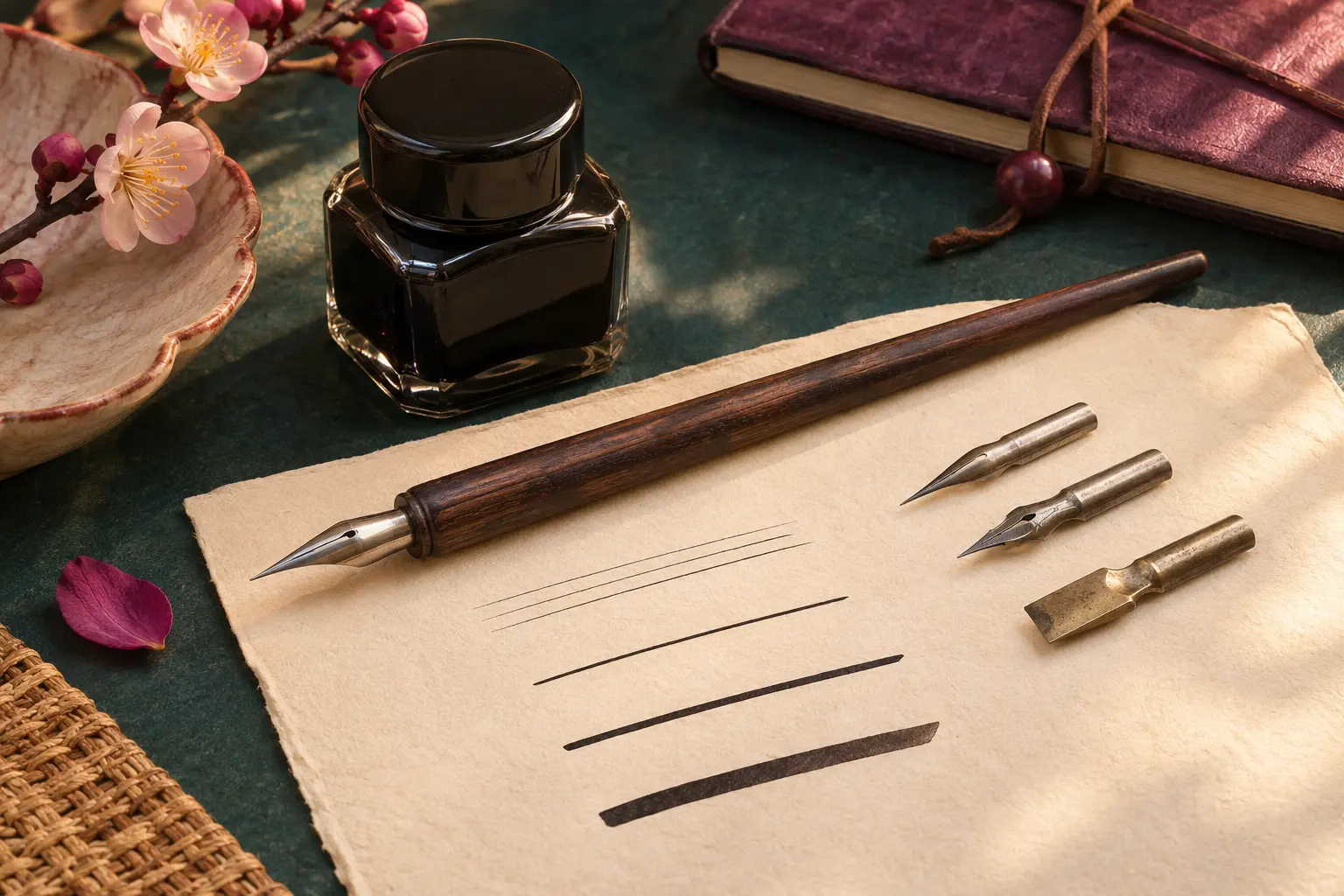
A handsome case tells you little about whether you can write with its contents. This guide is about interchangeable metal nibs that you dip into ink, not cartridge fountain pens. For a first set, one tested nib and matching holder are better than a handful of attractive parts that do not fit together.
Lay out the set
Ask for one photograph of all the parts and close-ups of nib markings from both sides. List the straight or oblique holder, nib models and counts, ink and box separately. Ask which nibs have actually been fitted. If parts were bought separately, matching metal colours do not establish compatibility.
Check the fit without force
Compare the holder model with the maker’s instructions. Speedball’s guide identifies examples of nibs that need specific holders; it is not a compatibility chart for every brand. With the seller’s permission, try the matching nib without force. If it wobbles, falls out or takes heavy pressure to insert, stop. Do not bend the fitting or force the nib in.
Inspect the tip and try a stroke
Side lighting helps reveal bends, corrosion and dried ink, but a photograph does not replace a test. Ask the seller to make a few gentle strokes with suitable ink on smooth scrap paper. Check that the nib stays in place and note how the line starts. If a line skips, do not diagnose the cause from one stroke. Compare with a known good nib on the same paper with the same ink.
Write down what changes hands
For example: one nib writing-tested, two visually inspected only, ink untested. Do not count a leaking bottle or one with an unreadable label as part of the set’s value. At handover, pack nibs separately from the bottle and protect the tips so they do not press against the box. Compare the contents with the inventory before mixing them with your own tools.