

















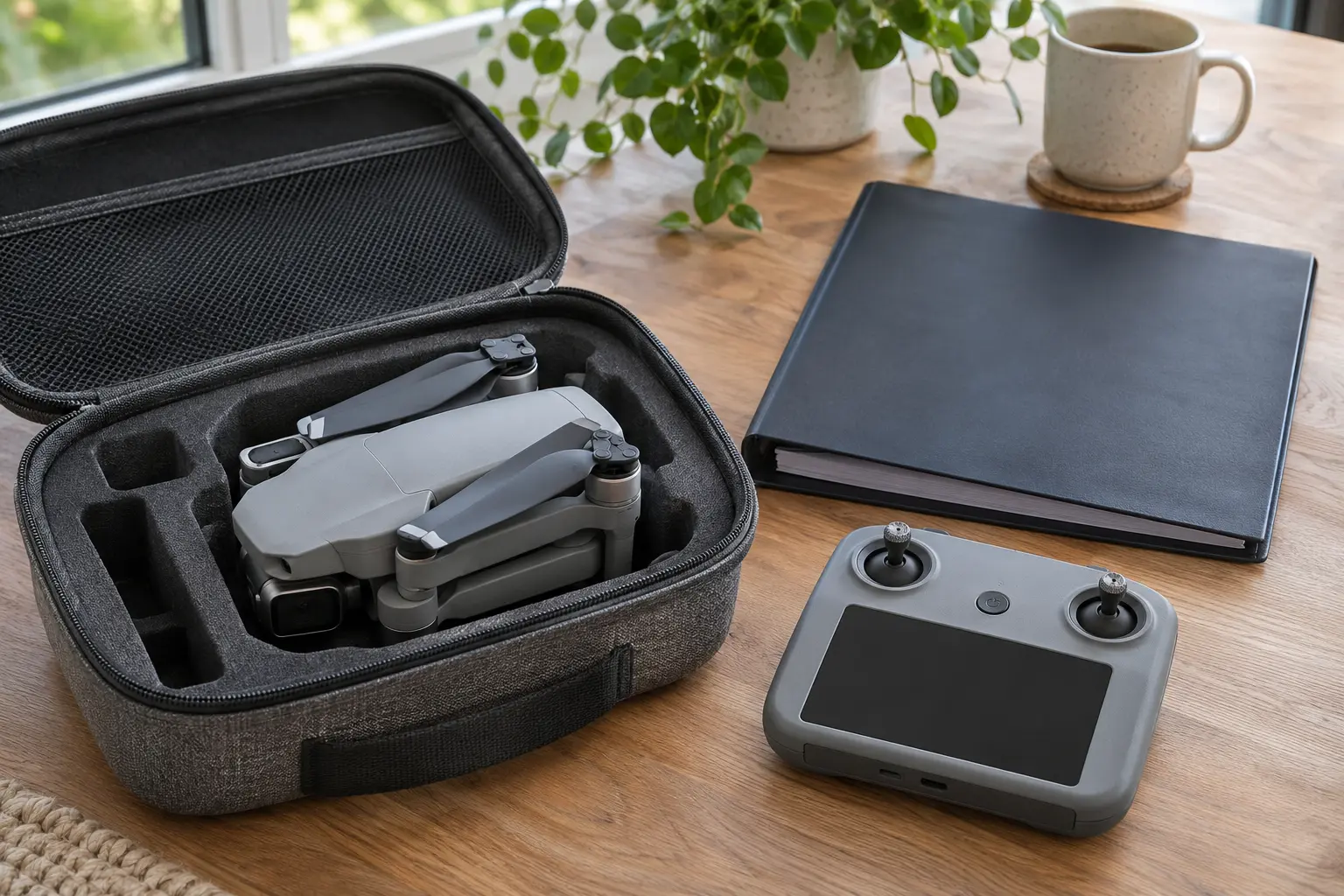
A folding drone with a camera can look like an easy way to film your garden or a weekend outing. Before comparing camera resolution, check whether the exact aircraft, its condition and the place where you intend to use it fit together. A seller’s successful flight does not transfer their operator registration or pilot competence to you. This is a buying checklist, not permission or instructions to fly.
Identify the actual version
Ask for the full model designation and clear photographs of its markings, including any C-class identification label. Match them to the manufacturer’s manual and, where applicable, the EU declaration of conformity. A familiar product name or an ordinary CE mark is not enough to establish a particular C class. Do not copy a class label from another model or accept a loose sticker as proof.
An older drone without a class label is not automatically unusable, but its permitted operating conditions may differ. Check the rules for that specific aircraft rather than borrowing the conditions advertised for a newer version. If the label, documentation and seller’s account disagree, pause the purchase until the manufacturer or authority can clarify the situation. Accessories and modifications should not be ignored in that assessment.
Ask about damage and changes
EASA specifically advises buyers of second-hand drones to establish reasonable confidence that damage or modifications have not affected the aircraft’s original compliance. Ask about crashes, water exposure, repairs and replaced components. Record what the seller can document and what remains unknown.
Compare the actual kit with the manual: aircraft, controller, compatible batteries, charger, propellers and other necessary parts. Inspect visible damage without dismantling safety-critical components. Ask whether the correct application and manufacturer-supported setup are available for the exact model. Any unresolved repair or compatibility issue belongs in the buying decision, not in a promised first flight.
Treat batteries as separate items
List each battery and ask about its age, use, storage and reported warnings. The authority’s training material notes that battery condition is not fully visible from the outside. A displayed full charge is not proof of remaining capacity or safe cell condition. Do not charge or test a visibly damaged or swollen battery to settle the question. Seek a competent assessment and use the manufacturer’s instructions, not a universal charging recipe.
Include confirmed replacement costs in your comparison. If the kit cannot be assessed safely, it is reasonable to leave it untested and decline the purchase rather than demand an improvised demonstration.
Separate operator and pilot requirements
Operator registration and remote-pilot competence are different requirements. Check both for your planned operation. A camera-equipped drone below 250 grams is not automatically exempt from operator registration; the toy exception depends on the relevant documented toy status, not a seller calling it a toy. Do not use weight alone as a complete answer.
Consult current Transpordiamet guidance for registration and competence. If you are already registered in another EASA member state, check the applicable recognition rules rather than creating a duplicate registration. The seller’s number or certificate is not part of the transferable accessory kit.
Check the intended place before paying
Use the official geographical-zone information for the actual intended location. Restrictions can require permission or impose limits even where the general open-category rules apply. Transpordiamet requires checks during planning and again immediately before flight because temporary restrictions can change.
Finish with three separate answers: what aircraft you are buying, what preparation you personally need, and whether the intended use is feasible at that place. If one remains unresolved, do not promise an immediate flight at home or arrange a casual test in a car park.