

















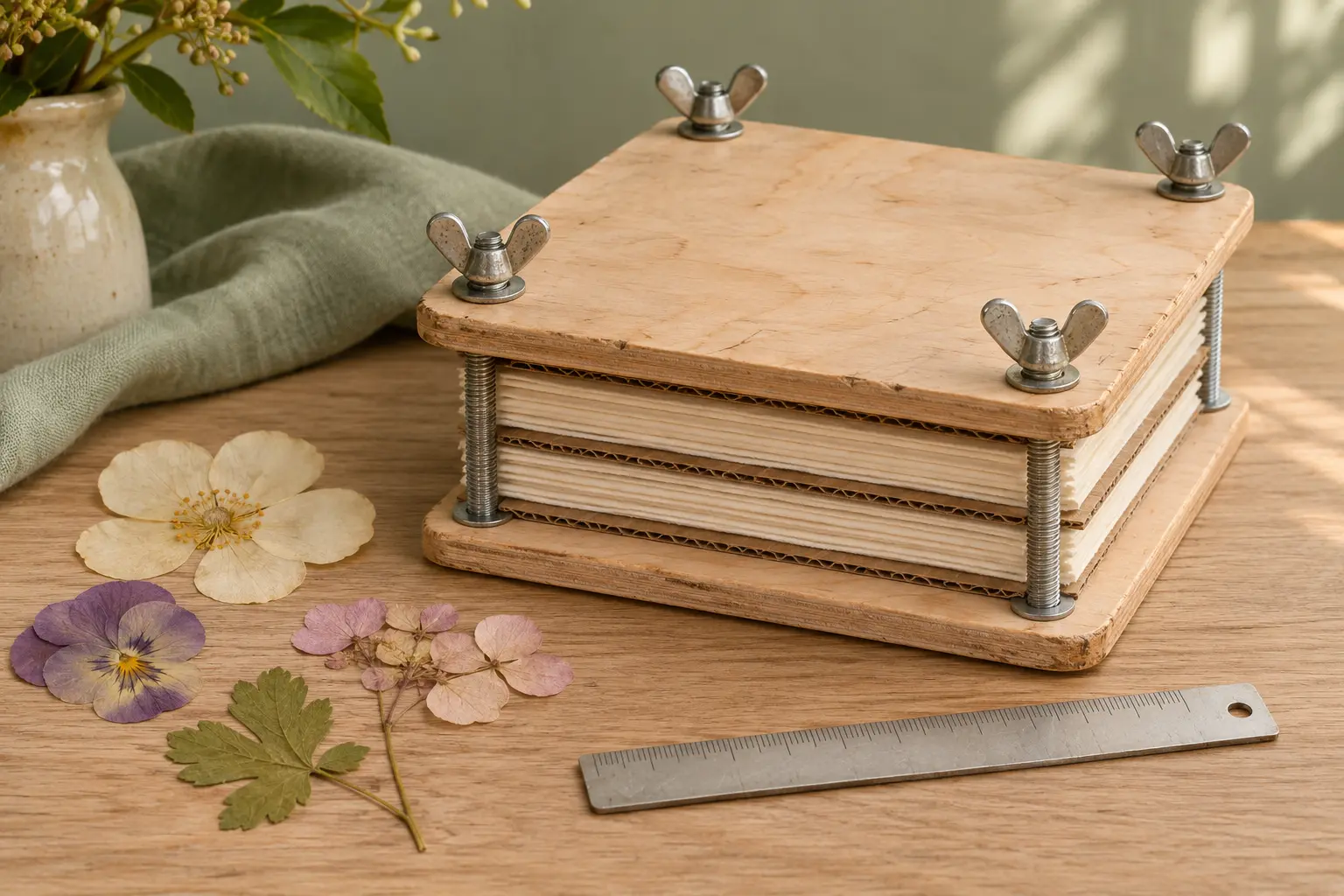
Measure the working area, try a dry stack of paper and count the consumables separately.
Measure the space for a specimen
A pocket press travels well, but the outer dimensions do not tell you whether your leaf will fit. Measure the usable space between the screws and allow a paper margin. Ask for a side-on photo with a ruler to see how thick a stack can fit without backing the nuts to the very ends of the threads.
Check the pressure is even
Set the boards on a flat table. Check for rocking, cracks around the holes and damaged threads. With the seller’s permission, put a clean dry paper stack inside and tighten opposite corners slightly in turn. If one corner closes first, do not compensate with force. Loosen the nuts and check whether the stack, board or screw sits skewed. This checks the movement, not the maximum clamping load.
Count the paper layers separately
The Royal Botanic Garden Edinburgh uses thin paper around the specimen and an absorbent outer layer. You do not need to copy its entire process at home; what matters here is that the paper can be replaced. Do not count damp, musty or heavily stained sheets as part of the value. Measure the inserts and budget for dry replacements.
Before paying
Ask the seller to list the boards, screws, nuts, washers and any remaining inserts. Test with plain paper, not a prized specimen. If a nut binds even with no load and you cannot confirm a suitable replacement, leave the press with the seller.
Source: Royal Botanic Garden Edinburgh: Living Collection Policy, p. 75