

















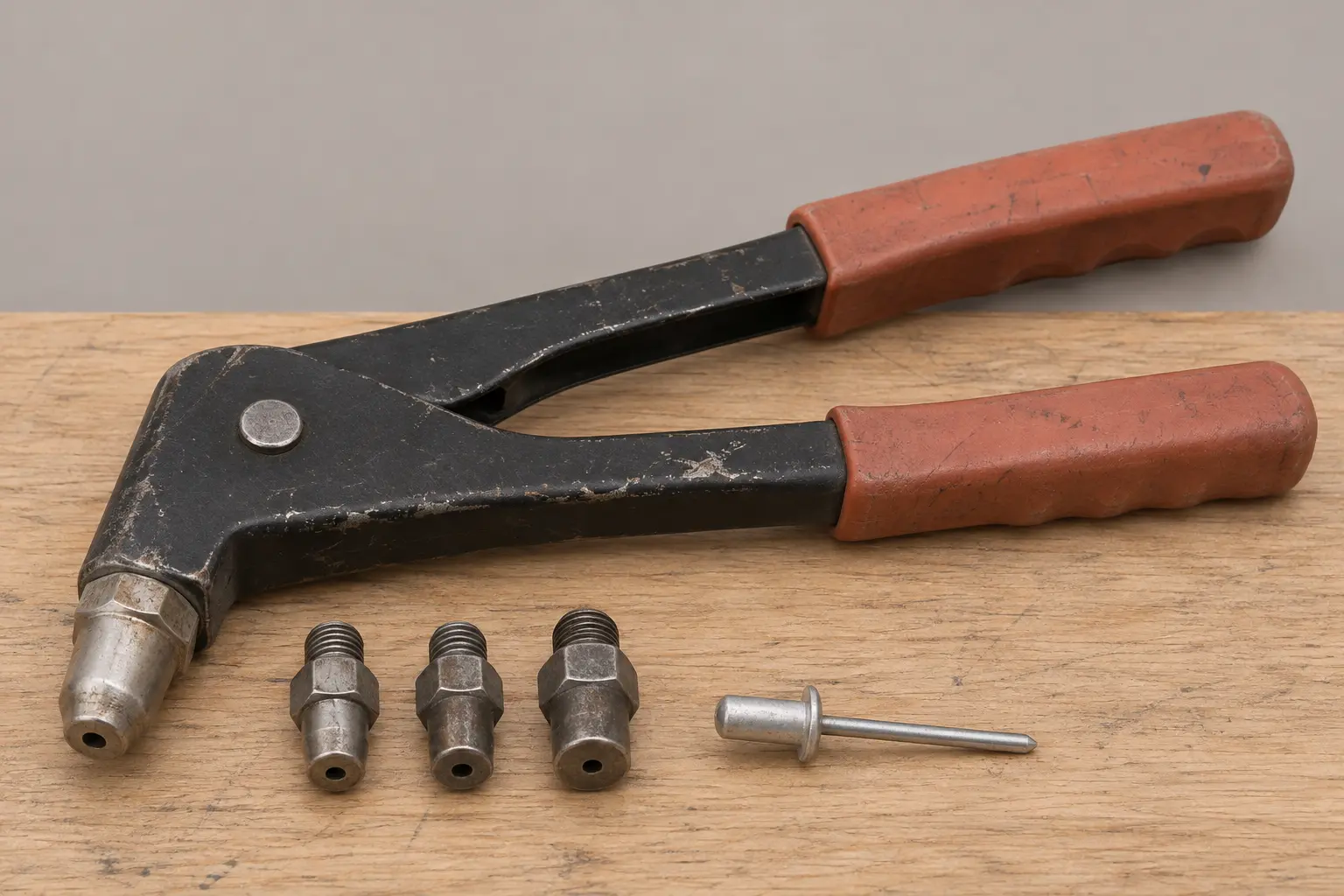
Ask for a photo of the tool’s model marking, the fitted nosepiece and any spares. Note both the diameter and material of the blind rivets you plan to use. Check the maker’s specifications: a nosepiece that fits the size does not mean the tool can set rivets of every material. Stanley’s MR100CG, for example, lists different diameter ranges depending on rivet material.
Check whether the nosepiece markings are legible and the edges are undamaged. The handles should move smoothly without an obviously bent or loose pivot. Ask whether mandrels have jammed before and whether the nosepiece wrench is included. Do not force handles that bind.
If the tool looks sound and the seller agrees, ask them to demonstrate a single rivet on suitable offcuts using the maker’s instructions. Check whether the joint holds and whether the spent mandrel comes out as the instructions describe. Leave your finished workpiece out of the test. Price any missing nosepiece before you buy.