













Start with what you plan to sew
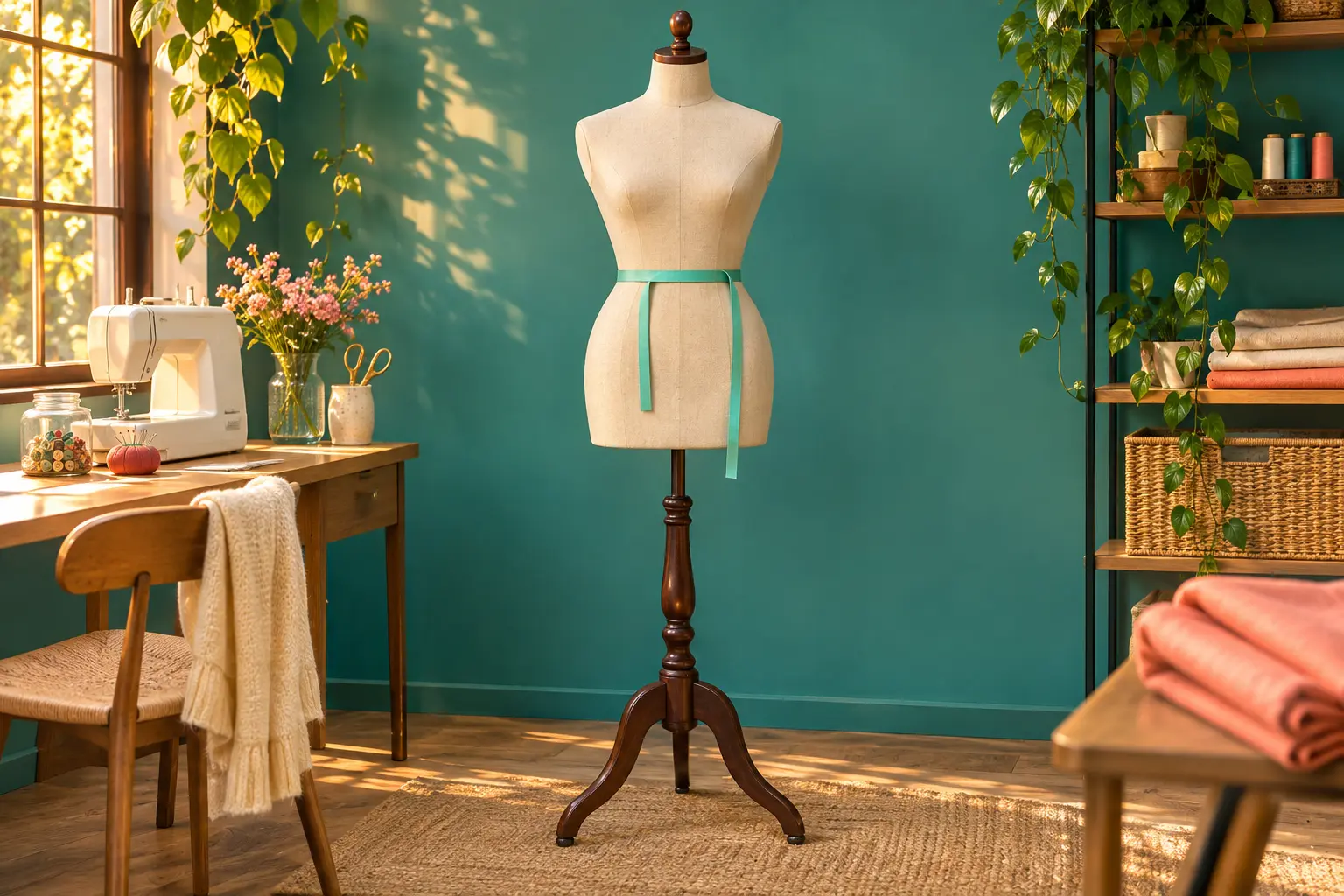
For fitting a bodice, bust circumference and waist position matter. For a dress, you may also need the hip measurement. Note bust, waist, hips and back waist length. Take each measurement according to the guide for the model you are considering so that you compare the same points. Prym recommends choosing an adjustable form by body measurements and adjustment ranges rather than ready-to-wear size.
Check the actual form on offer
Ask for a photo of the model label and for tape measurements on that particular form. If it is adjustable, ask the seller to set one of your target measurements and show the result. Stand height and back waist length are separate measurements. If the circumferences match but the waist sits at the wrong height, the form may still be unsuitable for your pattern.
Inspect the adjustments, stand and cover
At collection, check that the dials turn and the settings stay in place. Put the form on a level floor and check that the feet and clamps are present and the body does not twist loosely. Look at the fabric cover and the gaps between sections. If you plan to pin into the surface, check that the model is made for it; a shop display torso is not necessarily suitable.
Know when to walk away
If a key measurement is outside the range or a lock slips, do not assume you can fix it later. Note what you have checked and what is still uncertain. A dress form helps you judge drape and length, but it does not replace a fitting on the person, especially for seeing how a garment moves.