


















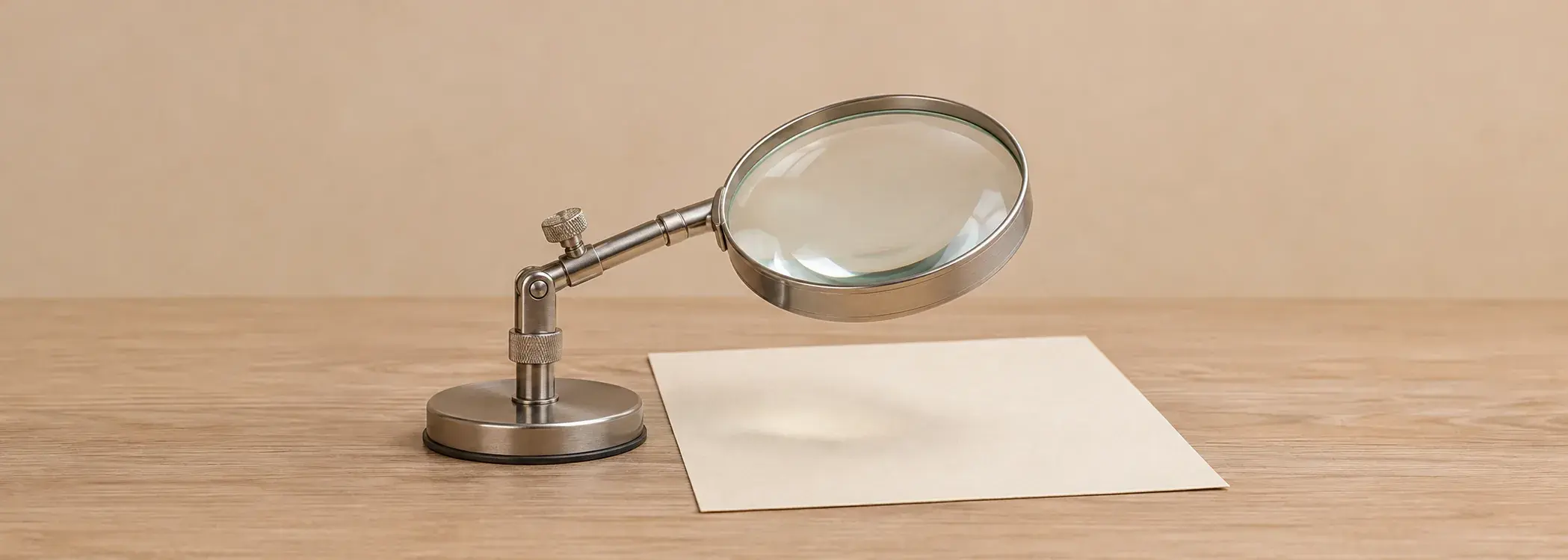
A tabletop magnifier without a built-in light can be useful for examining a small craft detail or a printed pattern. Yet a large-looking lens in an advertisement says little about how comfortably you can work beneath it. Before buying second-hand, check the viewing area, the stand and the space between the lens and your actual task.
Identify the lens and stand
Ask for the model name, any markings and photographs from above and from the side. Measure the clear lens area separately from the outside frame. Also ask for the stand's footprint and overall height. The frame may be wide while the useful view is smaller, and a bulky base can occupy the place where you want to put your hands.
Confirm that the magnifier genuinely has no illumination rather than a missing or broken lamp. Eschenbach's stand-magnifier range shows that lens sizes and base designs vary. Treat a maker's description as information about that model, not evidence that an unmarked second-hand lens has the same magnification or optical properties.
Bring a familiar sample
Try a printed pattern, fine drawing or other harmless sample you normally use. Work under ordinary room lighting, away from direct sunlight. Adjust only the parts intended to move and find the distance at which the sample appears clear. Check whether there is enough space for your hand or tool without bumping the lens or forcing an awkward posture.
Working distance means the usable space from the lens to the object; it is not simply the total height of the stand. A magnification number alone cannot tell you whether that space suits your task. Look through different parts of the lens and note scratches, cloudy areas or distortion that interferes with your own sample. Do not judge solely by a photograph taken through it.
Check stability and safe storage
Place the stand on a level surface. Look for cracks, loose fixings and missing feet. If there are adjustment joints, check that they retain the selected position without slowly dropping. Make only normal gentle adjustments, not a deliberate tipping test. If a fault needs tightening or repair, establish what the manufacturer permits before buying.
Optical lenses can concentrate sunlight and cause a fire. Eschenbach's safety instructions also warn against looking at the sun through optical equipment. Keep the magnifier away from direct sunlight, including during storage, and use its intended protective cover or case when available. Clean it according to the exact model's instructions. Describe lens marks and the test performed honestly in a resale listing. This is a practical craft-tool check, not a medical recommendation or a promise to correct vision.