
















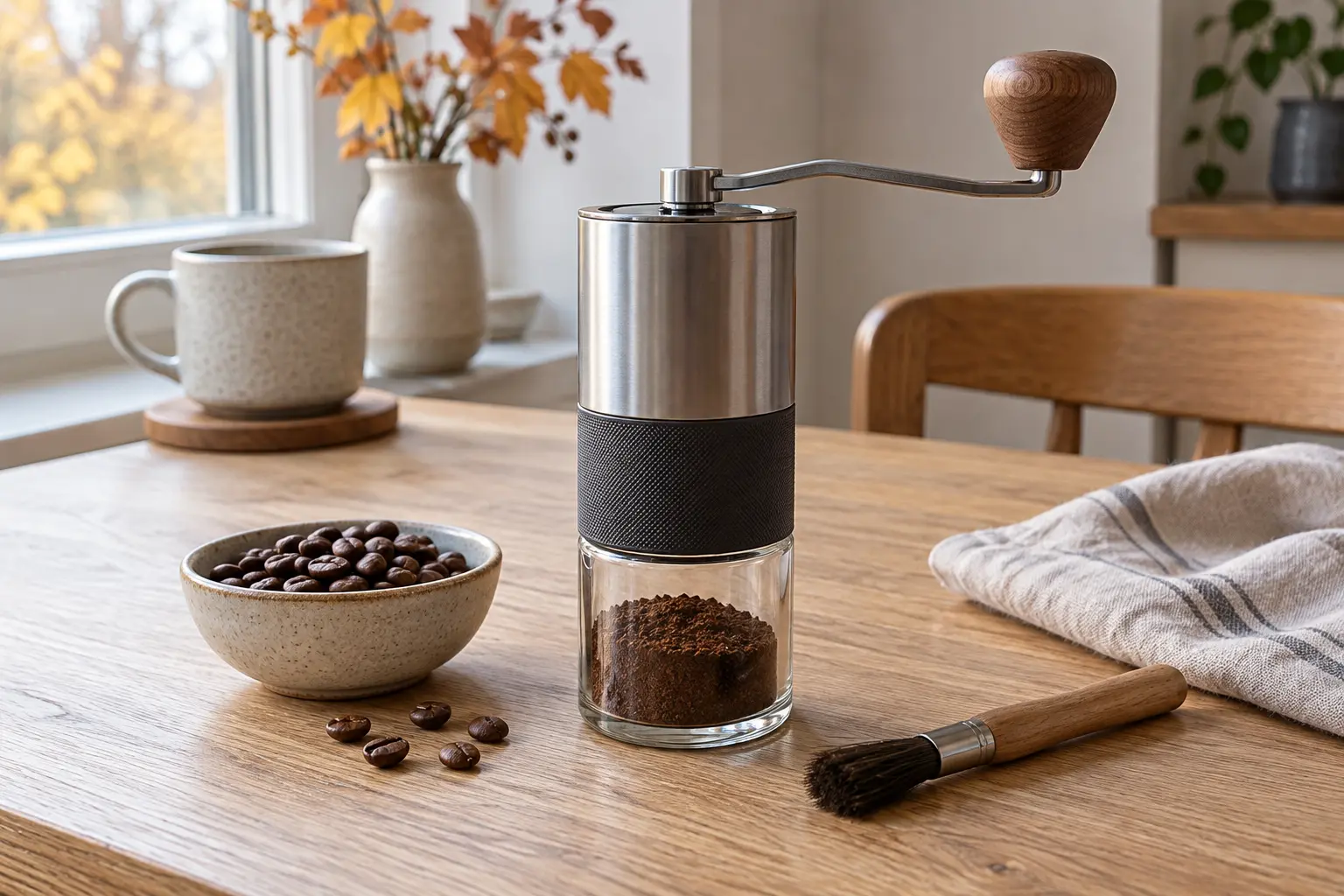
Grinding coffee by hand can be a pleasant autumn morning ritual, but an attractive handle does not make a used grinder a good buy. First establish whether it suits your brewing method and can be maintained without expensive repairs.
Identify the exact model
Ask for the model label and manual. Compare the precise version, not just the brand: capacity, adjustment mechanisms and spare parts differ. Hario’s July 2026 guide likewise describes different hand grinders rather than interchangeable bodies.
List the handle, lid, grounds container, adjustment assembly and parts shown in the manufacturer’s diagram. A missing washer is not trivial merely because it is hard to see in a photograph. Check replacement availability before travelling.
Inspect without forcing anything
Check the body, container threads, crank attachment and visible burr surfaces. Chips, cracks, corrosion or damaged fittings need an explanation, not a promise that use will cure them. Keep fingers away from the moving mechanism.
Do not tighten the adjustment to its limit or force a jammed handle. Disassemble only as the manual permits and with the owner’s agreement. If the model is unfamiliar, stick to accessible inspection.
Make the test relevant
With agreement, grind a small portion of normal coffee beans at a permitted setting. Assess your grip, whether the handle slips and whether the adjustment stays put. Spread the grounds on a light surface to spot conspicuously large pieces among fine particles.
One test does not measure remaining life or prove suitability for every espresso setup. Judge the result against your intended brewing method, not a claim of universal grinding. Never overcome strong resistance by force.
Cleaning is model-specific
HARIO’s official guidance distinguishes wooden models and grinders with iron burrs, which require dry cleaning. “Soak everything” is therefore wrong even within one brand. Establish which components your manual allows you to wash, how and how to dry them.
Odours, old residue and an unknown cleaning history affect value. Add missing parts and necessary servicing to the asking price, then compare with a complete working example.
Before paying
- Identify the model and manual.
- Check the parts against the diagram.
- Inspect accessible burrs and fittings.
- Agree on a test and understand its limits.
- Confirm cleaning and replacement costs.
Sellers should show the whole grinder, label and included parts, and describe faults honestly. Buyers are better off declining an unclear mechanism than assuming cleaning fixes every defect.